Showing posts with label Distillation. Show all posts

Friday, November 2, 2018

BRANDY REVIVAL IN CALIFORNIA: SAVE WHISKY DRINK BRANDY

Save Whisky Drink Brandy

California Brandy is coming back!

I have known it for a long time and it is starting to look like I was right.
Why I anticipated this revival?

When I came to California in 1996 for the first time I was surprised by the concept of 'single grape varietal'. A concept rather foreign to me as I was coming from the traditional blended grape varietals from the local appellation which is the way wines are presented in France. This discovery was later to become my impetus for producing Monteru Single Grape Brandyin 2008.

As I ventured into the wine world in the early 2000s in California and later into the distilled spirits it appeared to me that it was just a matter of time before California would reclaim the brandy category it once had.

===>The evidence were:
  • California and its concept of wine and entrepreneurial way of life,
  • California single grape varietal wine thriving business,
  • Micro-brewery and later Micro-distillation boom,
  • Spirits venturing into single ingredients such as Rye, specific type of Potatoes, wheat versus corn and etc. I noticed a real interest for studying the process and original ingredients,
  • Regain and later explosion for the Mixology, combined with the search of better ingredients,
  • People interests for organic, handmade, farm-to-table, sustainability, ... eventually culminating to local is better than far away things. A concept which is well executed by brands such as Tito's Vodka (starting from Texas) or FEW (starting from Chicago's suburbs) for instance.
All of these factors combined and symbiotically moving have increased my confidence in the return of brandy.

Recent Links:
The definitive guide to California brandy old and new
in San Francisco Gate
By Lou Bustamante, October 22, 2018
https://www.sfgate.com/news/article/The-definitive-guide-to-California-brandy-old-and-13323980.php

California brandy is better than ever. Will consumers notice?
in San Francisco Chronicle
By Lou Bustamante, Oct. 20, 2018
https://www.sfchronicle.com/news/article/California-brandy-is-better-than-ever-Will-13323976.php?fbclid=IwAR0hGYCS3fCwsy_yeChrX7DnTTvlvXvRxCjme1HK_fS35Yg1758euKLyQAU#photo-16334737

Wednesday, July 27, 2016

DES BRANDY DE FRUITS MADE IN ALSACE

Une trouvaille La Distillerie Metté en Alsace à Ribeauvillé.

Distillerie de Mette, Alsace

Elle existe depuis 1960 et utilse 3 petits alambics Charentais de petite taille de 100 Litres à 150 litres, minuscules!

Pour ainsi creer 87 differents brandy de fruits non-vieillis, et plusieurs liqueurs.
Abricot, ..., Coing, ..., Melon, ..., Truffe, a raisin de Muscat, etc.

On voit une passion et un travail artisanal authentique qui permet de creer des produits exceptionnels.

Adresse:
9, RUE DES TANNEURS 68150 RIBEAUVILLE - FRANCE

Wednesday, July 8, 2015

WHY WOULD YOU USE COPPER IN DISTILLATION?

As I am passionate of cognac I am often fascinated by copper. However, one may find that there are different types of metal used in the production of cognac. I have always thought this was due to old traditions but this short article has highlighted the importance of each metal in completing different purposes.
As for everything there is a cost / benefit element to take into account. And 'quality products' are often the culmination of details.
Cork Sparkling Wine Copper
STAINLESS STEEL
Advantages: Strength, brightness, non-abrasive, non-corrosive material, easy to use.
Disadvantages: Low thermal conductivity (16 Wm°K) and therefore suitable only for boiling. High energy consumption. Can be corroded by kitchen salt. Uneven heat distribution can cause hot spots and burned food. It contains chrome and nickel (this last material is linked to several allergic phenomena)
Note: Stainless steel, loved for its polished & clean appearance, after usage, acquires micro-scratches & micro-cracks in which pathogenic elements can harbour. As affirmed by Bill Kevil, this does not happen with copper. Bill Kevil coordinated this study at the Southampton University (www.soton.ac.uk) and demonstrated that the bacterium E.Coli survives for months in stainless steel while only 14 hours in copper.

ALUMINIUM
Advantages: Good thermal conductivity (225 Wm°K), energy saving, lightness, excellent price/quality ratio.
Disadvantages: It reacts with acidic & alkaline foods and easily discolours. It tends to release metal flavours in the food especially during long cooking. Its natural porosity can not guarantee perfect cleaning which encourages the proliferation of micro-bacterium. If the cookware is made from thin sheets of aluminium the shape can become distorted and it can heat unevenly.

SILVER
Advantages : Inimitable thermal conductivity (420 Wm°K), energy saving, excellent nonstick performance.
Disadvantages: Very expensive and needs to be cleaned with care. A novice cook may find it hard to control the heat conduction.

CAST IRON
Advantages: Very strong and durable material that retains heat for a long time. It does not alter with time (only if the piece is well finished & enamelled at high quality level). It allows for good heat distribution, perfect for long cooking at low temperatures.
Disadvantages: Poor thermal conductivity (58 Wm°K) which causes the pan to heat and cool slowly. Heavy weight. Pans not properly seasoned or coated can cause food to stick. If enamelled the surface can be damaged at high temperature.

MULTI-LAYERS
Innovative technology allows the creation of cookware made of several layers of different metals in order to enhance the positive qualities of each material and minimize their negative qualities. It is impossible to judge the thermal conductivity due to the different combinations on the market. This technology has created some cookware with excellent cooking attributes while other items were just developed for commercial-look purposes only.
Some examples:
- 10% stainless steel, 80% aluminium, 10% stainless steel It greatly improves the thermal conductivity of the stainless steel pot
- 90% aluminium, 10% stainless steel It keeps the same good thermal conductivity of the aluminium eliminating its reaction with food.
- 10% copper, 80% aluminium, 10% stainless steel The copper does not substantially improve the thermal conductivity and it requires more cleaning.
- 90% copper, 10% stainless steel It reduces some advantages related to the copper but it increases its practicality.
- 10% copper, 90% aluminium The copper does not substantially improve the thermal conductivity and it requires cleaning.
- 10% copper, 90% aluminium, and non-stick interior The copper does not substantially improve the thermal conductivity and it requires cleaning. The unavoidable abrasions irreparably damage the item.

COPPER
Advantages: Excellent heat conductor (392 Wm°K). It cooks at lower temperature and reduces overheating. It is essential for certain cooking including sauces and candy. It allows substantial energy savings and enhances the beauty of your table. It is extremely resistant to bacteria and it lasts forever.
Disadvantages: Expensive, heavy, and it requires special handling and care. It reacts with certain acidic food. It is recommended not to use in the dishwasher.
Notes: Copper is widely used in the dairy industry, not only for technological reasons but also for biologic properties. It is used for distillation, not only for its capacity for thermal exchange but also for chemical properties. It is also used in the canning industry to preserve color and flavour of the fruits/vegetables). A copper boiler or alembic is compulsory in the production of Grana Padano, Parmigiano Reggiano, Cognac, Armagnac, etc. Recyclable and “Green”: Copper does not emit harmful substances and it is 100% recyclable. This allows energy savings and cuts down on waste. It is estimated that 80% of copper made for cooking dating back to ancient times is still in use in some form. Copper & Health: Humans and animals absorb copper from our environment and in our daily lives all the time. Being a natural material, copper is contained in many foods & in water. The digestive system absorbs enough copper quantity to enjoy good health. The extra copper is expelled.
Source: http://www.ruffoni.net/ruffoni2/ENG/metalli.asp


Monday, November 21, 2011

Cognac and Armagnac - It is Like Salt and Pepper


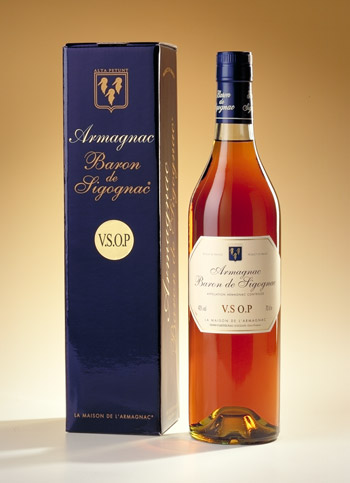
Cognac Paradis - Armagnac Baron de Sigognac VSOP
John W. Fischer in his blog published on November 5th 2011, gives us a rare explanation of what is cognac versus armagnac but also he offers an interesting view on why someone may select armagnac over cognac. The number of people who prefer armagnac over cognac is very limited. I often find that these people do not have a single valid reason for why they prefer armagnac (I will below give you my rational for preferring armagnac). In addition, preferring one over the other is like preferring salt over pepper. You need both in life because their are different and complementary.
At the end, comparing the 2 and saying which one is better makes no sense. But if I had to guess which one people think is better I would say that over 90% of the time people prefer cognac over armagnac. The driving reason for this may be that people do not know armagnac as much as they know cognac. There is 25 times more cognac than armagnac being produced. That just does not make it better - it is just a fact. Armagnac is 200 years older than cognac but that does not make it better either. Cognac has grown faster because of its natural proximity to the ocean which favored international trades for centuries. Remember 95% of the cognac is exported, and this percentage has been pretty much the same since it was created. Anyway, it was created by foreigners for foreigners  (quickly and over-simplified explanation but pretty valid).
Cognacs are generally assembled (blended) for the sake of creating the most balanced products. In many cases, the blends include over 100 different cognacs. Hence, they are smoother than armagnacs where the spirits are much less blended. Also, cognacs are distilled two times whereas traditionally armagnacs are distilled 1 time. The more you distill the smoother it gets. Passed 2 times you are removing significantly the characteristics of what you are distilling. So as a rule of thumb, 1 distillation are for eaux-de-vie, where the spirits are the expression of the fruits being distilled.
2 distillation is good balance where you have the best of both worlds: enough purity and still the complexity and typicity of what you are distilling.
--->Why vodkas are distilled 20 times? The worst the "stuff" you have fermented to generate alcohol the more you need to distill to get to neutrality. Plus some people are pretty bad at distilling so they need more times.
--->Why some vodkas are distilled 9 times or more ... (1) it is a marketing gimmick, and (2) they are not good at it. It is like someone telling you a joke and they need to repeat their joke 5 or 10 times to get you to laugh. Either the joke was bad or they were not good at telling the joke.
Going back to armagnac. Advanced spirits tasters look for single grape armagnacs made of colombard or made of only folle blanche. And since it is only made of a single grape one should taste a difference. That is a plus point of armagnacs as they more often make this distinction. The truth is you should taste a difference if the armagnacs are less than 5 years old but passed 5 years old the armagnacs or anything that is aged for that matter start tasting the same. So if someone starts spending a lot of money on very old armagnacs, and even more money because they are single grape armagnacs they are only being snob! Sometime people just know enough to get themselves in more trouble!
However, I will give you some valid reasons why someone may prefer Armagnac in another postings to keep things short and parsimonious.
Link to John Fischer's article: http://tinyurl.com/8x297zk