
Cognac Paradis - Appreciating The Finest Cognacs
Saturday, May 12, 2012
News Video of Jay-Z Releasing His Own Cognac d'Usse with Bacardi
[youtube http://www.youtube.com/watch?v=HprSeU4LQp0&w=560&h=315]

Friday, May 11, 2012
Bacardi Publicly Announced Cognac D'Ussé (Henri D'Ussé) is their New Cognac and is Endorsed by Shawn "Jay-Z" Carter.
When Bacardi announced they were going to launch a cognac sometimes this summer 2012 in the USA (see, March 20, 2012 blog) I was not surprised as I knew they owned Baron Otard Cognac, and I thought this brand should have a bigger share of the American marketplace (still 50% of cognac consumption is in the USA). My surprise was that they stated they would not use the Baron Otard brand but rather create a new one. I really wondered why?
On May 9, 2012 Jay-Z attended a private event in New York to announce his endorsement of Bacardi‘s Cognac D'Ussé, a new VSOP cognac priced at $45 for a 750ML bottle.
Mr Carter also known under Jay-Z is expanding his list of endorsement deals in an attempt to become the first Hip-Hop billionaire. I cannot blame him.
There are five artists on the short list of soon to be billionaire: Sean "Diddy" Combs (rich from Vodka Ciroc, marketing firm, and clothing lines ...), Shawn "Jay-Z" Carter (rich from Rocawear clothing, Live Nation, Reebok, HP, ...), Andre "Dr. Dre" Young (rich from HTC headsets, ...), Bryan "Birdman" Williams (rich from Young Money Cash Money productions with Drake, Nicki Minaj and Lil Wayne, ...) and Curtis "50 Cent" Jackson (rich from VitamineWater ...).
So why have another cognac?
This is Jay-Z 2nd endorsement of spirits, he had previously invested in Scottish vodka Armadale. A Scottish Vodka!! drinkarmadale.com
He is joining Ludacris in this rappers’ cognac venture. Ludacris with Cognac Conjure made a huge impact when endorsing and carrying very personally Conjure everywhere he went www.conjurecognac.com. I remember very well when it happened as I was at Vinexpo 2009 yards away when they got their first launch party. It was let’s say different, different than Cognac Houses tend to do things. I thought to myself “why not!”.
Perhaps Bacardi was inspired by Conjure’s success and the fact the company behind the scene Park Street Imports, LLC is right on their door steps in Miami.
- Cognac D'Usse, Henri D'Usse from Bacardi

One will have to explain why they are using the Croix de Lorraine which is (1) the symbol of Lorraine in France which is distinctively unrelated to the Cognac region and whose origin dates back to the French crusaders, (2) it is the symbol of France's resistance during World War II, but also (3) the symbol of the free army forces in WWII and (4) strongly associated with the General De Gaulle, President of France between 1959 to 1969.
My guess is they used this insignia because Jay-Z has long been associated with the champagne called Armand de Brignac also known as Ace of Spades champagne, which is using a very flashy glitzy gold and chrome bottles with a large conspicuous ace of spade logo. Now, with this experience rather successful why not using this concept again and place another big logo on the bottle of cognac, and 'voila' would say a proper Frenchman. They did it and they can do it again. It also reminds me of the type of bling bling hanging around the neck of rappers. I suppose it will do well with the obvious target.
Now, next question is ‘Why calling it Cognac ‘D'Ussé’? Everyone knows that in marketing a new product everything is hard enough that no one wants to had more difficulties as it is, and the number 1 rule is to have a name that the target market can remember, spell, and pronounce. Let’s add identify, relate, etc... Well, I do not think this is the case with ‘D'Ussé’ but perhaps this is the idea, kind of like Häagen-Dazs. I mean who can spell that made up brand owned under a collaboration of Pillsbury and Nestlé. Cognac D’Ussé will also be known under Cognac Henri D’Ussé, however it does not identify a particular living individual. Humm!! The plot thickens.
Perhaps, the inspiration comes from the famous castle from the Loire river called ‘Chateau D'Ussé depicted in Frenchman Charles Perrault’s fairy tales ‘Sleeping Beauty’ made famous by Disney. www.chateaudusse.fr
I am also getting inspired now myself. Why not a Cognac Cinderella or Cognac Chat Botté? Charles Perrault’s other famous original fairy tails.
Bacardi owns the Baron Otard Cognac brand cellared in the Chateau of Cognac, a 15th century building overlooking the Charente River in Cognac originally purchased by Baron Otard in 1796 and previous home of Francois 1er, king of France in the 14th century.
I am personally very excited by this news as it shows that cognac is becoming a growing spirit category and Jay-Z’s endorsement is sure to provide even more growing interests for the cognac from consumers internationally. The question is not about good or bad, but rather about keeping the cognac interesting. And it should do this. This marketing move does not win an award for originality but it does bring more buzz and that is what cognac needs. I cannot wait to try Cognac D’Ussé VSOP, and others qualities soon that will be coming after...
Wednesday, May 9, 2012
Whisky While You Do Kamasutra
The whisky marketplace is much larger in volume than Cognac. However, the whisky has a much larger number of producers and divergence not only in styles but more critically in origin - shall I say a much larger problem; what problem am I talking about? English whiskies (e.g., Saint-Georges), Welsh wiskies (e.g., Penderyn), Irish whiskies (e.g., Jameson), Australian Whisky (e.g., Lark), Canadian whiskies (e.g., Crown Royal), US whiskeys/Bourbons (e.g., Eagle Rare), Japanese whiskies (e.g., Yamazaki), French whisky (e.g., Glann ar Mor), German Whiskies (e.g., Gruel) Scottish whiskies/Scotch (e.g., Cardhu) and many other countries are producing whiskies like the Netherlands, Finland, Belgium, etc...
More recently India entered the whisky production in a big way with a bold winning proposition: a whisky made in India blended with Scotch blends. Whattttt!!!! you are thinking while reading this a second time! Can they do this? Yes and they did. This whisky is now coming to America and it is called: "Royal Challenge".
Next thing you know it could even be very nice, experts in blind taste may rave about it and it could costs less than premium fruit juices. In slower or hard economic downturn people are price sensitive and these whiskies coming from India or soon China may prove to be successful operations. In Fact, India offers a dozen of brands of whiskies made in India inside the Indian market. In the last Wine and Spirits Wholsaler of America (WSWA) trade show Royal Challenge was launched in the USA by Toni Bedi, the President of the UB Group. The UB Group is a huge multinational from India more famous for its beer business and its high tech division, but also airline business. www.aubsl.com
- Royal Challenge Whisky made in India by the UB Group

Thursday, May 3, 2012
People Don't Know How Good is Pineau des Charentes: Bonfun has a solution!
Pineau des Charentes is coming back in France with some difficulties as it has been a long time since people have had the habit, ritual, routine of consuming pineau. For the past year, Pineau des Charentes under the Pineau Committee (www.pineau.fr) that is the entity that is serving the interests of the pineau producers has been offering a new face using popularity as a method to revive the appeal. Songs inspired by Michel Fugain on the radio have started to spike interest.
I have myself been thinking for many years of the ambiguity created by the Pineau des Charentes. I explain myself. What is Pineau des Charentes? Which product category does it belong to? Is it a dessert wine, a mixing alcohol, a wine, an aperitif, to drink before or after diner, ... The first and main problem comes from its name: too long, too hard to spell, too hard to remember, quite misleading - people think it is a pinot as of pinot grigio for instance. What does it do and what does it taste? I personally believe one should mostly focus on the market and come up with a new name for it, or just brand it. it's a 'Schmutz'!
Nobody is more pragmatic than the Americans when it comes to taking a great complicated idea and shaping it up to fit a need. American businessman are always good at focusing at the essential and that is how they invented KIS, that is for Keep It Simple!
Hence, this explains the simple and I believe l0gical creation of 'BONFUN'. Bonfun wines are purposively avoiding any mention of Pineau des Charentes. They would rather concentrate on the essential the product. I really enjoy Pineau des Charentes not just because it contains cognac nor because it is made in Charentes but because it is delicious. In fact, I have to admit I think it is so good that no one should mention about it but just let it be for the happy few. Unlike cognac it is not an elite drink but a popular drink which drinks easily as it belongs to the fortified wine category.
Specifically, Pineau des Charentes is made from blending grape must, i.e., lightly fermented grape juice, just when the sugar content gets very high and young cognac blends. It is very refreshing cold and very complex and aromatic - people are very surprised how much they like it in particular women. Pineau was historically created by someone who poured by error cognac into a barrel where they was some grape juice. Having said this, try aged Pineau. Like many other fortified wines aging in the bottle will not do anything but aging in the oak barrels will tremendously mellow and increase the complexity and flavors.
After having had a good experience with Pineau des Charentes people are often considering trying cognac. You will notice it says Pineau des Charentes and not de Charente, but it is plural because they are 2 Charentes: Charente and Charente Maritime. The production of Pineau des Charentes is also authorized from the North of Dordogne region. Tip: try mixing 4/5 of Organgina and 1/5 Pineau des Charentes with lot of ice. Really nice!
Once again: "let's keep it simple folks", was the motive behind BONFUN. A nice Saverglass glass bottle, a white and red Pineau des Charentes and voila a not so new product but a new idea on to present it. BONFUN makes no mention of Pineau des Charentes, just a 'more spirited wine'. BONFUN seems particularly targeting younger women.
Other famous brandy appellations than Cognac offer their version of the Pineau des Charentes: Armagnac as the Floc de Gascogne and Calvados makes the Pommeau.

- Bonfun Pineau des Charentes

Tuesday, March 20, 2012
Bacardi is Thinking of Distributing Cognac Baron Otard in the USA
- Bacardi Logo

Bacardi is a privately-owned spirit company controlled by the Bacardi family and founded in 1862. Originally from Cuba the family has moved a great deal between Cuba, Jamaica, Puerto Rico and Florida as the political situations changed and they had to adjust and moved to a safer haven across the years.
This company has much merit and is responsible for a great deal of contributions in the spirit industry but to some extent also in their political influences such as over Cuba, and cultural influences such as art. In the spirit industry they great contribution was to make rum a premium spirit by (1) filtering rums in such a way to increase its purity and (2) by aging rums to mellow them. For everyone Bacardi is synonymous to rum but they carry a strong list of brands often times leader in other categories. For instance, they own Grey Goose Vodka, Dewar's Scotch, Benedictine, Bombay Sapphire, and Martini & Rossi, and many more ...
- Cognac Baron Otard Logo

In fact, they own Cognac Otard, or rather Cognac Baron Otard as it was re-branded at the end of 2011, but they have not sold directly Cognac Baron Otard in the United States. Robert Furniss-Roe, president of Bacardi North America, said Bacardi is trying to tap more into the dark side of spirits, launching its first cognac in the United States early this summer 2012. There is the possibility that they use a different brand even for the USA.
Source: Martinne Geller, March 14 2012 (Reuters)
www.bacardi.com
www.baronotard.com
Saturday, March 3, 2012
What's in Common between a Stradivarius and a Cognac?
- Old and Modern Violin

Old violins are always better than new ones. Expensive violins are better than cheap ones. One could say that this is the same for cognac!
Professor Claudia Fritz of the University of Paris VI and Joseph Curtin, a violin-maker have discovered that this opinion is biased. Twenty one professinal violinists were given to compare blindfolded a Stradivarius and a new quality violin. In this comparison, the Stradivarius were estimated at about 3 millions USD each versus the modern violin were about 30 thousand dollars each. Obviously, they could not compare the Stradivarius against cheap violins but against substantial violins made using modern technology.
One simple question was enough to say a lot: "given the chance, which violin would you want to take home?". The results are quite revealing since the majority of players clearly indicated the modern violins as being better. This study suggests that it is hard for people to be objective when estimating subjective measures as emotional as the feeling given by playing an instrument. This emotion is even more enhanced when one knows the value given to the instrument.
I wonder if this study would be true for cognacs as one may question the alleged superiority of the old cognacs over younger cognacs, and of the superiority of expensive cognacs over affordable cognacs. Now that we have 3D printing technology could it be that the Stradivarius status is jeopardized? Could we ever think of a liquid-D printing technology where we would be able to replicate on demand our favorite cognacs.
I am just day dreaming!
Please Sir! Print me a cognac...
http://brain4biz.wordpress.com/2012/01/09/brand-and-item-excellence-just-about-marketing-and-social-status/
http://www.economist.com/node/18114327
Photo: Source: Didacool, Wikipedia
Monday, February 6, 2012
Four Major Cognac Concepts: Cognac is a House Style, Cognac is a Terroir, Cognac is a Brand, and Cognac is a Vintage/Estate
- Cognac Paradis Vineyard in Borderies
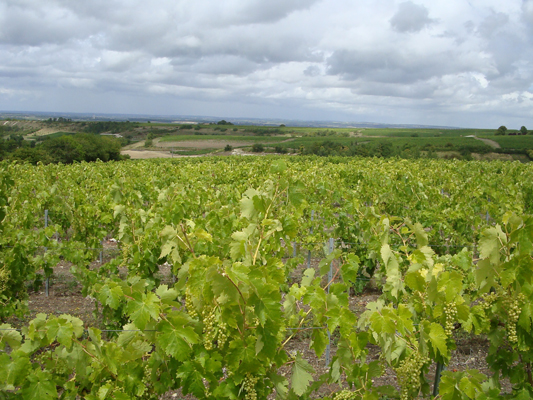
When making cognac there are 4 school of thoughts or concepts.
1. Cognac is an Assemblage or Cognac is a 'House Style': the concept is that cognac is a drinkable perfume hence the blending is necessary to achieve the best formula. And this formula becomes the House's style that is consistent year after year. Again it's like a perfume! The majority of cognac is labelled "Appellation Cognac" or just "Cognac", that does not mean the cognacs with a specific geographic location within the Cognac region are better. It all about choices, having choices and knowing really what you have for judging it for what it is really supposed to be.
2. Cognac is a Terroir: this philosophy is to represent a stereotype exemplifying a terroir profile - typicity is the keyword. They are 6 terroirs, 5 with an appellation, plus one assemblage which is authorized under a specific appellation, namely Fine Champagne which needs to include at least 50% of Grande Champagne and the remaining in Petite Champagne. This philosophy is very French in nature, wine-related, and driven by "marketing" sometimes. Consequently, Grande Champagne and Petite Champagne do not make automatically better cognacs. These 2 terroirs have characteristics which makes them better in general for very old cognacs - that is true!
I am presenting these terroirs also called crus in alphabetical order because they should be no ranking of terroirs but rather understanding of the differences between these terroirs is what matters. Like saying the wine terroirs are France, Italy, Spain, Argentina, USA, Chile, Australia, ... a ranking of France against Chile for instance would make no sense to people who know about wines. Ranking of Cognac terroirs make no sense to people who know about cognacs.
Bois Ordinaires (not an appellation, cognacs made in this terroir have the appellation of Cognac only)
Bons Bois (i.e., appellation)
Borderies (i.e., appellation)
Fins Bois (i.e., appellation)
Grande Champagne (i.e., appellation)
Petite Champagne (i.e., appellation)
Bons Bois (i.e., appellation)
Borderies (i.e., appellation)
Fins Bois (i.e., appellation)
Grande Champagne (i.e., appellation)
Petite Champagne (i.e., appellation)
+ 1 appellation not related to a terroir/geographical location but a blend = Fine Champagne
- Cognac Paradis Cognac Roffignac XO
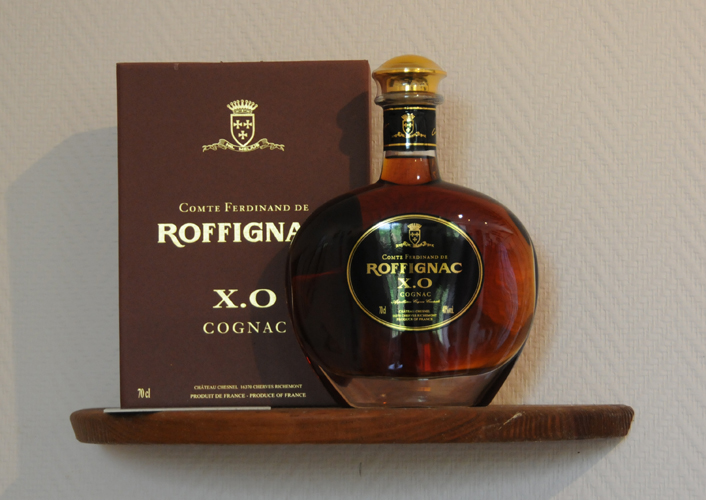
3. Cognac is a Brand: often times marketing is 50% or more of the success of a company and this philosophy drives the concept of cognac as a brand, where consumers do not really drink cognac but brand X.
4. Cognac is an Estate and/or a Vintage: this concept is closer to the wine world where producers try to keep the uniqueness of the spirit which differs from year to year. The grapes harvested a specific year must be distilled that year production and consequently if not blended are making "vintage-like" cognacs. Vintage cognacs in general are very rare which makes them more expensive. They are not more expensive because they are better but again because they are more rare. Vintage and Estate cognacs are fun and exiting but not really "cognac-like" but oddities. This fourth concept is much more "armagnac-like". Domaine and/or Estate cognacs are also not assembled from the 'best' blends available but from the blends only coming from the specific location and/or owner which makes it much more unique and limited. However, the singularity of cognac is the excellence of the product from the 'savoir faire', i.e., 'know how' of the master cellar to manipulate thousands of blends to achieve the 'most' perfect balance. A 'most' perfect balance coming from a single vineyard, or Estate, or Vintage, ... is less likely to be achieved.
Perfection I believe is most likely to be achieved by the freedom of the sourcing of the cognac blends and the liberty in composing. Width of sourcing and authenticity is critical in achieving an outstanding cognac.
Subscribe to:
Posts (Atom)