Showing posts with label Brand. Show all posts

Friday, November 2, 2018

TOP 100 MOST VALUABLE BRAND FROM INTERBRAND LIST HENNESSY 98th

Interbrand Logo
Interbrand Logo

by Nicola Carruthers
9th October, 2018

Hennessy (no.98/100), Jack Daniel's (no.84/100) and Johnnie Walker (no.97/100) have been ranked among the top 100 most valuable global brands on the Interbrand Best Global Brands 2018 list.
Brown-Forman-owned Jack Daniel's - which was ranked 84 on the list - moved two places down from last year to make it the highest-ranking spirit brand for the third year in a row. Interbrand valued the brand at US$5.64 billion, up 6% from 2017.

Diageo-owned Johnnie Walker made the list at 97, falling by one place from last year. Returning to the list for the ninth consecutive year, Johnnie Walker was valued at US$4.73bn - up 7% on last year.
A new entry to the list was LVMH-owned Hennessy Cognac at 98, valued at US$4.72bn.
Smirnoff vodka, which is also produced by Diageo, dropped off the top 100 list after ranking at 97 last year.

The spirits brands are three of six alcohol brands to make the list, which also includes beer brands Heineken, Budweiser and Corona.

"I'm very proud to see Johnnie Walker recognised by Interbrand as one of the 2018 Best Global Brands," said John L Williams, global brand director for Johnnie Walker.

"Johnnie Walker has been the world's most popular Scotch for more than 60 years - a true global giant, and yet one that is crafted by a small team of 12 whisky masters with the finest malts from the four corners of Scotland.

"It's an incredibly exciting time to work on this iconic brand - we've just unveiled White Walker in collaboration with HBO and Game of Thrones, and are hard at work in preparation for a new Johnnie Walker brand experience in Edinburgh."

The ranking is based on three key components that contribute to a brand's cumulative value:
1) the financial performance of the brands and services,
2) the role the brand plays in influencing customer choice,
3) and the strength the brand has to command a premium price or secure earnings for the company.

See the FULL LIST at INTERBRAND

Thursday, March 30, 2017

PORSCHE EXPERIENTIAL LEARNING

Experiencing and consumer experiential marketing are becoming the big words in business these days.

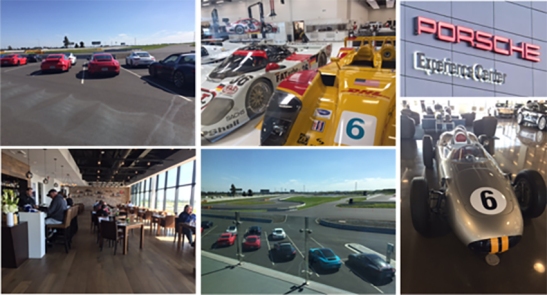
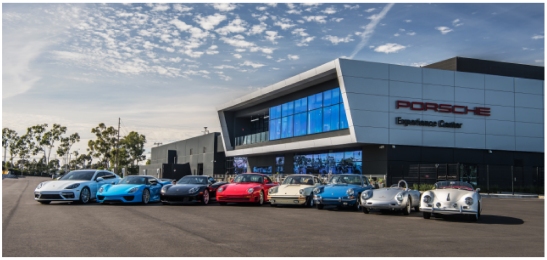
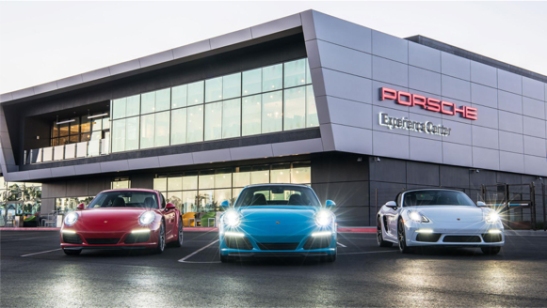
I ran into the Porsche Experience Center in Los Angeles (USA), which just opened in February 2017. What an experience! If you are into cars, sportscars and more so into Porsche, you need to check this place.

Porsche Experience Center

There is another Porsche Experience Center in Atanta (Georgia-USA), which is older.
Porsche Experience Center

The Porsche Experience Center offers driving lessons in the current Porsche for sale in their catalog, so you get to really test drive the car before you buy it. There is also sort of a museum of older race cars which you can see and touch, versus some behind a glass window being worked on as you would buy. There is also a boutique with Porsche accessories such as neat watch, clothing, books, etc. and 2 restaurants: one for a quick bit and a gourmet seat down style.

Porsche Experience Center

I cannot wait for them to open their doors for people to come with their Porsche to drive on the track!

Source: Porsche

Thursday, September 20, 2012

New Brands, Revived Brands and The Angry Birds!


There are over 1000 brands of Cognac that have been created since the foundation of cognac about 500 years ago. There are about 400 brands still existing and many of these brands have existed for a long time, and even they have been in the same families for centuries.

Recently, new brands have come up. The main reason: the democratization of cognac, that is cognac is not anymore just an elitist old man’s drink, but now an artistic, entertaining, hype, and gucci-gucci spirit worldwide. The ascension and development of cognac brands have significantly changed and perhaps insidiously cognac is becoming a mass-marketed product like yogurt and detergent with I call the "deluxury concept".

The good news is that cognac is still made the ‘good old way’. Or at least pretty much. It is not hand picked anymore ... but this is OK. Distillation in pot stills are now longer using manual mechanism and wood or coal but computerized automated systems ... but this is OK too. Ugni blanc grapes are used 99.99% of the times instead of folle blanche or colombard ... not such a big deal.  Vineyards are using modern pesticides, herbicides, and so called proven chemicals ... Not too sure of this one. Aging, storing, selection of wood barrels, assembling, bottling, ... are still pretty much the same.

So what is so different now? A good deal of attention has been on branding & rebranding, positioning and else. Marketing is muscling in!
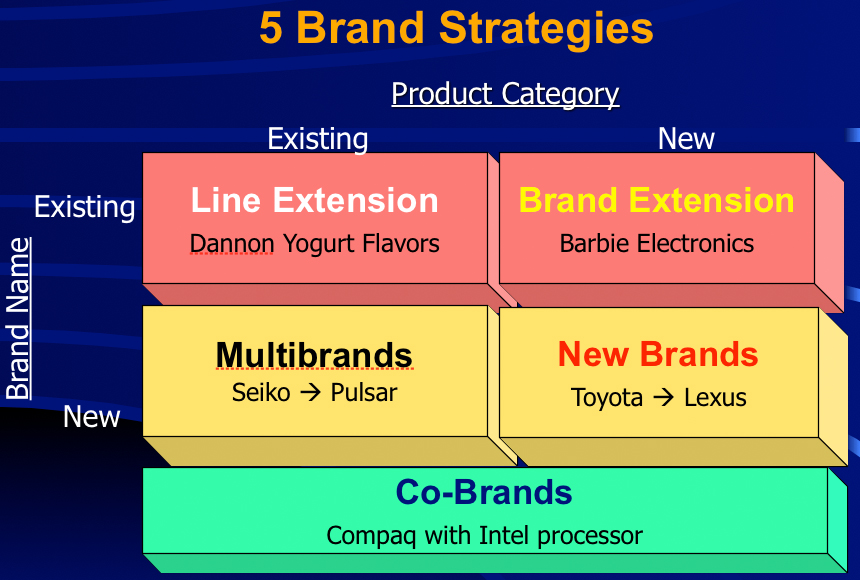
Five Basic Brand Strategies
1)  Therefore, new brands have been created: Cognac AlizĂ©, Cognac Conjure... even Cognac Gucci! But more significantly, a huge number of brand extension have been launched: Hennessy Black, Remy Red, ... and Courvoisier Rose.

2)  Old brands have been revived: Bisquit, Comandon, ... and recently Mestreau from Cognac Grosperrin.
The cognac industry has seen some product line extensions with the creation of mixed drinks based on cognacs: Hpnotiq, Meukow Vanilla, ... and more recently Courvoisier Rosé.

3)  And in some clever way the know-how nested in the region of Cognac has revealed brilliant creations and business ventures using that experience for the benefits of new products: Grey Goose Vodka, Ciroc Vodka, Citadelle Gin, ... and more recently Monteru Single Brandy.

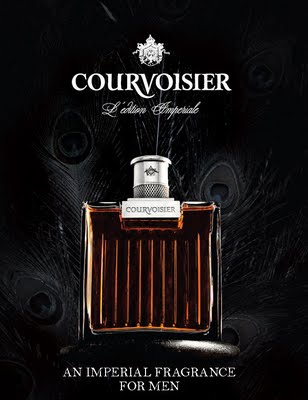
4)  Certain brands have even developped  'brand extensions' with for instance Courvoisier Edition Imperiale perfume.
Courvoisier Edition Imperiale Perfume
5) I leave you to guess what the ‘Angry birds’ could be!
angry-birds
angry-birds

Monday, February 6, 2012

Four Major Cognac Concepts: Cognac is a House Style, Cognac is a Terroir, Cognac is a Brand, and Cognac is a Vintage/Estate


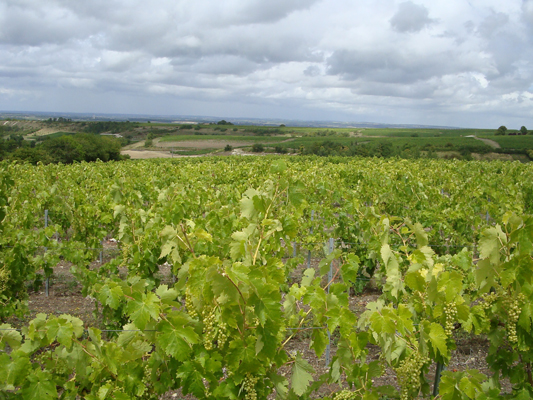
Cognac Paradis Vineyard
Cognac Paradis Vineyard in Borderies
When making cognac there are 4 school of thoughts or concepts.
1. Cognac is an Assemblage or Cognac is a 'House Style': the concept is that cognac is a drinkable perfume hence the blending is necessary to achieve the best formula. And this formula becomes the House's style that is consistent year after year. Again it's like a perfume! The majority of cognac is labelled "Appellation Cognac" or just "Cognac", that does not mean the cognacs with a specific geographic location within the Cognac region are better. It all about choices, having choices and knowing really what you have for judging it for what it is really supposed to be.
2. Cognac is a Terroir: this philosophy is to represent a stereotype exemplifying a terroir profile - typicity is the keyword. They are 6 terroirs, 5 with an appellation, plus one assemblage which is authorized under a specific appellation, namely Fine Champagne which needs to include at least 50% of Grande Champagne and the remaining in Petite Champagne. This philosophy is very French in nature, wine-related, and driven by  "marketing" sometimes. Consequently,   Grande Champagne and Petite Champagne do not make automatically better cognacs. These 2 terroirs have characteristics which makes them better in general for very old cognacs - that is true!
I am presenting these terroirs also called crus in alphabetical order because they should be no ranking of terroirs but rather understanding of the differences between these terroirs is what matters. Like saying the wine terroirs are France, Italy, Spain, Argentina, USA, Chile, Australia, ... a ranking of France against Chile for instance would make no sense to people who know about wines. Ranking of Cognac terroirs make no sense to people who know about cognacs.
Bois Ordinaires (not an appellation, cognacs made in this terroir have the appellation of Cognac only)
Bons Bois (i.e., appellation)
Borderies (i.e., appellation)
Fins Bois (i.e., appellation)
Grande Champagne (i.e., appellation)
Petite Champagne (i.e., appellation)
+ 1 appellation not related to a terroir/geographical location but a  blend = Fine Champagne

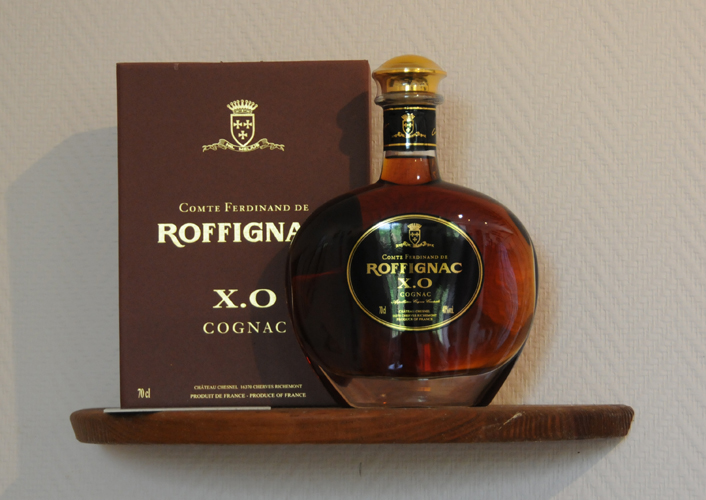
Cognac Paradis Cognac Roffignac XO
3. Cognac is a Brand: often times marketing is 50% or more of the success of a company and this philosophy drives the concept of cognac as a brand, where consumers do not really drink cognac but brand X.
4. Cognac is an Estate and/or a Vintage: this concept is closer to the wine world where producers try to keep the uniqueness of the spirit which differs from year to year. The grapes harvested a specific year must be distilled that year production and consequently if not blended are making "vintage-like" cognacs. Vintage cognacs in general are very rare which makes them more expensive. They are not more expensive because they are better but again because they are more rare. Vintage and Estate cognacs are fun and exiting but not really "cognac-like" but oddities. This fourth concept is much more "armagnac-like". Domaine and/or Estate cognacs are also not assembled from the 'best' blends available but from the blends only coming from the specific location and/or owner which makes it much more unique and limited. However, the singularity of cognac is the excellence of the product from the 'savoir faire', i.e., 'know how' of the master cellar to manipulate thousands of blends to achieve the 'most' perfect balance. A 'most' perfect balance coming from a single vineyard, or Estate, or Vintage, ... is less likely to be achieved.
Perfection I believe is most likely to be achieved by the freedom of the sourcing of the cognac blends and the liberty in composing. Width of sourcing and authenticity is critical in achieving an outstanding cognac.