Showing posts with label Marketing. Show all posts

Friday, June 1, 2018

THE SENSISTIVE SUBJECT OF CRAFT SPIRITS AND CONTRACT DISTILLING

Big Data Logo
Big Data Logo

The Spirits Business talks about a very sensitive subject, they are brave!!

Distilling under contract is a mysterious, but vital, part of the spirits industry. The Spirits Business lifts the lid on the operations and strategies of leading third-party producers, and explains why many so-called craft brands wouldn't be without them.

The production stories behind hundreds - perhaps thousands - of small, independent spirit brands are often left untold. As the craft renaissance grips the industry, romantic narratives of heritage and provenance are positioned front and centre on spirit labels, while the large-scale companies that actually distil or source the liquid in the bottle stay in the shadows.

Industry members and consumers are now becoming more aware of third-party producers, but their emergence into the public consciousness hasn't exactly been smooth. In recent years, some brands that use contract distillers have come under fire for what has been seen as a lack of transparency. The criticism has stretched from gin to American whiskey and beyond, but whiskey producers from the US have borne the brunt of the backlash.

Undoubtedly, third-party producers and suppliers enable fledgling spirits to hasten their launch date and dedicate valuable resources to their brand and market strategies. But it's not only 'craft' brands that benefit from the service; international drinks groups will often purchase sourced spirits to increase and accelerate their production.
Third-party production is even more pervasive when one considers that it also includes neutral grain spirit (NGS), which is used as the base for countless brand leaders in the white spirits world.

The Spirits Business offers 5 examples of bulk suppliers.

1) MGP Ingredients(USA)
One of the most prominent third -party spirits manufacturers in the world is MGP Ingredients. The company was formed in 1941 as an industrial distiller for the war effort, before moving into beverage alcohol some years later. It now owns two distilleries: one that creates vodka, gin and industrial alcohol, which is based in Atchison, Kansas; and another that distils whiskey, based in Lawrenceburg, Indiana.

2) Sasma (Netherlands)
Sasma is a supplier of base spirits and ready- to- bottle products such as Scotch, Bourbon, cachaça and Tequila for the beverage- alcohol industry. Representing a further aspect of third -party spirits, Sasma does not distil, but instead acts solely as a supplier, sourcing liquid from distilleries, traders and agents.

3) Thames Distillery(UK)
Thames Distillery was founded 21 years ago, it is one of the best-known third -party distillers in the UK, and predominantly produces gin and vodka.

4) Creamy Creation(Netherlands & USA)
Established in 1979, Creamy Creation is the market leader in emulsified beverages, supplying mixable and ready made dairy, soy and coconut -based beverages to the international drinks industry.

5) Alcohols Limited(UK)
Alcohols Limited is the owner of Langley Distillery, a prominent UK gin manufacturer that has more than 300 partners around the world. It produces about 70m bottles for the global gin market annually. The business was established in 1805, while the distillery itself dates back more than 200 years, and has been distilling gin since the early 1900s.

There is even trade shows for this industry. For instance, IBWSS gives supermarkets, retailers, restaurants, wineries, distilleries and other buyers a premier international platform to source bulk wine and spirits and meet private label suppliers. The theme of the 2018 IBWSS San Francisco conferenceis “Bulk up your bottom line”. This is your opportunity to learn all about how you can unlock new opportunities in private label, bulk and contract manufacturing.

Things get more complicated when the bulk suppliers start making their own brands too, as one may wonder about the conflict of interests and competiting against your customers.

Source: The Spirits Business

Wednesday, April 11, 2018

FAME AND BOOZE: CELEBRITY APPEAL FOR ALCOHOL BRANDING

Cognac Daily News Spirit icon Fame and Booze

Recent sale of George Clooney's Casamigos tequila to Diageo has stirred a great deal of publicity.

The spirits giant spirit company paid US$700m for Casamigos to start with, and Diageo will potentially pay an extra US$300m based on the brand’s performance over the next 10 years. And recently, Casamigos announced getting into mezcal as well.

The media entertainment does not pay as much as it used to and celebrities have to find new ways to increase their revenue besides through their original craft.

Thus, using their fame they make appearances, endorsements, more concerts, ... etc... anything they can leverage their brand with. Now, because of social media growth as a mean of communication, people are more influenced than ever by publicity celebrities make or just simply generate. No need to buy tabloid magazines anymore. Just follow them on Twitter!

Consequently, endorsing or owning part of a wine/beer/spirit brand has become a recourse to increase revenue for celebrities.

Read about 21 celebrities with their own alcohol brand here.

Reference: Ranker News

Thursday, December 7, 2017

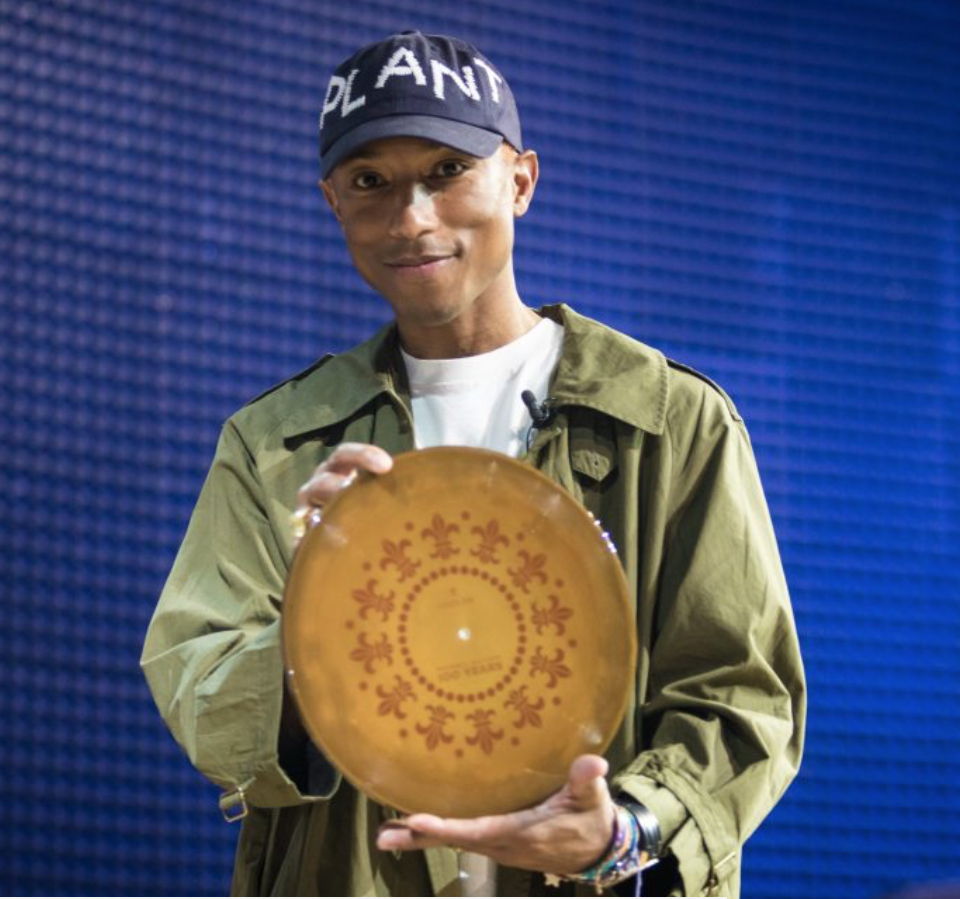
CONSUMER VIRTUAL REALITY AND LOUIS XIII

cognacdailynews-louisXII-Pharrell-Williams-Clay-Record

Louis XIII Cognac’s most recent activation is a great example of how luxury brands are aligning with meaningful causes and influencers to appeal to luxury consumers’ growing desire to feel their purchases are part of something bigger than themselves.

Luxury brands once relied on the tailored customer experience perfected at boutique storefronts on the most fashionable streets of the world’s most glamorous cities to bring their ethos to life.

With a new generation of luxury consumers interacting with brands online rather than in-person, it can be difficult for a brand to differentiate itself and play up the nuances of its legacy, heritage, and superior production.

Thus many brands from across all luxury sectors are turning to activations, or experiential marketing, as an opportunity to provide the high-level, white-glove experience that is missing in the digital customer relationship.

Read more at ...

Source:  Skift

Monday, May 1, 2017

HOW IS BIG DATA GETTING INTO THE SPIRIT BUSINESS?

Big Data Logo
Big Data Logo

Big data and marketing are being used in every industry including the spirit industry now.
According to SmartBrief

"Many beverage companies connect geographical data and purchasing trends to individual stores, while others collect data on influencers and use that data to engage with them in the form of multichannel campaigns and promotions.

Data has also become a powerful tool for optimizing assortments, streamlining supply chains, analyzing trends that appear on social media and planning and executing brand campaigns...

Companies track purchasing decisions at the item level via physical, online and mobile channels, and that data can be applied to making decisions about merchandising, assortment and supply chain.

But at the end of the day, just collecting data isn’t enough. Companies have to take a step further and turn that data into a decision-making tool to help optimize their beverage business."

Source: SmartBrief

Sunday, March 22, 2015

LUXURY MARKETING MY CO-AUTHORED BOOK IS NOMINATION FOR BEST BOOK OF THE YEAR

The creation and consumption of luxury brands is one of my favorite interest.
I am very inspired by luxury artisans and the craftsmanship necessary in making authentic luxury products.
Last year in 2014, I was able to co-author a business book titled "Marketing du Luxe: Stratégies innovantes et nouvelles pratiques" which is a book written in French about the management of luxury companies. I wrote the chapter about the creation and maintenance of luxury brands.
Luxury Marketing Book published in 2014, Marketing du Luxe
I am happy to report this book was recently nominated for the "Prix Académique de la Recherche en Management" which prize is recognizing the best business books of the year written in French.
The book is available at:
Enjoy this video which illustrates how Christian Dior crafts a handbag. A real wonder, Astonishing!
https://youtu.be/ixBYyTYZvYQ

Wednesday, November 7, 2012

PRESIDENT BARACK OBAMA WAS RE-ELECTED TO A SECOND TERM: WHAT LESSON TO LEARN FOR THE COGNAC INDUSTRY?


The political marketing in the USA is very revealing of the cognac marketing in the USA which needs a decisive strategic emphasis on geographic and ethnic targeting. Let me explain using the latest presidential campaign.

Barack Obama, the nation’s first African American president, was elected to a second presidential term Tuesday Novmber 6th 2012, defeating Republican Mitt Romney.

Mr Obama won both the necessary electoral college and the national votes. Today, every media is analyzing the reasons of its victory and they are comparing the two campaign strategies.

President Barack Obama won by stringing together a series of narrow victories in disputed states. Of the election’s seven major battleground states, he won at least six states. Originally, the favorite candidate in the race to the White House, the incumbent President was challenged during the first presidential debate when Mitt Romney appeared more energetic and clearly more appropriate in view of the challenges facing the next President of the United States of America.

However, at the end President Barack Obama won because of two reasons:

(1) His campaign focused 90% of its efforts in the last month over 7 hotly contested states only. No wasted energy and resources!

(2) His marketing was clearly segmenting the minorities in each of the battleground states. His use of technologies to micro-segment and target minorities was exemplary. Barack Obama's campaign was highly segmenting based on ethnicities. President Obama won large majorities among black, Hispanic, Asian and multiracial voters.

Popularity and familiarity is very important. Making accurate predictions is key and often simple patterns may allow one to predict. 

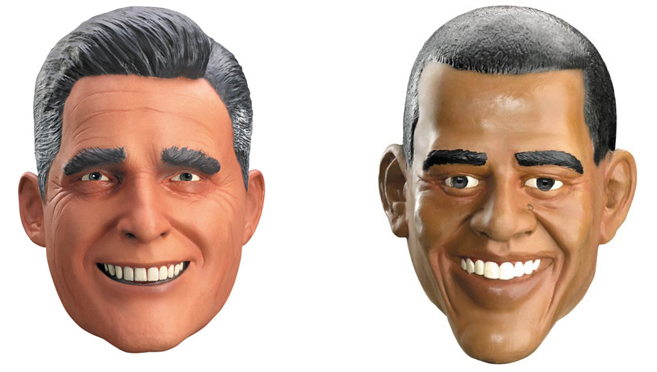
According to Spirit Halloween, the country's largest seasonal Halloween retailer, one may predict the winner of a presidential campaign based on the nationwide sales of candidates' masks weeks prior to the election. Although this method seems unscientific Spirit Halloween has compiled a 'mask index' since 1996 which has accurately predicted the winner of the election since then, including today's winner Barack Obama. Last October 31st, Spirit Halloween registered a 60-40 win for Mr Obama based on its national sales of mask, and thus predicted that Barack Obama would win.
Obama Romney Masks
Obama Romney Masks

Source Photo: http://www.spirithalloween.com
Source: CNN and CNN Money


Thursday, September 20, 2012

New Brands, Revived Brands and The Angry Birds!


There are over 1000 brands of Cognac that have been created since the foundation of cognac about 500 years ago. There are about 400 brands still existing and many of these brands have existed for a long time, and even they have been in the same families for centuries.

Recently, new brands have come up. The main reason: the democratization of cognac, that is cognac is not anymore just an elitist old man’s drink, but now an artistic, entertaining, hype, and gucci-gucci spirit worldwide. The ascension and development of cognac brands have significantly changed and perhaps insidiously cognac is becoming a mass-marketed product like yogurt and detergent with I call the "deluxury concept".

The good news is that cognac is still made the ‘good old way’. Or at least pretty much. It is not hand picked anymore ... but this is OK. Distillation in pot stills are now longer using manual mechanism and wood or coal but computerized automated systems ... but this is OK too. Ugni blanc grapes are used 99.99% of the times instead of folle blanche or colombard ... not such a big deal.  Vineyards are using modern pesticides, herbicides, and so called proven chemicals ... Not too sure of this one. Aging, storing, selection of wood barrels, assembling, bottling, ... are still pretty much the same.

So what is so different now? A good deal of attention has been on branding & rebranding, positioning and else. Marketing is muscling in!
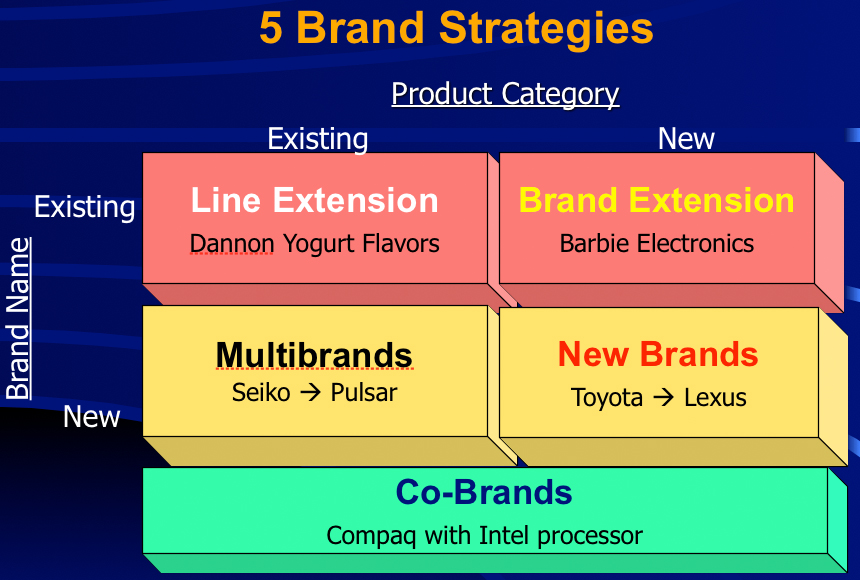
Five Basic Brand Strategies
1)  Therefore, new brands have been created: Cognac Alizé, Cognac Conjure... even Cognac Gucci! But more significantly, a huge number of brand extension have been launched: Hennessy Black, Remy Red, ... and Courvoisier Rose.

2)  Old brands have been revived: Bisquit, Comandon, ... and recently Mestreau from Cognac Grosperrin.
The cognac industry has seen some product line extensions with the creation of mixed drinks based on cognacs: Hpnotiq, Meukow Vanilla, ... and more recently Courvoisier Rosé.

3)  And in some clever way the know-how nested in the region of Cognac has revealed brilliant creations and business ventures using that experience for the benefits of new products: Grey Goose Vodka, Ciroc Vodka, Citadelle Gin, ... and more recently Monteru Single Brandy.

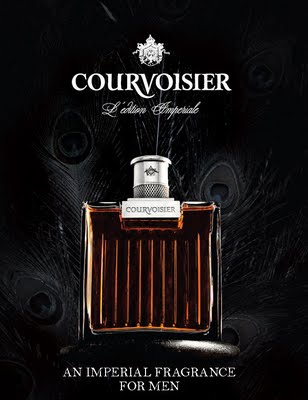
4)  Certain brands have even developped  'brand extensions' with for instance Courvoisier Edition Imperiale perfume.
Courvoisier Edition Imperiale Perfume
5) I leave you to guess what the ‘Angry birds’ could be!
angry-birds
angry-birds