Showing posts with label Wine. Show all posts

Friday, September 21, 2018

THINKING OF SELLING YOUR RARE WINES AND SPIRITS?

Auction Hammer
Auction Hammer


BY MELANIE YOUNG
September 18, 2018

Whether you want to downsize a prized collection or can finally procure an elusive bottle, here are expert tips on how to do it.

Global wine auction sales are on the upswing, according to specialists. Jamie Ritchie, head of Sotheby's global wine program, projects $90 million in sales by year's end, which would top the existing record of $88 million in 2010.

Though nothing has topped the Jeroboam of 1945 Château Mouton Rothschild that sold for $310,700 in February 2007 at Sotheby's.

If time is of the essence and you're comfortable with settling on a firm price, a direct sale may be the best choice. However, with an auction, the sky is the limit.

Like any major transaction, it's wise to comparison shop. The reputation and success rate of an auction house is paramount, along with the size and reach of its customer base.

Many houses have minimums based on the value of the wine lot, which can be one item or an entire collection. Also, the lot's size and value can affect the seller's fee, which ranges from zero to 18%.

It's the auction house's responsibility to appraise the wine and set a price. Munro stresses that sellers should submit important documentation well in advance, especially those with large collections.

Most auctions take place between September and May.
Bordeaux and Burgundy are more in demand but scotch and Japanese whiskies are both growing.

One example is the current offerings slated for t e coming 13th Oct. 2018 auction at Sotheby's New York. A bottle of 1926 Macallan Scotch is priced at $700,000 to $1.2 million, a new lot estimate record for Sotheby's.

Join auction house mailing lists, and review past online sales and recent catalogs to compare what's selling.

Another consideration is the buyer's premium to the auction house, which can range from 19.5-24%.

Friday, June 8, 2018

RECORD SALES PRICE FOR A WINE BOTTLE

cognacdailynews-auction-hammer-icon

A bottle of Vin Jaune, meaning literally ‘yellow wine’ in French, has sold for a record price of over €100,000 to a Canadian buyer.

One of the oldest bottles of wine in the world was sold on Saturday, 26 May, at an auction in France, for €103,700 ($121,000).

The exceptional longevity of the yellow wine of Arbois comes from its particular mode of elaboration, which consists of raising the wines “under veil”; that is to say, with a form of oxidation which transcends perfumes and limits ageing.

The wines have been lovingly cared for by eight generations of heirs of Pierre Vercel (1694-1754), whose family is known to have made wine in Arbois since the 14th century and whose Grand Commander has maintained the tradition. He had remained discreet about the number of bottles he had carefully preserved, and their location.

Source: Vinexpo-Newsroom

Thursday, June 7, 2018

WINE WITH TRANSPRENT LABELS

Clinging Glasses

You Don't Really Know What's in Your Wine. These Winemakers Want to Change That.
Source: vinepair.com
Christine Clark
June 6, 2018

Most of us have a pretty good idea of how we're supposed to be eating - less sugar, more fiber, more good fats. Shop local, pay attention to labels, blah blah blah. We know the drill.
If you try to hold your wine to a similar standard of transparency, however, you'll end up frustrated. There's no requirement for winemakers to list their ingredients. Anywhere.
Unlike most of what we consume, wine is not regulated by the Food and Drug Administration, part of Health & Human Services. It falls under the purview of the Alcohol and Tobacco Tax and Trade Bureau, part of the U.S. Treasury. While winemakers do have to prove that their ingredients are safe, they don't have to list them. A winemaker can add sugar before or during fermentation in a process called chaptalization, potato protein isolate or polyvinyl-pyrrolidone (try saying that five times fast), or many others, and the consumer has no way of knowing.

That's where Donkey & Goat comes in. Pick up a bottle of anything made by this Northern California winery and you'll see an ingredients list that reads, "Hand-Harvested Grapes and Sulphur" or, sometimes, just "Hand-Harvested Grapes." Grab a bottle of wine made by almost anyone else, and look as hard as you want for its ingredients. You probably won't find them. Even a thorough internet search is bound to leave you empty-handed.

Donkey & Goat started labeling the ingredients on some 2014 wines after owner and winemaker Jared Brandt read that Ridge Vineyards in Cupertino, Calif. had started sharing theirs publicly. Brandt adopted the practice as "a way to explain our wines and be transparent," he says
Jared and Tracey Brandt of Donkey & Goat started labeling their 2014 wines.
The company describes itself as making "natural wines," complete with quotation marks. Its grapes are sustainably (and, in some cases, biodynamically) grown on Sierra Nevada, Mendocino, and Napa farms, and the only thing winemakers ever add in the cellar is sulfur, and even that is used minimally and sometimes not at all.

"Sulfur is complicated," Brandt says. Many consumers have a hazy idea that sulfites are added to wines, and that we're not supposed to be fans of that for some reason, but we don't really know why. Headaches, maybe? Off-tasting juice? Asthmatic fits? Whatever the outcome, it doesn't sound good.
Winemakers are legally required to inform consumers when their wines contain sulfites, though only when there's 10 milligrams or more per bottle.
"Wine is allowed to have 125 PPM [parts per million] sulfur for reds and 200 PPM for whites," Brandt says. This translates to 125 milligrams per liter for reds, and 200 milligrams per liter for whites. "Dried fruits can have between 500 and 2,000 PPM of sulfur," he says.

Donkey & Goat wines that do contain sulfur have 25 PPM. "Some books say sulfur is a byproduct of fermentation," Brandt says. "I don't think this is true. We have made wines that have zero detectable SO2." Donkey & Goat's Pet-Nat and Gigi wines contain zero sulfur.

"Many other winemakers add commercial yeast to try and get specific flavors," Brandt says. "Then they add DAP [diammonium phosphate] and yeast nutrients to make that yeast work better. Tannins to make it more tannic. Acid for balance. The list goes on." Some of the weirder ingredients wineries use include gum arabic, or acacia, to round out tannins, and "fish bladder for fining," Brandt says.
Ingredients labels, or the lack thereof, speak to the ways certain laws prioritize companies' marketability over consumer awareness.

"Many ingredients are not required by law to be listed in any product," Brandt says, "In fact, they qualify as 'production aids.'" Velcorin, for example, is an organic dimethyl dicarbonate (DMDC). It's a popular stabilizer used to quell yeasts and bacterial growth in juices, sports drinks, and wines. DMDC is becoming increasingly controversial, though. It's toxic for at least the first four hours after it's added to a liquid, Brandt says. Despite a scary-sounding list of potential hazards, including corrosive runoff and combustible vapors, companies are not legally required to disclose when they've added DMDC to their products to consumers.

"Producers are afraid consumers would care and thus have lobbied to have it as an exemption and not required to be labeled," Brandt says. "Who wants to buy 'fresh-squeezed orange juice' if that's in there, too - which I have been told is very common," he adds.

There's something comforting about knowing exactly what goes into your glass, for sure, but transparent labeling surpasses sentimental marketing, or touchy-feely hyphenates like "all-natural" or "farm-fresh." Food allergies, digestive disorders, and other health concerns are on the rise, both in terms of anecdotal awareness and medical diagnoses. As a result, many of us are scratching our heads and looking for ways to adjust diets and lifestyles.

Learning what's in everything we consume, be it a fast-food cheeseburger or Napa Valley Sauvignon Blanc, empowers us. We ask better questions of our doctors, our food providers, and ourselves.
And we especially appreciate those who give us the answers, free of charge, without our even having to ask.


Wednesday, May 30, 2018

BAD HAILSTORMS IN COGNAC AND DAMAGES IN SOUTH-WEST REGION


Hailstones 'the size of pigeon eggs' devastate Bordeaux vineyards

Source: https://www.telegraph.co.uk/
David Chazan
27 MAY 2018

Hailstorms have devastated thousands of acres of prime Bordeaux vineyards, prompting the French government to promise support for winegrowers, some of whom have lost their entire crop.
Cyril Giresse, a winegrower, said hailstones "the size of pigeons' eggs" destroyed grape buds and left vines bare on Saturday.

"The storm lasted only about 15 minutes, but in some places, there's nothing left at all," said Mr Giresse, who runs the Château Gravettes Samonac in Bordeaux's Côtes de Bourg appellation. "No leaves, no grapes, just the vines stripped as if the grapes had all been picked."
Jean-Dominique Château, another claret producer, said: "I've got nothing left. I've been growing grapes for 33 years and this is the worst storm I've ever seen. Last year we lost 40 per cent of our crop to hail but this year it's going to be an even worse disaster."

Stéphane Travert, the agriculture minister, said the government was assessing the extent of losses and would aid wine producers. "We'll take the necessary measures and we're ready to meet Bordeaux winemakers," he said.

Franck Jullion, the head of the producers' association in the "Blaye Côtes de Bordeaux" appellation, said: "It's a desolate vista, as if the vines had gone back to winter. Estates hit by frost last year will not recover. We're going to need a lot of support and solidarity."
Saint-Emilion, one of the most prestigious Bordeaux appellations, was spared, but parts of Médoc were badly hit, as were Cognac brandy producers in the Charente and Charente-Maritime departments.

Didier Gontier, director of the Côtes de Bourg appellation, said: "Winegrowers say they've got no vines left for next year so this is going to affect two years of production."
Bordeaux is France's largest wine-growing area, with about 300,000 acres of vineyards producing more than 700 million bottles of claret a year, ranging from cheap table wines to some of the world's most acclaimed and expensive vintages.

French wine and spirits exports amounted to more than £11 billion last year.
Wine industry leaders have opposed moves to tighten 1991 laws restricting alcohol advertising. President Emmanuel Macron has backed them, saying he drinks wine at lunch and dinner.
He has infuriated doctors by minimising public health concerns over wine and arguing that spirits and beer pose more of a problem because they are favoured by binge-drinkers.

Wednesday, April 11, 2018

FAME AND BOOZE: CELEBRITY APPEAL FOR ALCOHOL BRANDING

Cognac Daily News Spirit icon Fame and Booze

Recent sale of George Clooney's Casamigos tequila to Diageo has stirred a great deal of publicity.

The spirits giant spirit company paid US$700m for Casamigos to start with, and Diageo will potentially pay an extra US$300m based on the brand’s performance over the next 10 years. And recently, Casamigos announced getting into mezcal as well.

The media entertainment does not pay as much as it used to and celebrities have to find new ways to increase their revenue besides through their original craft.

Thus, using their fame they make appearances, endorsements, more concerts, ... etc... anything they can leverage their brand with. Now, because of social media growth as a mean of communication, people are more influenced than ever by publicity celebrities make or just simply generate. No need to buy tabloid magazines anymore. Just follow them on Twitter!

Consequently, endorsing or owning part of a wine/beer/spirit brand has become a recourse to increase revenue for celebrities.

Read about 21 celebrities with their own alcohol brand here.

Reference: Ranker News

Wednesday, December 6, 2017

COUNTERFEIT WINE BRANDED MOET-HENNESSY REPORTED IN CHINA

LVMH's Moet-Hennessy Unit, and logo 
LVMH's Moet-Hennessy Unit, and logo

Source: the drinks business
by Natalie Wang
5th December, 2017

Following a formal complaint filed by French luxury group Louis Vuitton Moët Hennessy, the Beijing Administration for Industry and Commerce has busted a local Chinese wine company which has been selling counterfeit Rhône wines it claimed were made by Moët Hennessy.

The wines in question, purported to be Côtes du Rhône, are distributed by a company called Shanghai Haotuo International Trading Company Ltd based in Beijing's Fengtai District, and each wine carries a back label stating that it's made by Moët Hennessy, using its trademarked Chinese name, reported Beijing TV.

In fact, Moët Hennessy doesn't make wines in the Côtes du Rhône or indeed any part of the Rhône Valley.

Speaking of one of the wines called; 'Wan De Da Special Reserve', an officer called Zhang Peng with the bureau, explained that: "This is to mislead consumers to let them believe the wine is produced by Moët Hennessy."

However, the wine in question has a front label that says it's a Côtes du Rhône Villages Sablet 2003 with a suspiciously sounding French company name called 'France Henris Co Ltd'. Henris in Chinese sounds phonetically similar to Moët Hennessy's Chinese name.

Another imperial bottle claimed to be made by Moët Hennessy with a Chinese name 'Wei Da Mu Special Reserve' is described as "the most treasured bottle" in the shop. It sells for a staggering RMB 99,999 (US$15,121) a bottle. The wine's label says it's a 2007 Côtes du Rhône Sablet, but its back label says it's made by Moët Hennessy.

According to the report, police found more than 500 bottles of counterfeit wines with labels saying they are produced by Moët Hennessy. The wines' retail prices at the shop range from RMB 300 to RMB 99,999.

In a Chinese statement by Moët Hennessy, the company reiterated that it "under no circumstances" had granted Shanghai Haotuo International Trading Company Ltd any right to use its company name, and the products are not produced by Moët.

It's unclear based on the report if any suspect has been arrested.

This is the latest case taken by Moët to crack down on counterfeit wines using its branded names. Previously the company won a court case against wine auction house Acker Merrall & Condit concerning a counterfeit bottle of Krug Collection 1947.

Wednesday, September 6, 2017

2017 COGNAC HARVEST IS PLANNED ON 10TH OF SEPTEMBER SAYS BNIC

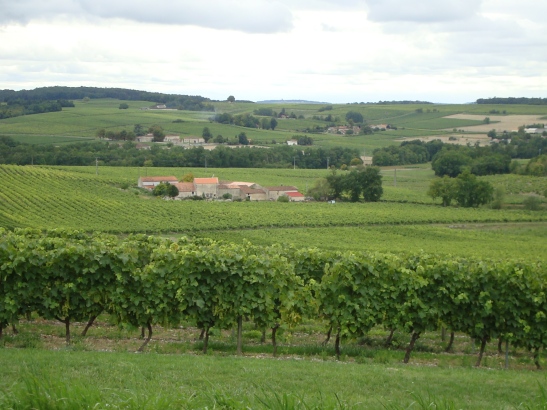
Cognac landscape photo

Harvest was initially expected on 15th Sept. but it has been moved earlier to the 10th September according to Bureau National Inteprofessionnel du Cognac (BNIC). Average date for harvest is historically approx. 23rd Sept.

The BNIC expects that the 2017 will be the smallest harvest since 1945 due to various weather conditions and in particular the late frost in May.
In late August 2017, the average acidity was 11.1 g/L H2SO4 for a  pH of 2.8 and with a potential alcohol % of 7.4%.

The area of the Cognac AOC not damaged by frost can expect 110 to 120 hecto liter per hectar of wine, whereas the frozen vineyard areas will only make 40 to 50 hl/ha, which will make a potential harvest on average for 2017 of 80-90 hl/ha.

Normally, the average is over 100 hl/ha, with an average for the past 10 years being of 107 hl/ha.
This is caused by the lower number of grapes per bunch with 37.5 grapes per bunch compared to the average of 53.5 grapes for the past 10 years.

Surprisingly, the grapes bunch weighted about 420g which is well above the 10 years average of 357g.
The BNIC recommends harvesting grapes with a rate of alcohol of 8.5 to 10.5% for an total acidity above 7.5 g/l H2SO4.

Source: Vitisphere

Thursday, January 5, 2017

CHINA IS PRODUCING EXPENSIVE WINES

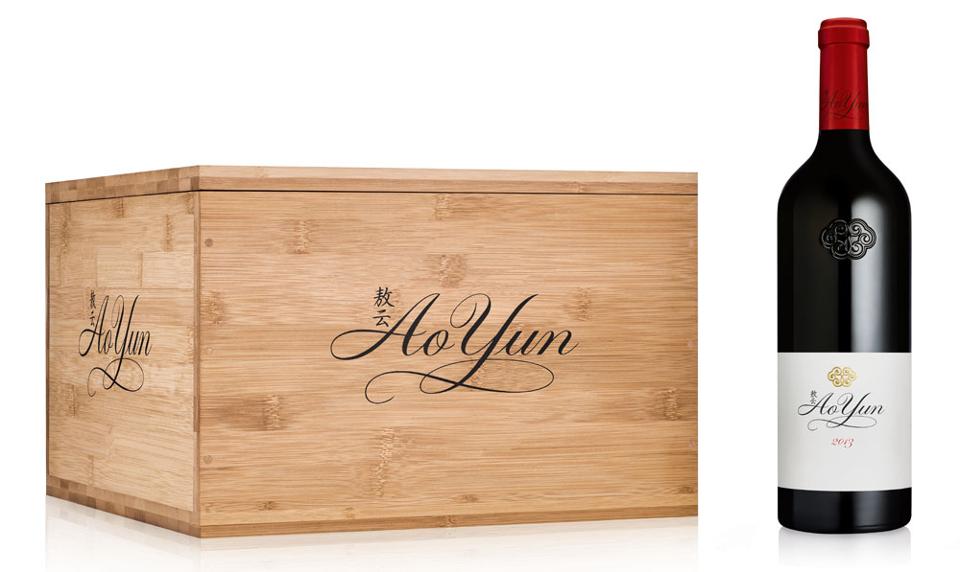
Moet Hennessey is bringing the first high-end wine made in China to US shelves with a price tag of $300 per bottle. Its Ao Yun red wine, meaning "above the clouds," is made in a remote part of the Himalayan plateau, a high-altitude region with steady weather.
cognacdailynews-ao-yun-chinese-wine
Most Expensive wine made in China

The winery is in Yunnan Province, the most southerly in China, hard against the borders of Laos, Vietnam, and Myanmar.

Made of Cabernet-Sauvignon grapes, possibly Cabernet-Franc, vines were planted by Chinese government and nobody is 100% sure.

A new stunning project from M-H worths following...

Source: Forbes

Friday, July 22, 2016

THIERRY PICOULET COLLECTING FINE THINGS

Thierry Picoulet shares 2 passions: one for the rare and finest spirits and the other for small scale cars.
In his store, 'Les Charentes en Boutique' in Jazennes next to Gemozac and Pons in (Charente Maritime), Mr. Picoulet has one of the most exciting collection of fine wine & spirits in the region. 
In particular he has a huge amount of rare whiskies from around the world, and some of the lesser known brands of cognac but also many wines which are considered 'cult wines'.
Thierry Picoulet et Charentes en Boutique

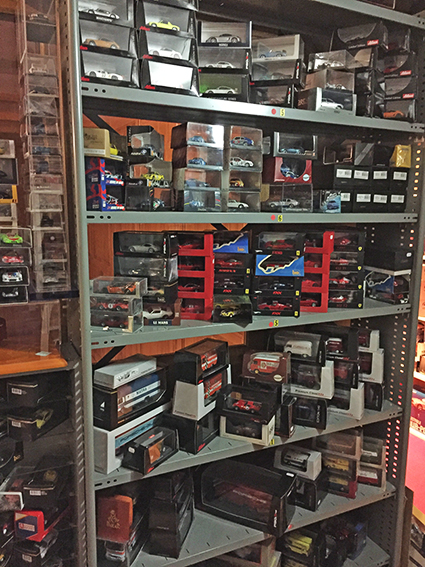
This is downstairs, now step upstairs to find a collection of small scale cars which will take you over 1 hour to look through. Norev, Dinky Toys, Majorette, Britains, Matchbox, etc. Some smaller some bigger, there is enough to make any adults want to return being a kid.
Thierry Picoulet, Charentes en Boutique


Bienvenue en Charente Maritime chez Thierry Picoulet au magasin 'Les Charentes en Boutique'. En bas tout pour Papa, des vins et spiritueux haut-de-gamme, et en haut pour les grands enfants une collection de miliers de petites voitures, certaines des repliques d'autres des models d'origine: Norev, Majorette, Britains, Matchbox, etc.
Prevoyer 3 heures si vous etes un mordu!

LES CHARENTES EN BOUTIQUE
Thierry PICOULET
La Petite Foy - 17260 JAZENNES
Tél.: 05.46.94.57.35 - Courriel : thierry.picoulet@wanadoo.fr

Sources: Sud Ouest

Sunday, October 5, 2014

TV PERSONALITY GIULIANA RANCIC LAUNCHES XO G WINE IN WALMART

TV personality Giuliana Rancic will launch a new wine brand under the label XO, G Wine that will include three varietals in by-the-glass formats. Available at about 1,200 Walmart stores beginning in November, XO, G will include a dry rosé, medium-bodied Pinot Noir (both from the South of France) and a Pinot Grigio from Italy. Four individually-packaged, pre-filled glasses stack together to form a 750-ml. bottle, and a mixed pack will be available for the holidays that features two glasses of Pinot Grigio and two glasses of Pinot Noir. The brand is targeted at female consumers and retails for just under $10 at select Walmart locations.
XO G Wine by Guiliana Rancic
Like many of today’s hottest reality stars, Giuliana Rancic will need to get involved with promotions. I wonder how one can do this with Walmart!!
Another thing this is catching my eye is:
. How can one call a wine XO without getting in trouble with the US Patent and Trademark Office?
. But isn't there a gin already call G'Vine?
I just thought that is a complicated name for a popular wine! 

Wednesday, September 10, 2014

FRANCE IS EXPECTED TO REGAIN ITS POSITION AS THE WORLD'S BIGGEST WINE PRODUCER IN 2014

Government and trade groups from Italy, France and Spain have released wine production forecasts for the year 2014, with France expected to jump over Spain and Italy to become the world’s biggest wine producer. According to France’s Ministry of Agriculture, French wine production is expected to increase by 11% this year, to 46.93 million hectoliters.
2014 Country World Largest Producers of Wines

Italy’s Associazione Enologi Enotecnici Italiani is projecting Italian wine output to fall 13.5%, from 48.2 million hectoliters last year to 41.6 million hectoliters for 2014. According to the Milan-based group, wet weather conditions are primarily to blame, with 12 of Italy’s 15 wine production regions including Piedmont, Veneto, Sicily and Puglia among others set to record volume losses that is believe to be the smallest since 1950.
Spanish wine production, meanwhile, is expected to drop by 26.3%, from 2013’s record 53.55 million hectoliters to 39.44 million hectoliters this year, according to reports from Spain’s Ministry of Agriculture.
As a result, French wines are probably going to be cheaper and more available than before. Hence, it will indirectly help the cognac where French wine might brighten the reputation and remind consumers of French alcoholic beverages.

Monday, June 2, 2014

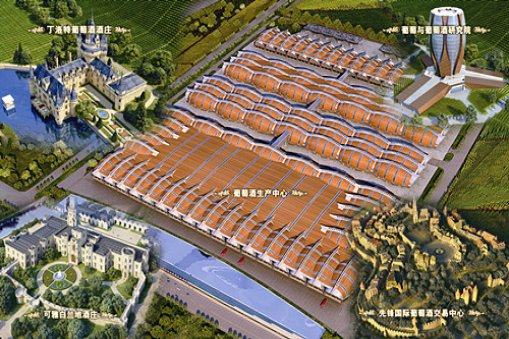
CHINA WILL HAVE THE WORLD'S LARGEST WINE AND BRANDY PRODUCTION PLANT OWNED BY CHANGYU

China’s oldest and largest winery, Changyu Pioneer Wine Co., is to build an international “wine city” in Yantai, Shandong province, at a cost of £600m.
The project, covering an area of 413 hectares, will be home to a national wine research institute and wine production centre.
Changyu Wine City
Changyu Wine City
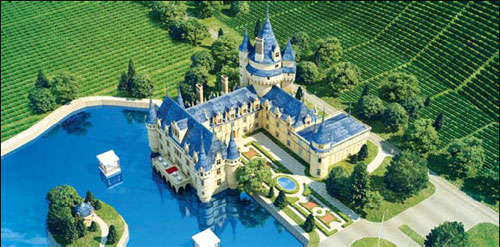
It will also include grape planting areas, an international wine trading center, a European-style village, and two high-end châteaux.
The wine production centre will cover an area of 220,000 square metres, making it one of the world’s largest wine and brandy production plants.
Changyu Wine City
Changyu Wine City
The city – an amalgam of research, winemaking and tourism – is expected to be completed by 2016.
Changyu Pioneer Wine Co. was established in 1892, when cuttings from Bordeaux, Burgundy and Alsace were planted in Yantai.
In 2002, the company built its first French-style château – Château Changyu-Castel – in Yantai in cooperation with the Castel Group, planted primarily with Cabernet Gernischt – a red variety similar to Cabernet Franc.
It has since added a further five châteaux to its portfolio, three of which are operational.
Changyu Wine City
Changyu Wine City
The other three: Château Changyu Baron Balboa in Xinjiang Uygur, Château Changyu Moser XV in Ningxia Hui and Château Changyu Reina in Shaanxi province, are expected to open in the next six months.
In 2006, Changyu collaborated with Canadian company Aurora to build the largest ice wine château in the world near Huanlong Lake in Liaoning province. It has also expanded overseas, with Château Changyu Kely in New Zealand.
Changyu Pioneer Wine Co. is the tenth largest wine company in the world.
Changyu acquired the cognac house on Saulnier street named Roullet-Fransac in 2013.

Friday, November 22, 2013

CLASSICAL CONDITIONING A SIMPLE METHOD USED TO SELL WINE & SPIRITS TO CONSUMERS

I think consumers should learn more about the true origin of products and what the products are meant to be rather than pay attention to vague details.
In most cases, products are bought for the appeals. Either a physical appeal or a brand appeal or a promotion appeal.
. Physical Appeal: people buy with their eyes and are influenced by aesthetics and fashion.
. Brand Appeal: most sold brands are building growth on the concept of popularity.
. Promotion Appeal: either a discount or an extra products or the use of a celebrity endorsement can increase sales.

. More often than not, consumers are blind sided by simple conditional responses. Let's review 2 conditioned stimuli for the liquor industry.
---> Stimulus 1 = Item descriptions

Three Examples of Item Descriptions
Example 1
Matured in both traditional sherry casks and heavily peated casks. On the nose, it displays aromas of dried bitter orange complemented by softer notes of lemon peels, cardamom and anise. The palate is rich with notes of lemon, grapefruit and toffee that merge with rich spiced apple and liquorice undertone. The long finish leaves behind hickory smoke, toasted cloves and light vanilla.
Example 2
On the nose, it displays bold, complex aromas of orange peel, ginger, nutmeg, clove and other baking spices which are complemented by notes of charred oak, caramel, and a hint of gingerbread. Full-bodied and rich on the palate, sweet, warming notes of caramel and vanilla are followed by rye-spice and mint flavors, which blend seamlessly into butterscotch and dark chocolate on the long, crisp finish.
Example 3
It has been carefully distilled to capture the nuance of the malted barley, then aged in new charred American oak barrels for ten months. The resulting spirit is floral with harmonious notes of vanilla, caramel and sweet spice leading to a hint of dark chocolate on the finish.
. These notes were created to signal quality and to appeal to consumers based on conditioned words. In this situation, the conditioned words are: vanilla, orange, caramel, spice, and chocolate in most case.

---> Stimulus 2: ratings
Another typical classical conditioning is the use of ratings. Ratings are made to help consumers quickly make decisions. Consumers in many situations try to save mental energy and for this purpose they learn in many different ways including classical conditioning. Hence, marketers have created these ratings for this purpose, i.e., to create a simple "heuristic" to speed decision making.
Example:
2010 Château de Somewhere ($49.99): It exhibits a deep plum color as well as sweet aromas of kirsch, cassis, licorice and lavender. Richly fruity and pure with low acidity and terrific purity, it should drink well for 10-12 years. 94 points by XX, 92 points by XX, 90 points by XX
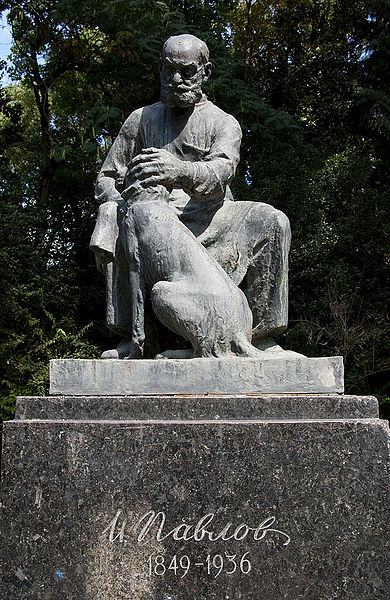
A statue of the Nobel Prize-winning physiologist Ivan Petrovich Pavlov (1849-1936), Institute of Experimental pathology and Therapy, at Sukhumi, Caucasus.
Classical conditioning (also called Pavlovian Conditioning) was made famous by Ivan Pavlov when he revealed the "conditioned reflex" of salivations from his dogs. Pavlov, the "master" was able to dominate his 'dogs' by conditioning them. Classical conditioning is a powerful tool mostly in favor of the marketers (masters) and not so much in favor of the consumers (dogs). Sorry!
Source Photo: Я автор этой фотографии (Wikipedia)

Wednesday, September 26, 2012

GIVE ME BACK MY CHATEAU AND I WILL LET YOU HAVE THE FRIES SAYS THE FRENCH


Chateau Margaux, Chateau Talbot, ... are very famous vineyards in France, specifically in Bordeaux. The use of the term 'chateau' is highly regulated in France and not everyone can use this term unlike in other countries such as the USA.  A news story about the French fighting to limit the use of this term only to French estates came to a pause on Tuesday at the European Union’s wine management committee in Brussels, Belgium.

The European Union’s wine management committee was supposed to approve an application to allow US wine exports to Europe to use the word “chateau,” in what one EU official described as a “purely technical rubber-stamping exercise.”

But this was not accounting for the passionate rivalry between France and California wine producers dating back let's say to the blind tasting competition from 1976 "the jugement de Paris" in which a californian wine won.

French legal representatives will get an extended delay to  present alternative proposals. One may wonder if  people would prefere the term 'castle' to 'chateau': 'Chateau Sainte-Michelle' would be called "Castle Sainte-Michelle" or "Chateau Diana" would become "Castle Diana".  It does not sound good to me!
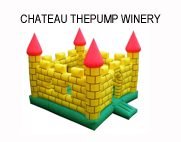
Chateau Thepump Winery
Personally, I have no doubt that the use of the word 'chateau' enhances the brand as it premiumizes  it, and it makes it more sound like old/traditional/ and European style.

It is not deceiving  just good branding as it enriches the product quality perceptions. It creates positive co-branding and country-of-origin effects. 

1/3 of the wines produced and exported from the US goes into Europe. Mondialization and globalization of the wine industry may explain why the term chateau is less discriminatory to French vineyards now than before.  

However, the problem gets more complicated when letting the use to other production areas. Thus, one may expect a "Chateau Hong Kong" or a "Chateau India" to appear soon and then consumers may not know what they are really getting if the term becomes so generic. 

 I do not think we will easily agree on generic terms with a single worldwide regulation to apply.  Hence, one may rather encourage differentiation and region specificities to entertain diversity. In a way a culture is made to tell you where you are coming from and where you are going to.

Who knows what 'cognac' would mean today if someone a long time ago had not protected it?

Source: Reuters India