Showing posts with label Regulations. Show all posts

Thursday, June 7, 2018

WINE WITH TRANSPRENT LABELS

Clinging Glasses

You Don't Really Know What's in Your Wine. These Winemakers Want to Change That.
Source: vinepair.com
Christine Clark
June 6, 2018

Most of us have a pretty good idea of how we're supposed to be eating - less sugar, more fiber, more good fats. Shop local, pay attention to labels, blah blah blah. We know the drill.
If you try to hold your wine to a similar standard of transparency, however, you'll end up frustrated. There's no requirement for winemakers to list their ingredients. Anywhere.
Unlike most of what we consume, wine is not regulated by the Food and Drug Administration, part of Health & Human Services. It falls under the purview of the Alcohol and Tobacco Tax and Trade Bureau, part of the U.S. Treasury. While winemakers do have to prove that their ingredients are safe, they don't have to list them. A winemaker can add sugar before or during fermentation in a process called chaptalization, potato protein isolate or polyvinyl-pyrrolidone (try saying that five times fast), or many others, and the consumer has no way of knowing.

That's where Donkey & Goat comes in. Pick up a bottle of anything made by this Northern California winery and you'll see an ingredients list that reads, "Hand-Harvested Grapes and Sulphur" or, sometimes, just "Hand-Harvested Grapes." Grab a bottle of wine made by almost anyone else, and look as hard as you want for its ingredients. You probably won't find them. Even a thorough internet search is bound to leave you empty-handed.

Donkey & Goat started labeling the ingredients on some 2014 wines after owner and winemaker Jared Brandt read that Ridge Vineyards in Cupertino, Calif. had started sharing theirs publicly. Brandt adopted the practice as "a way to explain our wines and be transparent," he says
Jared and Tracey Brandt of Donkey & Goat started labeling their 2014 wines.
The company describes itself as making "natural wines," complete with quotation marks. Its grapes are sustainably (and, in some cases, biodynamically) grown on Sierra Nevada, Mendocino, and Napa farms, and the only thing winemakers ever add in the cellar is sulfur, and even that is used minimally and sometimes not at all.

"Sulfur is complicated," Brandt says. Many consumers have a hazy idea that sulfites are added to wines, and that we're not supposed to be fans of that for some reason, but we don't really know why. Headaches, maybe? Off-tasting juice? Asthmatic fits? Whatever the outcome, it doesn't sound good.
Winemakers are legally required to inform consumers when their wines contain sulfites, though only when there's 10 milligrams or more per bottle.
"Wine is allowed to have 125 PPM [parts per million] sulfur for reds and 200 PPM for whites," Brandt says. This translates to 125 milligrams per liter for reds, and 200 milligrams per liter for whites. "Dried fruits can have between 500 and 2,000 PPM of sulfur," he says.

Donkey & Goat wines that do contain sulfur have 25 PPM. "Some books say sulfur is a byproduct of fermentation," Brandt says. "I don't think this is true. We have made wines that have zero detectable SO2." Donkey & Goat's Pet-Nat and Gigi wines contain zero sulfur.

"Many other winemakers add commercial yeast to try and get specific flavors," Brandt says. "Then they add DAP [diammonium phosphate] and yeast nutrients to make that yeast work better. Tannins to make it more tannic. Acid for balance. The list goes on." Some of the weirder ingredients wineries use include gum arabic, or acacia, to round out tannins, and "fish bladder for fining," Brandt says.
Ingredients labels, or the lack thereof, speak to the ways certain laws prioritize companies' marketability over consumer awareness.

"Many ingredients are not required by law to be listed in any product," Brandt says, "In fact, they qualify as 'production aids.'" Velcorin, for example, is an organic dimethyl dicarbonate (DMDC). It's a popular stabilizer used to quell yeasts and bacterial growth in juices, sports drinks, and wines. DMDC is becoming increasingly controversial, though. It's toxic for at least the first four hours after it's added to a liquid, Brandt says. Despite a scary-sounding list of potential hazards, including corrosive runoff and combustible vapors, companies are not legally required to disclose when they've added DMDC to their products to consumers.

"Producers are afraid consumers would care and thus have lobbied to have it as an exemption and not required to be labeled," Brandt says. "Who wants to buy 'fresh-squeezed orange juice' if that's in there, too - which I have been told is very common," he adds.

There's something comforting about knowing exactly what goes into your glass, for sure, but transparent labeling surpasses sentimental marketing, or touchy-feely hyphenates like "all-natural" or "farm-fresh." Food allergies, digestive disorders, and other health concerns are on the rise, both in terms of anecdotal awareness and medical diagnoses. As a result, many of us are scratching our heads and looking for ways to adjust diets and lifestyles.

Learning what's in everything we consume, be it a fast-food cheeseburger or Napa Valley Sauvignon Blanc, empowers us. We ask better questions of our doctors, our food providers, and ourselves.
And we especially appreciate those who give us the answers, free of charge, without our even having to ask.

Tuesday, September 30, 2014

CLAIMS OF BEING HANDMADE IS BEING SCRUTINIZED

We have all witnessed the growth of craft beers, craft wines and now crafts spirits. Craft and Artisan Spirits are trendy and so trendy that many brands are claiming to be craft brands or handmade in small batch etc. Even mega large distributors/wholesalers have started 'artisan' and 'craft spirit' portfolio and sales departments.
However, I have mostly personally witnessed a bandwagon effect and a me-too follow up on this.
Fictitious Flavored Spirits
Within the past months a few brands have been under scrutiny about the true statement of being small-batch or craft made. All in all it is catchy marketing and it is hard to decipher what is crafty or handmade or not. At some stage someone had to use their hands in the process and therefore ...
In closely watched case, Tito’s plans to contest lawsuit against its “handmade” claim says  Shanken News Daily.
Drinks marketers are likely reevaluating their label claims in the wake of a lawsuit against Tito’s Handmade Vodka for the 1.3-million-case brand’s claim of being “Handmade.” The suit, filed September 15 2014 in San Diego Superior Court.
A pair of class-action lawsuits filed this month against craft distillers has exposed what many consider the worst-kept secret in craft distilling: Despite the marketing, most liquor is factory-made"says The Denver Post.
Whisky and American Whiskey /Bourbon are faced with the same dilemma: huge demand growth and limited amount of producers, hence the growing number of bottlers trying to claim all kind of things.
For this matter, 'cognac' benefits from a strict controlled appellation. Not only the grapes, but the way the grapes are crushed, the fermentation process, distillation, etc. and another 1000 things are regulated to ensure the quality of the claims. Eventually ALL cognac is by definition produced in small-batch and handmade. However, since 90% or more is blended and distributed by a few brands the end result is mostly processed through large standardizing factories to ensure a repeatable product day after day.
My recommendation read the article from The Denver Post asap!

Wednesday, September 26, 2012

GIVE ME BACK MY CHATEAU AND I WILL LET YOU HAVE THE FRIES SAYS THE FRENCH


Chateau Margaux, Chateau Talbot, ... are very famous vineyards in France, specifically in Bordeaux. The use of the term 'chateau' is highly regulated in France and not everyone can use this term unlike in other countries such as the USA.  A news story about the French fighting to limit the use of this term only to French estates came to a pause on Tuesday at the European Union’s wine management committee in Brussels, Belgium.

The European Union’s wine management committee was supposed to approve an application to allow US wine exports to Europe to use the word “chateau,” in what one EU official described as a “purely technical rubber-stamping exercise.”

But this was not accounting for the passionate rivalry between France and California wine producers dating back let's say to the blind tasting competition from 1976 "the jugement de Paris" in which a californian wine won.

French legal representatives will get an extended delay to  present alternative proposals. One may wonder if  people would prefere the term 'castle' to 'chateau': 'Chateau Sainte-Michelle' would be called "Castle Sainte-Michelle" or "Chateau Diana" would become "Castle Diana".  It does not sound good to me!
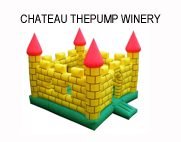
Chateau Thepump Winery
Personally, I have no doubt that the use of the word 'chateau' enhances the brand as it premiumizes  it, and it makes it more sound like old/traditional/ and European style.

It is not deceiving  just good branding as it enriches the product quality perceptions. It creates positive co-branding and country-of-origin effects. 

1/3 of the wines produced and exported from the US goes into Europe. Mondialization and globalization of the wine industry may explain why the term chateau is less discriminatory to French vineyards now than before.  

However, the problem gets more complicated when letting the use to other production areas. Thus, one may expect a "Chateau Hong Kong" or a "Chateau India" to appear soon and then consumers may not know what they are really getting if the term becomes so generic. 

 I do not think we will easily agree on generic terms with a single worldwide regulation to apply.  Hence, one may rather encourage differentiation and region specificities to entertain diversity. In a way a culture is made to tell you where you are coming from and where you are going to.

Who knows what 'cognac' would mean today if someone a long time ago had not protected it?

Source: Reuters India

Saturday, November 19, 2011

Should Legislation Forbid Liquor-Related Messages in Lyrics?

Music industry and musicians are not making as much money as before because the music industry as significant changed since loosing revenues from selling records because of illegal downloading and sharing. So musicians are increasing their ties with branded goods. This phenomenon has significantly last June 2011 when the Majors (meaning the big production companies) decided to recover expenses from deals musicians used to be making directly from product placements and such. Hence, the current high level of appearances of big alcoholic brands in popular music is a consequence of strengthening ties between the alcohol companies and music industries. So much that a large number of celebrities have now launched their own brand of spirits. Nobody has been able to download a vodka yet and these businessmen/musicians are encouraged to find other streams of revenues. According to a recent study teens hear 34 liquor brands message a day in rap and hip-hop music since they listen to music on average 2 1/2 hours per day. The problem is that adolescent are increasingly having problems with abuse and addiction of alcoholic beverages and the lyrics from these songs may appear like underage advertising and share some responsibility with alcoholic related issues with teens.
see FOX NEWS for more details: http://tinyurl.com/3f5d22n
see ABC NEWS for more details: http://tinyurl.com/3ruvwnt
I hope the music industry takes a position on this matter before it is taken by legislation.