Showing posts with label Craft. Show all posts

Tuesday, October 16, 2018

UNIVERSITY OF SPIRITS IN THE COGNAC REGION CELEBRATES CRAFT COGNAC WITH LE GARAGE BAR & COMANDON

Association Elixir University Eaux-de-Vie Logo

Le Garage Bar Logo
Le Garage Bar Logo

Comandon Logo
Comandon Logo

Cognac and Cocktail Event in Cognac, France.

Organised by Association Elixir from the Université des Eaux-de-Vie from Segonzac and Le Garage Bar in Cognac.

Le Garage Bar is an iconic bar in Cognac owned by the Berniers for almost 20 years. Originally, the bar was a garage dealership for DeDion, Panhard and other luxury French. Now, Le Garage Bar has kept this spirit but changed into a trendy and fun bar in Cognac where everyone can relax and taste a cognac cocktails.

Le Garage Bar in Cognac, France

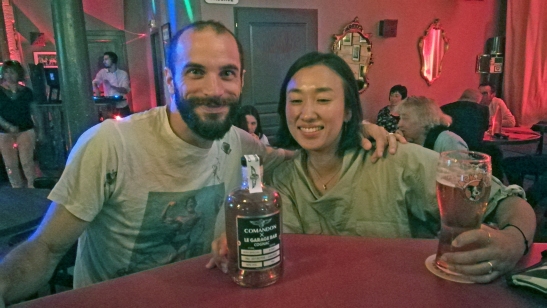
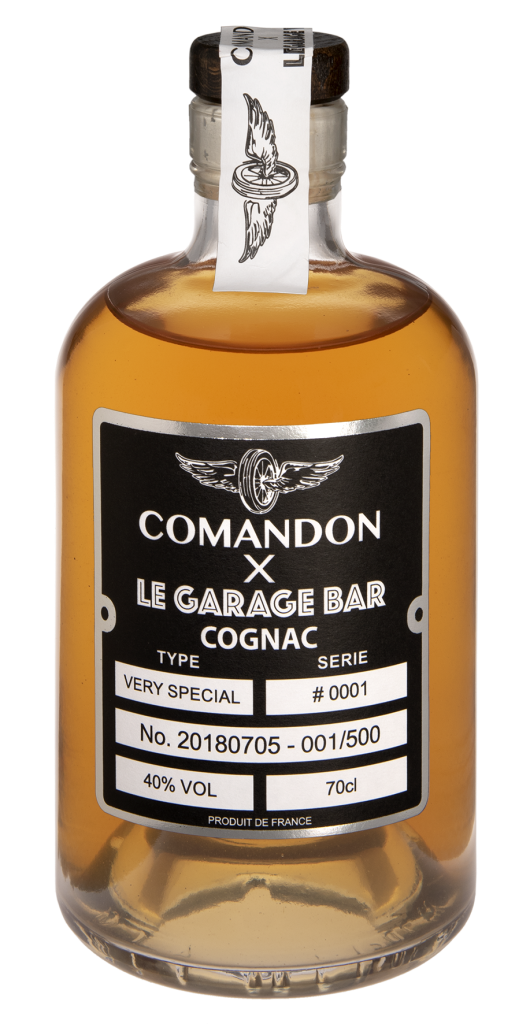
You will taste the new cognac Comandon X Le Garage Bar.

When: Thursday 25th October 2018
When: Le Garage Bar: 3 rue de l'isle d'or, 16100 Cognac, France
Starting at 7pm

Le Garage Bar will serve 4 Cocktails made with the unique small batch cognac produced by Comandon, le Comandon X Le Garage, fabriqué en lot unique et avec une passion artisanale.
COMANDON X LE GARAGE COGNAC, CRAFT, SMALL BATCH, LOT UNIQUE, EDITION LIMITEE, LIMITED EDITION, SANS FILTRATION A FROID, UN-CHILLED FILTRED
COMANDON X LE GARAGE COGNAC, CRAFT, SMALL BATCH, LIMITED EDITION, UN-CHILLED FILTRED, SINGLE DISTILLERY

7 € per cocktail or 12 € for 2 cocktails

Specialty foods will be availble exclusively made for this event by the chef of Le Garage Bar.

This event will profit and fund/donation to the Elixir Club, student club from the University des Eaux-de-Vie, so as to offer scholarships to finance the last year trip which is part of the curriculum for the Master 2 Management of Spritis Business in Segonzac, France.

Monday, July 23, 2018

MORE AND MORE SPIRITS DISTILLERIES IN THE USA

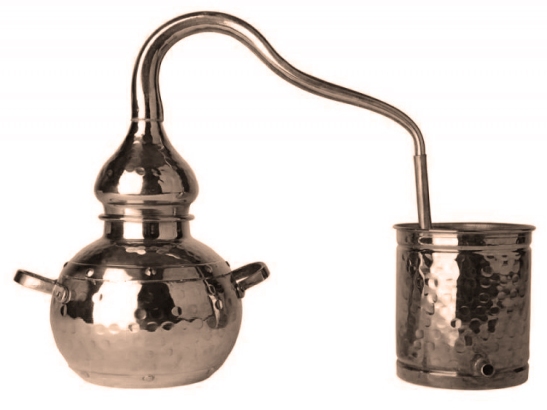
Craft Pot Still Distillery


The number of craft distilleries in the USA is ten times larger in 10 years. This is showing a healthy growth.
Original Title: Number of US craft distilleries rises by 26%
Source: beveragedaily.com
July 18, 2018

In 2016 there were 1,315 active distillers, which rose to 1,589 in 2017, according to figures compiled by the American Craft Spirits Association (ACSA), Park Street Imports, and the IWSR.
A craft spirits producer is defined by the ACSA as one that has not removed from bond more than 750,000 proof gallons; markets itself as craft; is not openly controlled by a large supplier and has no proven violation of the ACSA Code of Ethics.

All about local?

The West boasts the largest number of distilleries (32.7% of total US craft distilleries), but the South - with classic spirits states like Texas, North Carolina and Kentucky - comes a close second (29.3%). The Midwest accounts for 19.1% and the Northeast 18.9%.
California is the state with the most distilleries: a total of 148, which makes up 9.3% of the nation's total. This is followed by New York, Washington, Texas and Colorado.

On average, more than half of a craft spirit producer's US sales come from within its home state (18% at the facility and 34% outside its premises).
"Nearly one-fifth of all sales take place at the production facility, underscoring the importance of tasting rooms and on-site retail to the bottom line,"? says ACSA in its 2017 annual report.

Meanwhile, employment in the craft spirits industry has grown nearly 50%: from 13,239 full time jobs in 2016 to 19,579 jobs in 2017.
The ACSA highlights 2017's 'most game-changing moment' as when Congress passed the Craft Beverage Modernization and Tax Reform Act (CMBTRA) on December 19 as part of the larger Tax Cuts and Jobs Act.

"The significance of the tax vote cannot be overstated, for it is the first time in modern history that the federal government has acted to lower the Federal Excise Tax (FET) on the nation's small craft distillers," ?explains the ACSA.

"The legislative action has helped level the playing field for spirits within the broader craft beverage space, putting distillers on par with breweries and wineries. Prior to the law's enactment, a craft spirits producer had paid 5.4 times more FET than a craft brewer and 16.4 times more FET than a small winery, for equal quantities of beverage alcohol.?

"While it certainly is a time to celebrate, our work is only just beginning. ACSA's priority now is to ensure that Congress votes to make the tax relief permanent."?
The American Craft Spirits Association is a registered non-profit trade group representing the U.S. craft spirits industry.

Thursday, June 7, 2018

CAN ANCIENT INGREDIENTS MAKE BETTER SPIRITS TODAY?

Heritage Corn Craft Whiskey’s Final Frontier?
Having tapped the bounty of heirloom grains, distillers are turning to the unexplored diversity of heritage corn to add nuance to their whiskeys.
JUNE 6, 2018 story: KARA NEWMAN

Once upon a time, nobody cared for whiskey being made with Rye, Corn or Wheat...
Now people are into details. What kind of corn?
Just a little over a century ago, hundreds of varieties of corn grew across the fields of the United States.

Today, almost all corn-based whiskey, including bourbon, is sourced from a single type of corn. But some craft distillers are trying to revive those ancient strains, creating spirits with greater nuance by stretching back to the past.

This sort of obsessiveness has become a feature of the craft whiskey movement. But even as producers increase their focus on the sourcing of grainslike ancient strains of rye, and even how they’re malted, corn remains the last frontier.
See, article Souce below for more details ...

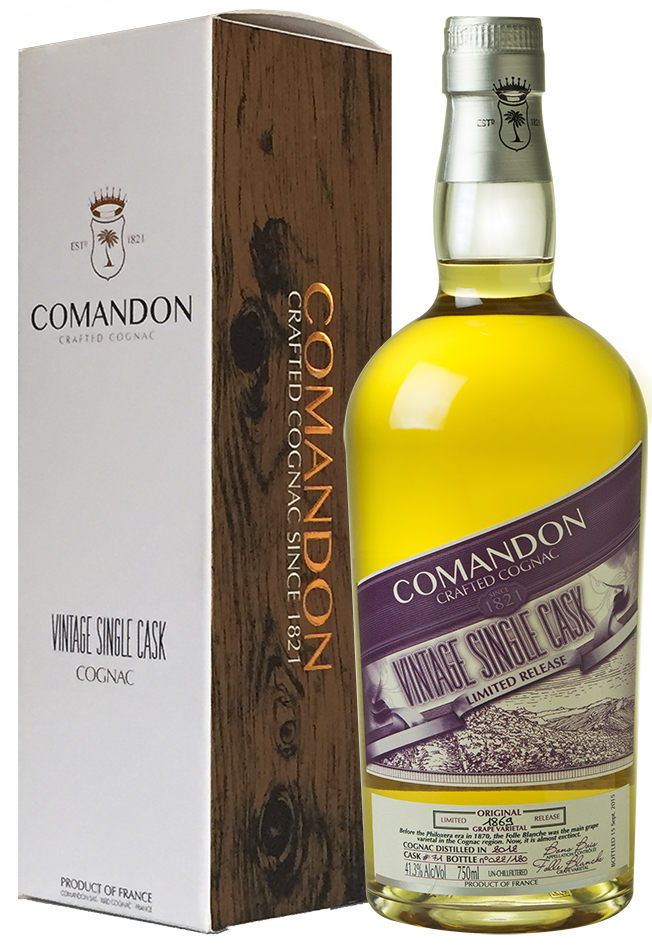
That reminds me, that in 2015 I revived the concept of 1870 cognac by producing a cognac 'à la pre-phylloxera way' that is using single grape 'Folle Blanche', single cask, vintage and why not from Bons Bois with a higher proof which is looked down for no real reasons besides commercial reasons. I did not do high proof or cask strength because one as to go with baby steps. All of this was too much at once and it was wise to get a few great and 'good old' concepts first and later we will see!

Meet Comandon Cognac 2012 Single Cask Folle Blanche from Bons Bois 41.3% Alc/Vol.
Only 120 bottles were released in the USA and we sold them all to aficionados who were paying attention.
COMANDON VSC BB Folle Blanche 2012 #71 Box
Source: PUNCH, Comandon

Friday, June 1, 2018

THE SENSISTIVE SUBJECT OF CRAFT SPIRITS AND CONTRACT DISTILLING

Big Data Logo
Big Data Logo

The Spirits Business talks about a very sensitive subject, they are brave!!

Distilling under contract is a mysterious, but vital, part of the spirits industry. The Spirits Business lifts the lid on the operations and strategies of leading third-party producers, and explains why many so-called craft brands wouldn't be without them.

The production stories behind hundreds - perhaps thousands - of small, independent spirit brands are often left untold. As the craft renaissance grips the industry, romantic narratives of heritage and provenance are positioned front and centre on spirit labels, while the large-scale companies that actually distil or source the liquid in the bottle stay in the shadows.

Industry members and consumers are now becoming more aware of third-party producers, but their emergence into the public consciousness hasn't exactly been smooth. In recent years, some brands that use contract distillers have come under fire for what has been seen as a lack of transparency. The criticism has stretched from gin to American whiskey and beyond, but whiskey producers from the US have borne the brunt of the backlash.

Undoubtedly, third-party producers and suppliers enable fledgling spirits to hasten their launch date and dedicate valuable resources to their brand and market strategies. But it's not only 'craft' brands that benefit from the service; international drinks groups will often purchase sourced spirits to increase and accelerate their production.
Third-party production is even more pervasive when one considers that it also includes neutral grain spirit (NGS), which is used as the base for countless brand leaders in the white spirits world.

The Spirits Business offers 5 examples of bulk suppliers.

1) MGP Ingredients(USA)
One of the most prominent third -party spirits manufacturers in the world is MGP Ingredients. The company was formed in 1941 as an industrial distiller for the war effort, before moving into beverage alcohol some years later. It now owns two distilleries: one that creates vodka, gin and industrial alcohol, which is based in Atchison, Kansas; and another that distils whiskey, based in Lawrenceburg, Indiana.

2) Sasma (Netherlands)
Sasma is a supplier of base spirits and ready- to- bottle products such as Scotch, Bourbon, cachaça and Tequila for the beverage- alcohol industry. Representing a further aspect of third -party spirits, Sasma does not distil, but instead acts solely as a supplier, sourcing liquid from distilleries, traders and agents.

3) Thames Distillery(UK)
Thames Distillery was founded 21 years ago, it is one of the best-known third -party distillers in the UK, and predominantly produces gin and vodka.

4) Creamy Creation(Netherlands & USA)
Established in 1979, Creamy Creation is the market leader in emulsified beverages, supplying mixable and ready made dairy, soy and coconut -based beverages to the international drinks industry.

5) Alcohols Limited(UK)
Alcohols Limited is the owner of Langley Distillery, a prominent UK gin manufacturer that has more than 300 partners around the world. It produces about 70m bottles for the global gin market annually. The business was established in 1805, while the distillery itself dates back more than 200 years, and has been distilling gin since the early 1900s.

There is even trade shows for this industry. For instance, IBWSS gives supermarkets, retailers, restaurants, wineries, distilleries and other buyers a premier international platform to source bulk wine and spirits and meet private label suppliers. The theme of the 2018 IBWSS San Francisco conferenceis “Bulk up your bottom line”. This is your opportunity to learn all about how you can unlock new opportunities in private label, bulk and contract manufacturing.

Things get more complicated when the bulk suppliers start making their own brands too, as one may wonder about the conflict of interests and competiting against your customers.

Source: The Spirits Business

Thursday, August 24, 2017

BRANDY RESURRECTION IN THE USA FUELED BY HUGE PUSH FROM E&J GALLO

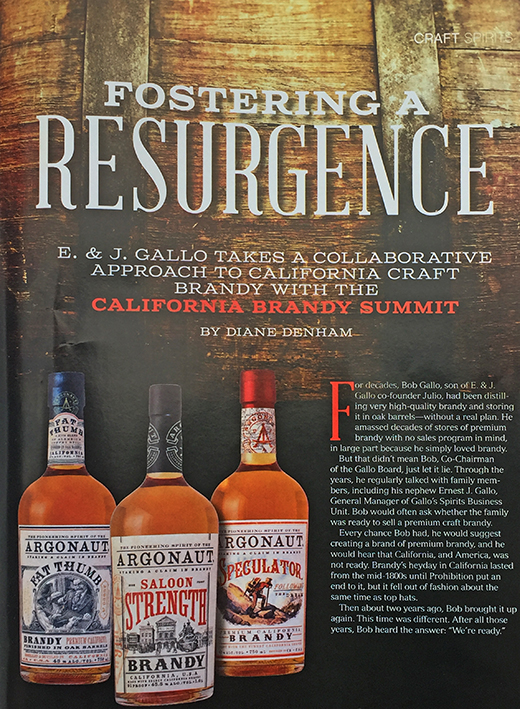
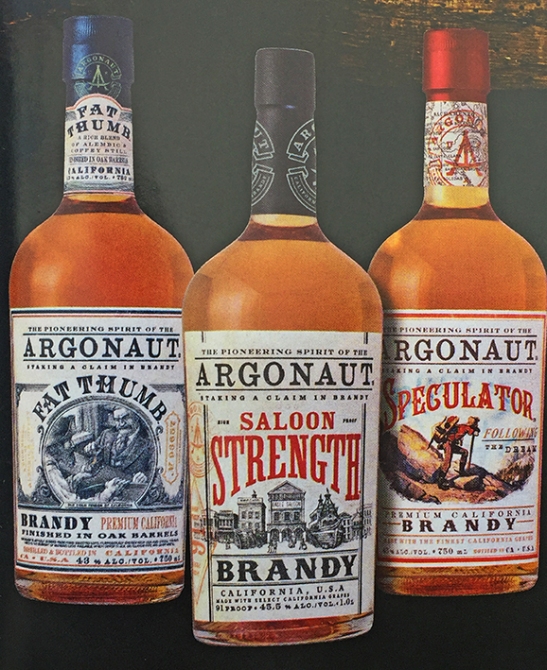
[cArgonaut Brandy is new, by E&J Gallo
Argonaut Brandy is new, by E&J Gallo


[ENG] E&J Gallo, a massive and trend-making machine company in the wine & spirits industry is making news for its recent stake into the super premiun and craft brandy category in the USA. First, E&J Gallo released late July 2017 its long awaited Brandy Argonaut which is inspired by the brandy movement prior to prohibition.
Then, they acquired Brandy Germain-Robin mid-August. Clearly something huge is going to happen now!

Argonaut Brandy, 3 different styles, produced by E&J Gallo

[FR] Ca bouge dans la categorie 'Brandy' aux USA, j'ai meme envie de dire que ca bouge beaucoup.
Fin juillet 2017, E&J Gallo lance Brandy Argonaut, un brandy craft a la mode americaine, plutot Californienne devrais-je dire.
Et mi-aout 2017, E&J Gallo, encore, prend acquisition de la maison prestigieuse Brandy Germain-Robin.
Mais qu'est-ce qui se passe?

Sources: Gallo, Argonaut Brandy, Tasting Panel Magazine

Thursday, July 20, 2017

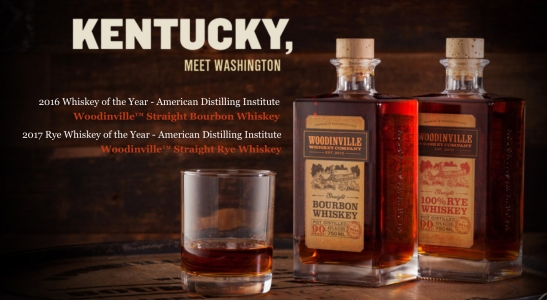
WASHINGTON STATE LARGEST DISTILLERY OF AMERICAN WHISKEY BOUGHT BY CONGLOMERATE MOET HENNESSY

Woodinville Whiskey 
Woodinville Whiskey

Woodinville Whiskey Co., another craft distillery has been bought out but this time by a huge Cognac & Champagne conglomerate, ie, Moët Hennessy.
This is the first time Moët Hennessy are making a move into the craft spirit movement. We know of their ownership of scotch whisky Glenmorangie and Ardberg, but they did not own any small craft spirits.

This follows a trend, last year Pernod bought West Virginia's Smooth Ambler Spirits Co., while Remy Cointreau acquired Westland Distillery also located in the State of Washington.

The sale is a strategic move by the founders Brett Carlile and Orlin Sorensen to help Washington State's largest distillery to grow and expand since establishement in 2010.
Originally, the whiskeys were only available in the State of Washington but one can imagine this will change now.

Source: Woodinville Whiskey Co.

Tuesday, June 20, 2017

COGNAC INNOVATION AT VINEXPO 2017

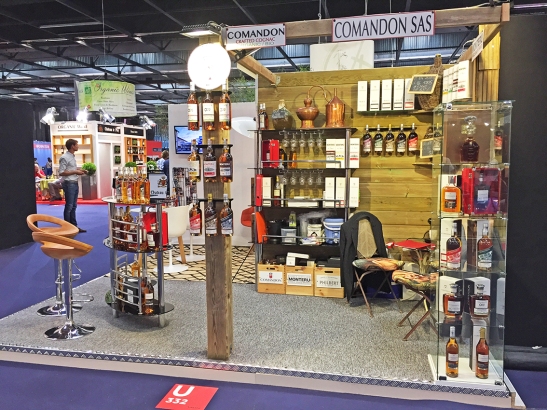
[caption id="attachment_5346" align="aligncenter" width="547"]Vinexpo 2017 - Limited Edition Cognac, Showing Comandon #Cognac #luxury #Vinexpo
Vinexpo 2017 - Limited Edition Cognac, Showing Comandon[/caption]

Comandon Cognac for the 4th times in a row is showing its evolutionary and revolutionary cognac selections. From its pioneering single casks, about 50 of them to the single batch, called One-Off selections, with a new organic line of cognac to choose from.

The 2010 and 2014 World Best cognac winner is now available in 22 countries and is looking beyond (2 times world best cognac from the San Francisco World Spirits Competition).

Tuesday, May 23, 2017

CONSUMERS ARE LOOKING FOR AMERICAN BRANDY

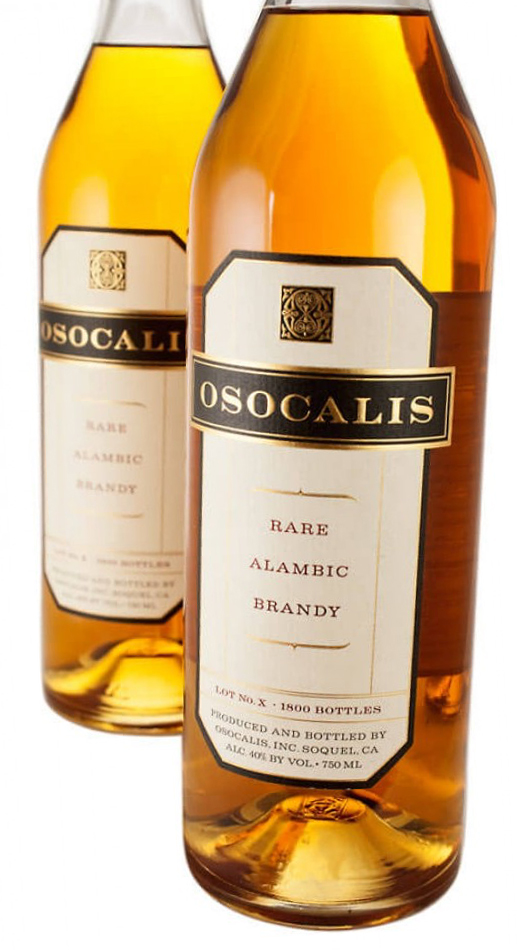
American Brandy Osocalis
From Shanken News

Tuesday, May 23, 2017


American Brandy Is Enjoying A Renaissance

Spurred by the craft movement, domestic brandies are starting to catch fire in the marketplace. Brandy’s rise is an extension of the surge in other brown spirits, and part of an ever-broadening repertoire of drinks being explored by today’s adventurous consumers.

The big four American brandies—E.&J., Christian Brothers, Paul Masson and Korbel—still account for 93% of the category, according to Impact Databank. But the dynamism surrounding craft brandies has the industry taking notice. Brian Bowden, senior vice president and general merchandise manager for spirits, beer, tobacco and beverages at BevMo, expects to add more artisanal brandies this year. “We’ve seen an increase in all our American brandies, from everyday labels like E.&J., Korbel and Christian Brothers to more artisanal brands like St. George and Clear Creek’s fruit brandies,” Bowden says.

American brandy has retained a solid consumer base for decades. Sales rose steadily through the 1990s and 2000s, reaching 7.23 million cases by 2010, according to Impact Databank. Last year, category volume grew an estimated 5.5% to 7.8 million cases. Category leader E.&J. rose 7.5% to 3.9 million cases last year, driven by its Peach and Apple extensions. Meanwhile, Constellation’s Paul Masson surpassed 2 million cases in 2016 on double-digit growth. Korbel, marketed by Brown-Forman, sells about 290,000 cases annually, while Heaven Hill's Christian Brothers is at roughly 1.1 million cases.

Todd Kennedy, brand director for Korbel, says that even a hefty retail price increase—from $13 to roughly $18 a 1.75-liter bottle—only temporarily destabilized the Korbel brand. “We were initially delisted by some major retailers,” Kennedy says, noting that the increase was necessary due to rising grape and production costs. “But they came back to us after four or five months.”

While American brandy’s core demographic is the baby boomer and older market, millennials are driving growth. “Brandy has shifted to younger consumers,” Bowden notes. “They’re not necessarily trading over to brandy, they’re just adding it into their cocktail choices.”

Christopher Brian, bartender at New Orleans restaurant Coquette, notes the emergence of a middle tier for brandy. “For too long, the options were either Cognac, which is upwards of $40 or $50, or the cheap stuff for $8 or $9,” he says. “There was a dearth of well-made brandies that could be put into cocktails. Now the mid-tier range—$20 to $40—is emerging.” He says offerings from regional producers—most notably Louisville, Kentucky–based Copper & Kings, whose brandies are aged in Bourbon barrels—are resonating with his customers.

When Ansley Coale began making Germain-Robin brandy in the early 1980s, the craft brand garnered praise from critics, but didn’t gain widespread consumer acceptance. That situation may be finally changing. “After 30 years in the desert, suddenly everyone is paying attention to American brandies,” says Coale, cofounder of Germain-Robin and president of Ukiah, California–based Craft Distillers. Copper & Kings founder Joe Heron agrees. “Much more adventurous consumers have been the driver,” he says, noting that they’re typically younger than traditional brandy drinkers.

Todd Randall, vice president of St. Louis-based Randall’s Wines and Spirits, says consumers who buy American craft brandies are deliberately searching for them. “Certain customers come in looking for brands like Osocalis, Leopold Bros. and Copper & Kings,” Randall says. “They’re expensive—around the same price as a high-end Scotch or Bourbon.”

Sunday, May 21, 2017

HOW IS COGNAC EXPANDING INTO NEW TARGETS?

Cognac Landscape
Cognac Landscape

Cognac producers are looking at cocktails, product innovations (craft cognac) and new type of consumers to expand says Reuters in this video and article.

The purpose is to widen the consumer base without alienating the current and sort of traditional cognac customers, ie, Chinese and African American.

This is a rather difficult task as one can imagine that talking about celebrity appeals such as rappers and terroirs at the same time might be rather confusing.

Source: Reuters TV

Wednesday, May 17, 2017

DETECTING CRAFT COGNAC

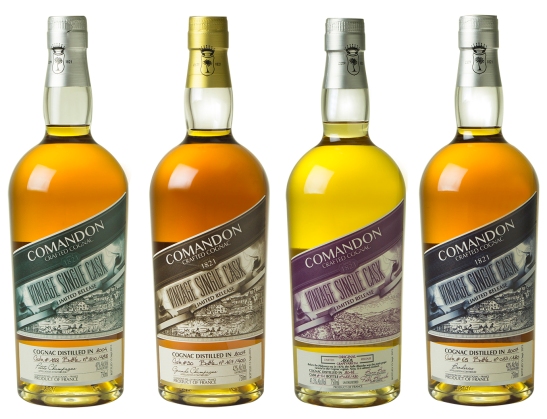
Comandon Vintage Single Cask 2017

There has been a lot of discussions on what makes a spirit a craft spirit.
Perhaps its size, the volume of bottles being produced, family owned, ... etc...

However, it recently occured to me what craft may mean.

Comandon Cognac is increasingly becoming synonymous with "craft cognac" while reinventing itself. Comandon is a revived 1821 cognac brand once one of the largest producer of cognac in volume and sales that puts innovation and terroir at the heart of its process.  Much of its purpose is to question the traditional standards and to offer more innovative alternatives.

In particular, Comandon makes various cognac ranges that once drunk there is 'no more'. 

This concept of 'small batch' is common and perhaps necessary within the craft spirit category but Comandon's craft philosophy goes beyond this.

We produce many different 'Single Casks' which goes against the rhetoric of having a 'house style' or a 'secret blend' being repeated forever and ever, everyday with a standard consistency. The purpose of making single cask cognac is to demonstrate that there is no standard in cognac, and on the contrary to popular belief, the category has much variety to offer. Comandon provides about 50 different single casks to choose from at any time, and there seems to be at least one for everyone's taste.

Other interesting details include the filtration. It does not seem much but almost no other brand offers a selection of cognac wich are not cold filtered, also called un-chill filtered. 

Brown spirits, that is white spirits which have been aged in wood casks will eventually be filtered and most of them will be cold filtered. A cold filtration ensures that the brown spirits does not generate any sediments, deposits, crystals which to the untrained eyes looks like 'dirt'. Un-chill filtered cognac may with a brisk change of temperature create these small sediments. It is normal!

These sediments are the authentic manifestation of a cognac that was handcrafted because it was not filtered to the point of removing 'interesting' esters and oils that add to the flavors and aromas. However, most people do not know and will rightfuly assume that this is a problem.

This matter is commonly discussed in more than 100s of articles on the Internet by whisky fans, but never in the context of cognac. For 'crafted cognac' unchillfiltering will increase the likelihood of having sediments in the bottle, but if you do, you are the lucky one, meaning you are drinking crafted cognac.

Be honest! Do you want craft or not? If you do take the time to learn and understand.

Friday, January 27, 2017

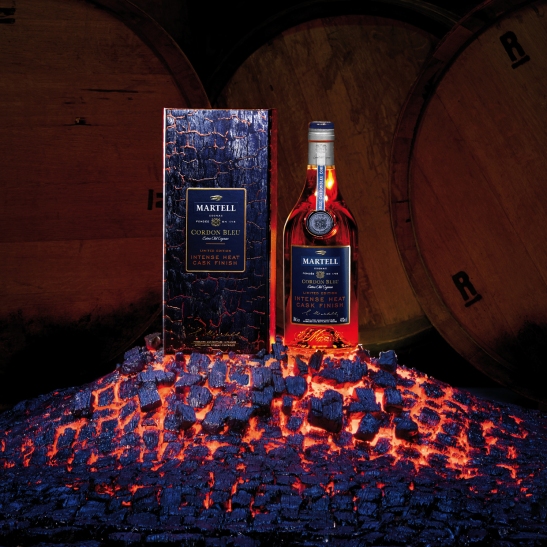
MARTELL IS CHARRING COGNAC CASKS TO MAKE A MORE INTENSE CORDON BLEU

Martell Cordon Bleu Toasted Casks

Pernod Ricard-owned Cognac house Martell is ringing in the Chinese Year of the Rooster with the launch of Cordon Bleu Intense Heat Cask Finish, which utilises a first-of-its-kind finishing process for the brand.
Available in Asia Pacific travel retail, Martell Cordon Bleu Intense Heat Cask Finish is created using a cask toasting and finishing process new to the Cognac house.
Extra heat is applied to the casks using as if charring an American whisky oak barrel.
Then, the cognac is aged 6 months.

The resulting Cognac is said to offer “heightened fruit and spice tasting notes” including a “fruity citrus sweetness, a toasted nuttiness and robust spice”.

The pack also features invisible thermochromic inks that react with a consumer’s body temperature to glow fiery red when rubbed, designed to replicate glowing embers.

Martell Cordon Bleu Intense Heat Cask Finish is available in Asia Pacific travel retail now.

Friday, October 28, 2016

AUTHENTICITY AND CRAFT EXPLAINED BY COGNAC REMY MARTIN WITH 'LA MAISON REMY MARTIN' INTERACTIVE

Rémy Martin Cognac is hosting an interactive experience which will allow the guests to immerse in the universe of Rémy Martin and its One Life & Live Them lifestyle. 

This interactive experience is called "La Maison Rémy Martin".

La Maison Remy Martin Logo

It is starting from late October to late November in 3 cities: New York, Chicago, and then Los Angeles .

The experience will consist in giving you a view into cognac; from the grapes on the vine, to the blending process, to the magical cellars where cognac is aged.

You will discover the century’s old artisanship behind cognac making with a contemporary lens through curated workshops and interactive programming.

The objective: get the millennials, largest drinking age group to experience the authenticity and quality of craftmanship needed to make cognac. They will learn about (1) Terroirs, (2) People and (3) Time.

Drinking cognac is an experience and a lifestyle.

Tuesday, May 10, 2016

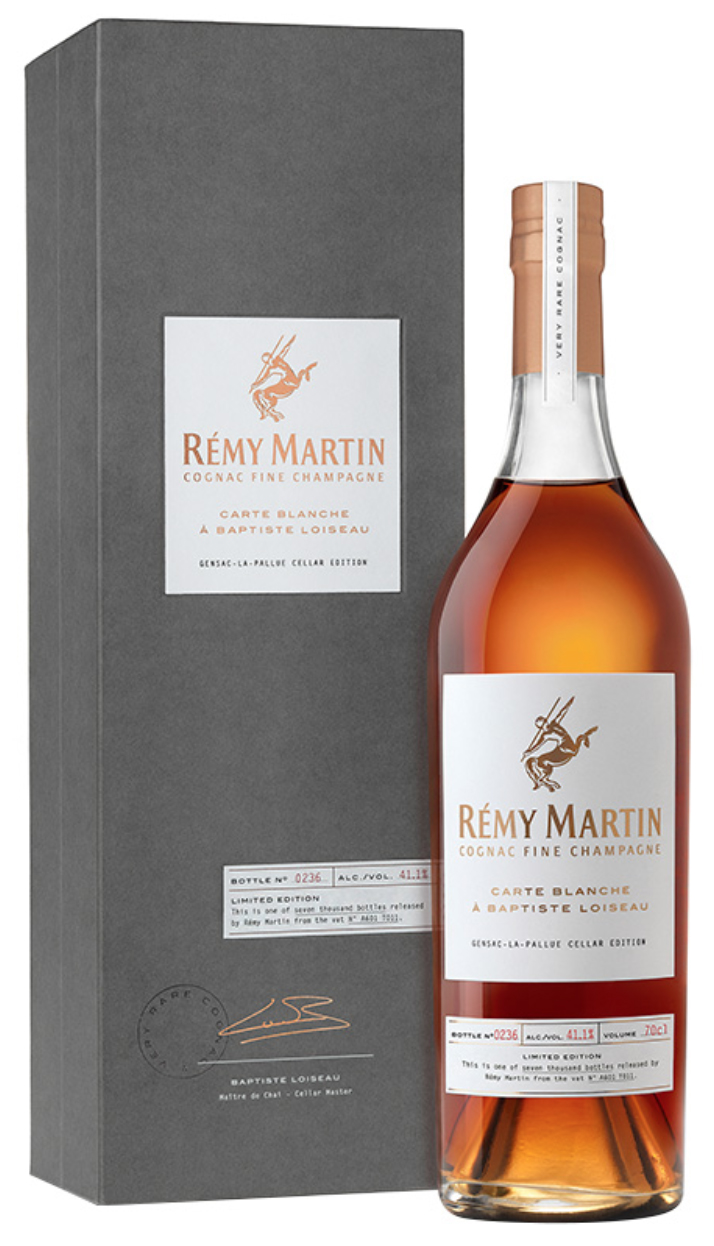
BAPTISTE LOISEAU REVEALS ITS FIRST LIMITED EDITION COGNAC FOR REMY MARTIN CALLED CARTE BLANCHE No.1

'Carte Blanche' in French means 'blank card', words used in the sense of a 'blank check' for instance.
Rémy Martin has just granted 'Carte Blanche' to his new master cellar Baptiste Loiseau to select a few casks to make a limited edition cognac named 'Carte Blanche No.1'.

Baptiste Loiseau is the cellar master of the House of Rémy Martin, who was appointed in 2014 at the age of just 34. During the years he spent perfecting his craft alongside his predecessor Pierrette Trichet, he tasted every eau-de-vie that had been set aside by previous cellar masters.
Remy Martin, Loiseau, Limited Edition, Carte Blanche No.1

Rémy Martin limited edition Carte Blanche No1 is presented in the traditional cognac bottle with a big punt at the bottom of the bottle, and in a simple yet elegant case which shows 
Rémy Martin is looking to position this cognac into the premium craft spirits.

Loiseau chose to particular casks from the Gensac-la-Pallue cellar which reveal harmonious notes of lilac and spicy notes of nutmeg. The remarkable long finish, with intense aromas of leather, incense and black tea, has given life to this powerful and refined cognac. These eaux-de-vie were bottled at 41.10% Alc. Vol. to preserve their original attributes and to create a cognac of exceptional aromatic strength and finesse.

Rémy Martin only used grapes from both the Grande Champagne and Petite Champagne, which when blended together are called the Fine Champagne.  Fine Champagne Cognac, ir regulated by French law, which means the cognac is made exclusively from eaux-de-vie of the Grande Champagne and Petite Champagne, is the only blend of two crus protected by the AOC, the Appellation d’Origine Contrôlée.

Just 7,000 numbered bottles of Carte Blanche No.1 have been created with a price of US$400 per bottle. From June 1, Carte Blanche No1 will be rolled out in DFS stores at Hong Kong International Airport, Los Angeles International Airport, New York John F. Kennedy International Airport and San Francisco International Airport, where it will remain exclusive to DFS until the end of October when distribution will be extended to selected domestic markets.

Sources: DFS, The Drinks Report

Tuesday, September 30, 2014

CLAIMS OF BEING HANDMADE IS BEING SCRUTINIZED

We have all witnessed the growth of craft beers, craft wines and now crafts spirits. Craft and Artisan Spirits are trendy and so trendy that many brands are claiming to be craft brands or handmade in small batch etc. Even mega large distributors/wholesalers have started 'artisan' and 'craft spirit' portfolio and sales departments.
However, I have mostly personally witnessed a bandwagon effect and a me-too follow up on this.
Fictitious Flavored Spirits
Within the past months a few brands have been under scrutiny about the true statement of being small-batch or craft made. All in all it is catchy marketing and it is hard to decipher what is crafty or handmade or not. At some stage someone had to use their hands in the process and therefore ...
In closely watched case, Tito’s plans to contest lawsuit against its “handmade” claim says  Shanken News Daily.
Drinks marketers are likely reevaluating their label claims in the wake of a lawsuit against Tito’s Handmade Vodka for the 1.3-million-case brand’s claim of being “Handmade.” The suit, filed September 15 2014 in San Diego Superior Court.
A pair of class-action lawsuits filed this month against craft distillers has exposed what many consider the worst-kept secret in craft distilling: Despite the marketing, most liquor is factory-made"says The Denver Post.
Whisky and American Whiskey /Bourbon are faced with the same dilemma: huge demand growth and limited amount of producers, hence the growing number of bottlers trying to claim all kind of things.
For this matter, 'cognac' benefits from a strict controlled appellation. Not only the grapes, but the way the grapes are crushed, the fermentation process, distillation, etc. and another 1000 things are regulated to ensure the quality of the claims. Eventually ALL cognac is by definition produced in small-batch and handmade. However, since 90% or more is blended and distributed by a few brands the end result is mostly processed through large standardizing factories to ensure a repeatable product day after day.
My recommendation read the article from The Denver Post asap!