Showing posts with label Spirits. Show all posts

Wednesday, January 16, 2019

LE GARAGE MAKES THE BEST 2019 BURGER WITH INFUSED COGNAC

BEST BURGERS MADE WITH COGNAC FROM LE GARAGE IN COGNAC FRANCE

If you love burgers and hamburgers give yourself a favor and taste Le Garage Bar’s Burgers in Cognac, France. They are yummy!
Catch the limited edition burgers that they make every month or just based on the season.
NEW FOR 2019!
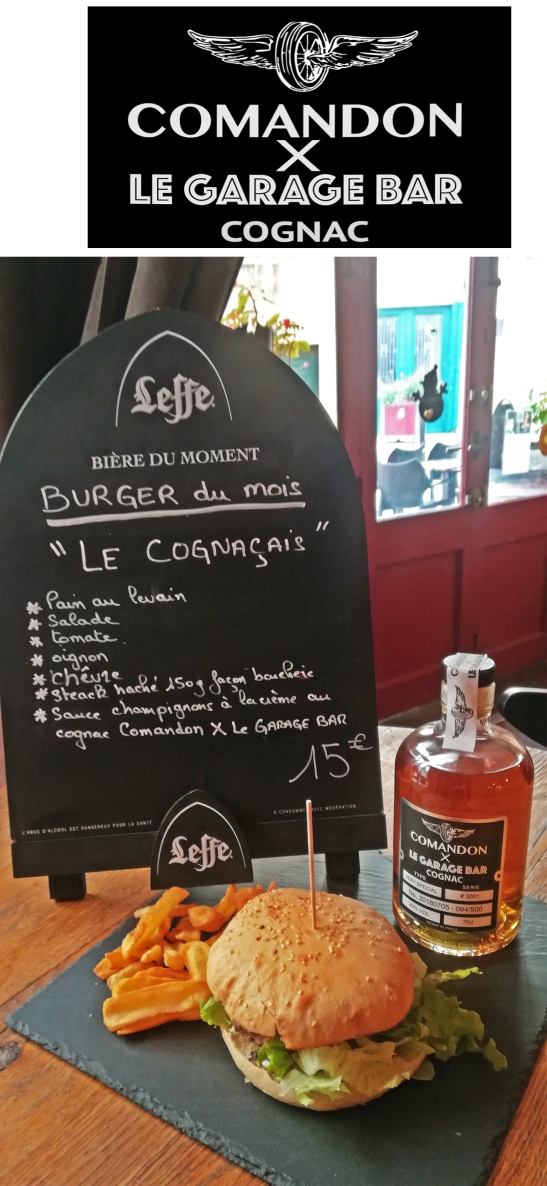
‘LE COGNAÇAIS’ BURGER
dav
Ingredients include:
. Artesanal Bread source from Maison Lemetayer (22 place d’Armes, Cognac France).
. With Salad, Tomatoes, Onions, Goat Cheese (all sourced from the local farmers), 150g of Minced Meat from the nearby artesanal butchery, with Cream of Mushrooms infused with Comandon X Le Garage Cognac.
. Add some heirlooms potatoes hand peeled and wedged.
Sorry! There is only 1 ‘Le Garage Bar’ and it is in Cognac only.
Happy New Year 2019!
Le Garage Bar, 1 Rue de l’Isle d’Or, 16100 Cognac, France

Thursday, September 27, 2018

A NEW BRANDY FOR CALIFORNIA: FRANCIS FORD COPPOLA BRANDY

cognacdailynews-Coppola-Brandy-California

After Gallo, the Coppola family is also getting into the brandy category.
What is going on!!!

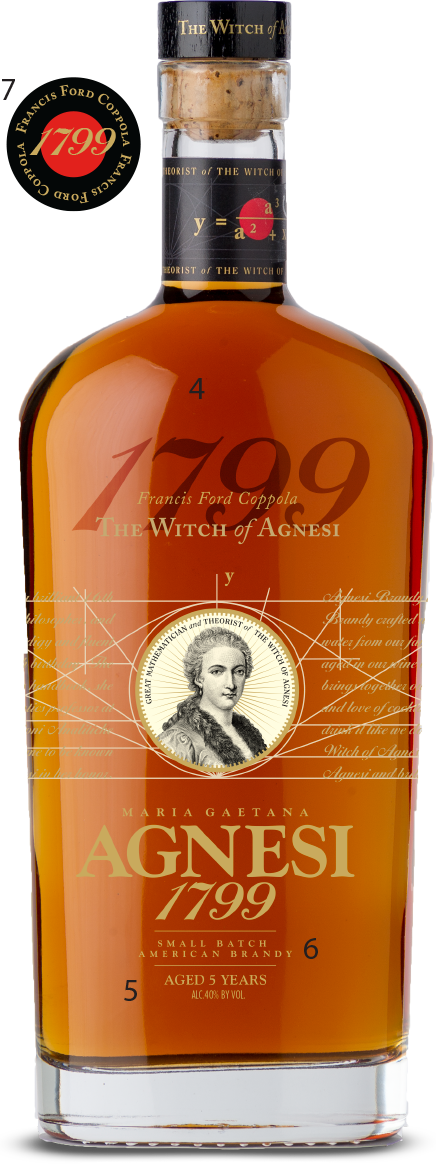
"Maria Gaetana Agnesi 1799 Brandy from Francis Ford Coppola sourced by Family Coppola.
The grape based brandies for Agnesi 1799 are sought, sourced, and blended by The Family Coppola and our winery’s master blender from barrel stocks in California’s finest brandy distilleries.

Our initial brandy release is a blend of 2012 Dolcetto grapes from Russian River Valley and 2009 French Colombard grapes from the Central Valley. Agnesi 1799 is a true taste of California soil, ambient yeast, naturally filtered water, and warm climate of the Golden State. Through careful selection of barrels and delicate blending of water and spirit, our brandy assumes the best qualities of the artisanally-crafted individual spirits.

By sourcing brandy made in different types of stills, both Old World Alembic Charentais stills and modern column stills, and from various local grapes, we are able to craft a proprietary blend that we believe is greater than the sum of its parts." (from Coppola Website)

Small batch 5 years old Brandy!


TASTING NOTES
Nose
Layered cinnamon in front, small amount of tobacco. Hints of vanilla and almonds give it a well-rounded profile of oak characters.


Taste
Overall high complexity. Baking spices on entry. Small hints of clove. Toasted bread in mid pallet. Pleasant mouth coating, some sweetness in the mid-palate, and a silky smooth finish. Very clean overall, with some honey.


"Agnesi 1799 is as fine as any Old World sipping brandy, yet comes with no pretense that it’s above being mixed into your favorite cocktails" says Coppola.

Source & Photo: Francis Ford Coppola Brandy

Friday, September 21, 2018

THINKING OF SELLING YOUR RARE WINES AND SPIRITS?

Auction Hammer
Auction Hammer


BY MELANIE YOUNG
September 18, 2018

Whether you want to downsize a prized collection or can finally procure an elusive bottle, here are expert tips on how to do it.

Global wine auction sales are on the upswing, according to specialists. Jamie Ritchie, head of Sotheby's global wine program, projects $90 million in sales by year's end, which would top the existing record of $88 million in 2010.

Though nothing has topped the Jeroboam of 1945 Château Mouton Rothschild that sold for $310,700 in February 2007 at Sotheby's.

If time is of the essence and you're comfortable with settling on a firm price, a direct sale may be the best choice. However, with an auction, the sky is the limit.

Like any major transaction, it's wise to comparison shop. The reputation and success rate of an auction house is paramount, along with the size and reach of its customer base.

Many houses have minimums based on the value of the wine lot, which can be one item or an entire collection. Also, the lot's size and value can affect the seller's fee, which ranges from zero to 18%.

It's the auction house's responsibility to appraise the wine and set a price. Munro stresses that sellers should submit important documentation well in advance, especially those with large collections.

Most auctions take place between September and May.
Bordeaux and Burgundy are more in demand but scotch and Japanese whiskies are both growing.

One example is the current offerings slated for t e coming 13th Oct. 2018 auction at Sotheby's New York. A bottle of 1926 Macallan Scotch is priced at $700,000 to $1.2 million, a new lot estimate record for Sotheby's.

Join auction house mailing lists, and review past online sales and recent catalogs to compare what's selling.

Another consideration is the buyer's premium to the auction house, which can range from 19.5-24%.

Monday, July 23, 2018

MORE AND MORE SPIRITS DISTILLERIES IN THE USA

Craft Pot Still Distillery


The number of craft distilleries in the USA is ten times larger in 10 years. This is showing a healthy growth.
Original Title: Number of US craft distilleries rises by 26%
Source: beveragedaily.com
July 18, 2018

In 2016 there were 1,315 active distillers, which rose to 1,589 in 2017, according to figures compiled by the American Craft Spirits Association (ACSA), Park Street Imports, and the IWSR.
A craft spirits producer is defined by the ACSA as one that has not removed from bond more than 750,000 proof gallons; markets itself as craft; is not openly controlled by a large supplier and has no proven violation of the ACSA Code of Ethics.

All about local?

The West boasts the largest number of distilleries (32.7% of total US craft distilleries), but the South - with classic spirits states like Texas, North Carolina and Kentucky - comes a close second (29.3%). The Midwest accounts for 19.1% and the Northeast 18.9%.
California is the state with the most distilleries: a total of 148, which makes up 9.3% of the nation's total. This is followed by New York, Washington, Texas and Colorado.

On average, more than half of a craft spirit producer's US sales come from within its home state (18% at the facility and 34% outside its premises).
"Nearly one-fifth of all sales take place at the production facility, underscoring the importance of tasting rooms and on-site retail to the bottom line,"? says ACSA in its 2017 annual report.

Meanwhile, employment in the craft spirits industry has grown nearly 50%: from 13,239 full time jobs in 2016 to 19,579 jobs in 2017.
The ACSA highlights 2017's 'most game-changing moment' as when Congress passed the Craft Beverage Modernization and Tax Reform Act (CMBTRA) on December 19 as part of the larger Tax Cuts and Jobs Act.

"The significance of the tax vote cannot be overstated, for it is the first time in modern history that the federal government has acted to lower the Federal Excise Tax (FET) on the nation's small craft distillers," ?explains the ACSA.

"The legislative action has helped level the playing field for spirits within the broader craft beverage space, putting distillers on par with breweries and wineries. Prior to the law's enactment, a craft spirits producer had paid 5.4 times more FET than a craft brewer and 16.4 times more FET than a small winery, for equal quantities of beverage alcohol.?

"While it certainly is a time to celebrate, our work is only just beginning. ACSA's priority now is to ensure that Congress votes to make the tax relief permanent."?
The American Craft Spirits Association is a registered non-profit trade group representing the U.S. craft spirits industry.

Thursday, June 7, 2018

CAN ANCIENT INGREDIENTS MAKE BETTER SPIRITS TODAY?

Heritage Corn Craft Whiskey’s Final Frontier?
Having tapped the bounty of heirloom grains, distillers are turning to the unexplored diversity of heritage corn to add nuance to their whiskeys.
JUNE 6, 2018 story: KARA NEWMAN

Once upon a time, nobody cared for whiskey being made with Rye, Corn or Wheat...
Now people are into details. What kind of corn?
Just a little over a century ago, hundreds of varieties of corn grew across the fields of the United States.

Today, almost all corn-based whiskey, including bourbon, is sourced from a single type of corn. But some craft distillers are trying to revive those ancient strains, creating spirits with greater nuance by stretching back to the past.

This sort of obsessiveness has become a feature of the craft whiskey movement. But even as producers increase their focus on the sourcing of grainslike ancient strains of rye, and even how they’re malted, corn remains the last frontier.
See, article Souce below for more details ...

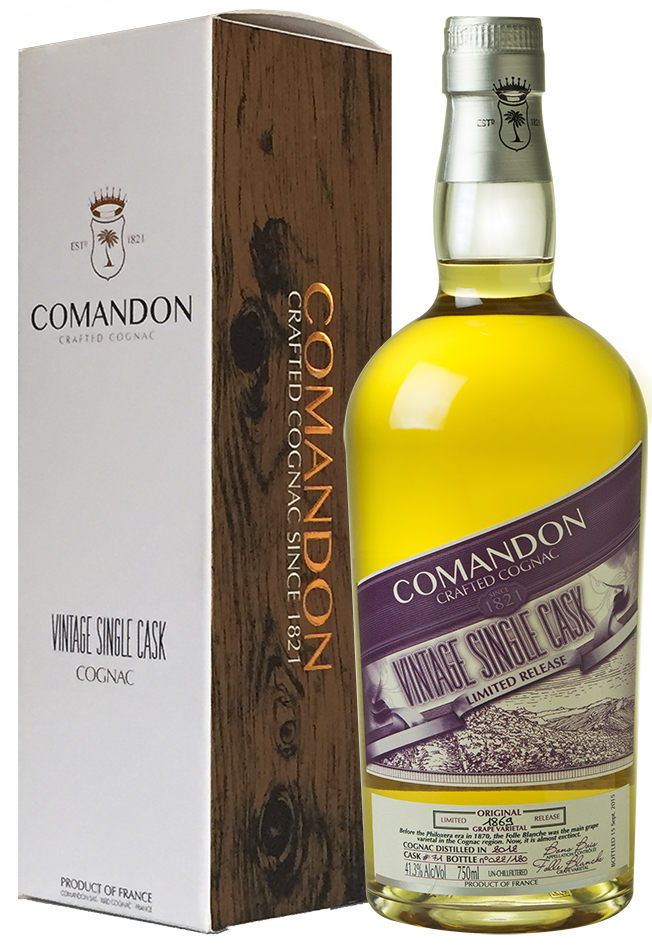
That reminds me, that in 2015 I revived the concept of 1870 cognac by producing a cognac 'à la pre-phylloxera way' that is using single grape 'Folle Blanche', single cask, vintage and why not from Bons Bois with a higher proof which is looked down for no real reasons besides commercial reasons. I did not do high proof or cask strength because one as to go with baby steps. All of this was too much at once and it was wise to get a few great and 'good old' concepts first and later we will see!

Meet Comandon Cognac 2012 Single Cask Folle Blanche from Bons Bois 41.3% Alc/Vol.
Only 120 bottles were released in the USA and we sold them all to aficionados who were paying attention.
COMANDON VSC BB Folle Blanche 2012 #71 Box
Source: PUNCHComandon

Friday, June 1, 2018

THE SENSISTIVE SUBJECT OF CRAFT SPIRITS AND CONTRACT DISTILLING

Big Data Logo
Big Data Logo

The Spirits Business talks about a very sensitive subject, they are brave!!

Distilling under contract is a mysterious, but vital, part of the spirits industry. The Spirits Business lifts the lid on the operations and strategies of leading third-party producers, and explains why many so-called craft brands wouldn't be without them.

The production stories behind hundreds - perhaps thousands - of small, independent spirit brands are often left untold. As the craft renaissance grips the industry, romantic narratives of heritage and provenance are positioned front and centre on spirit labels, while the large-scale companies that actually distil or source the liquid in the bottle stay in the shadows.

Industry members and consumers are now becoming more aware of third-party producers, but their emergence into the public consciousness hasn't exactly been smooth. In recent years, some brands that use contract distillers have come under fire for what has been seen as a lack of transparency. The criticism has stretched from gin to American whiskey and beyond, but whiskey producers from the US have borne the brunt of the backlash.

Undoubtedly, third-party producers and suppliers enable fledgling spirits to hasten their launch date and dedicate valuable resources to their brand and market strategies. But it's not only 'craft' brands that benefit from the service; international drinks groups will often purchase sourced spirits to increase and accelerate their production.
Third-party production is even more pervasive when one considers that it also includes neutral grain spirit (NGS), which is used as the base for countless brand leaders in the white spirits world.

The Spirits Business offers 5 examples of bulk suppliers.

1) MGP Ingredients(USA)
One of the most prominent third -party spirits manufacturers in the world is MGP Ingredients. The company was formed in 1941 as an industrial distiller for the war effort, before moving into beverage alcohol some years later. It now owns two distilleries: one that creates vodka, gin and industrial alcohol, which is based in Atchison, Kansas; and another that distils whiskey, based in Lawrenceburg, Indiana.

2) Sasma (Netherlands)
Sasma is a supplier of base spirits and ready- to- bottle products such as Scotch, Bourbon, cachaça and Tequila for the beverage- alcohol industry. Representing a further aspect of third -party spirits, Sasma does not distil, but instead acts solely as a supplier, sourcing liquid from distilleries, traders and agents.

3) Thames Distillery(UK)
Thames Distillery was founded 21 years ago, it is one of the best-known third -party distillers in the UK, and predominantly produces gin and vodka.

4) Creamy Creation(Netherlands & USA)
Established in 1979, Creamy Creation is the market leader in emulsified beverages, supplying mixable and ready made dairy, soy and coconut -based beverages to the international drinks industry.

5) Alcohols Limited(UK)
Alcohols Limited is the owner of Langley Distillery, a prominent UK gin manufacturer that has more than 300 partners around the world. It produces about 70m bottles for the global gin market annually. The business was established in 1805, while the distillery itself dates back more than 200 years, and has been distilling gin since the early 1900s.

There is even trade shows for this industry. For instance, IBWSS gives supermarkets, retailers, restaurants, wineries, distilleries and other buyers a premier international platform to source bulk wine and spirits and meet private label suppliers. The theme of the 2018 IBWSS San Francisco conferenceis “Bulk up your bottom line”. This is your opportunity to learn all about how you can unlock new opportunities in private label, bulk and contract manufacturing.

Things get more complicated when the bulk suppliers start making their own brands too, as one may wonder about the conflict of interests and competiting against your customers.

Source: The Spirits Business

Wednesday, May 30, 2018

BAD HAILSTORMS IN COGNAC AND DAMAGES IN SOUTH-WEST REGION


Hailstones 'the size of pigeon eggs' devastate Bordeaux vineyards

Source: https://www.telegraph.co.uk/
David Chazan
27 MAY 2018

Hailstorms have devastated thousands of acres of prime Bordeaux vineyards, prompting the French government to promise support for winegrowers, some of whom have lost their entire crop.
Cyril Giresse, a winegrower, said hailstones "the size of pigeons' eggs" destroyed grape buds and left vines bare on Saturday.

"The storm lasted only about 15 minutes, but in some places, there's nothing left at all," said Mr Giresse, who runs the Château Gravettes Samonac in Bordeaux's Côtes de Bourg appellation. "No leaves, no grapes, just the vines stripped as if the grapes had all been picked."
Jean-Dominique Château, another claret producer, said: "I've got nothing left. I've been growing grapes for 33 years and this is the worst storm I've ever seen. Last year we lost 40 per cent of our crop to hail but this year it's going to be an even worse disaster."

Stéphane Travert, the agriculture minister, said the government was assessing the extent of losses and would aid wine producers. "We'll take the necessary measures and we're ready to meet Bordeaux winemakers," he said.

Franck Jullion, the head of the producers' association in the "Blaye Côtes de Bordeaux" appellation, said: "It's a desolate vista, as if the vines had gone back to winter. Estates hit by frost last year will not recover. We're going to need a lot of support and solidarity."
Saint-Emilion, one of the most prestigious Bordeaux appellations, was spared, but parts of Médoc were badly hit, as were Cognac brandy producers in the Charente and Charente-Maritime departments.

Didier Gontier, director of the Côtes de Bourg appellation, said: "Winegrowers say they've got no vines left for next year so this is going to affect two years of production."
Bordeaux is France's largest wine-growing area, with about 300,000 acres of vineyards producing more than 700 million bottles of claret a year, ranging from cheap table wines to some of the world's most acclaimed and expensive vintages.

French wine and spirits exports amounted to more than £11 billion last year.
Wine industry leaders have opposed moves to tighten 1991 laws restricting alcohol advertising. President Emmanuel Macron has backed them, saying he drinks wine at lunch and dinner.
He has infuriated doctors by minimising public health concerns over wine and arguing that spirits and beer pose more of a problem because they are favoured by binge-drinkers.

Wednesday, April 11, 2018

FAME AND BOOZE: CELEBRITY APPEAL FOR ALCOHOL BRANDING

Cognac Daily News Spirit icon Fame and Booze

Recent sale of George Clooney's Casamigos tequila to Diageo has stirred a great deal of publicity.

The spirits giant spirit company paid US$700m for Casamigos to start with, and Diageo will potentially pay an extra US$300m based on the brand’s performance over the next 10 years. And recently, Casamigos announced getting into mezcal as well.

The media entertainment does not pay as much as it used to and celebrities have to find new ways to increase their revenue besides through their original craft.

Thus, using their fame they make appearances, endorsements, more concerts, ... etc... anything they can leverage their brand with. Now, because of social media growth as a mean of communication, people are more influenced than ever by publicity celebrities make or just simply generate. No need to buy tabloid magazines anymore. Just follow them on Twitter!

Consequently, endorsing or owning part of a wine/beer/spirit brand has become a recourse to increase revenue for celebrities.

Read about 21 celebrities with their own alcohol brand here.

Reference: Ranker News

Thursday, August 24, 2017

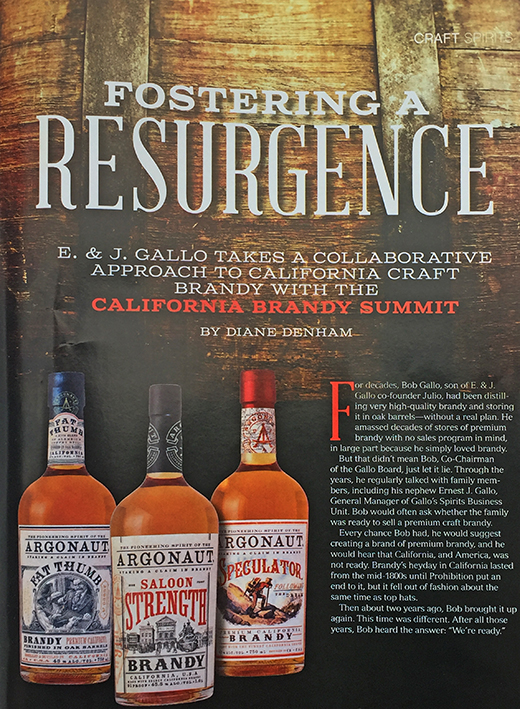
BRANDY RESURRECTION IN THE USA FUELED BY HUGE PUSH FROM E&J GALLO

[cArgonaut Brandy is new, by E&J Gallo
Argonaut Brandy is new, by E&J Gallo


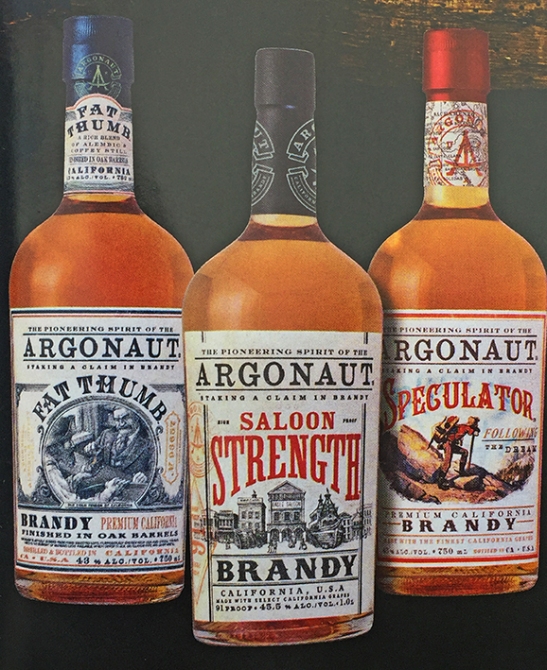
[ENG] E&J Gallo, a massive and trend-making machine company in the wine & spirits industry is making news for its recent stake into the super premiun and craft brandy category in the USA. First, E&J Gallo released late July 2017 its long awaited Brandy Argonaut which is inspired by the brandy movement prior to prohibition.
Then, they acquired Brandy Germain-Robin mid-August. Clearly something huge is going to happen now!

Argonaut Brandy, 3 different styles, produced by E&J Gallo

[FR] Ca bouge dans la categorie 'Brandy' aux USA, j'ai meme envie de dire que ca bouge beaucoup.
Fin juillet 2017, E&J Gallo lance Brandy Argonaut, un brandy craft a la mode americaine, plutot Californienne devrais-je dire.
Et mi-aout 2017, E&J Gallo, encore, prend acquisition de la maison prestigieuse Brandy Germain-Robin.
Mais qu'est-ce qui se passe?

Sources: Gallo, Argonaut Brandy, Tasting Panel Magazine

Friday, April 28, 2017

SPIRIT AIRLINES IS NOT DRINKABLE!

Spirit Airline Logo Icon

This blog is about spirits and in particular cognac, but I could not help but to want to share with you this news about a different type of spirit this time.

CNN in a recent articles report that "When it comes to customer satisfaction among airline passengers, Spirit Airlines ranks dead last."

I wonder why?

My suggestion is do not try to find out why. Just Google them and/or read this article from CNN. I think Spirits Airlines qualify for the 'not to do list' for pretty much everything when it comes to customer services. There is just none and whatever services they have, it seems they try harder to make it to a point that you promise yourself not to use them again.
It is too bad, it does not have to be this way.

Virgin America was great but it is almost gone when I write this blog, Delta Airlines is OK, and I would agree that Jet Blue is often good or more. It can be done. Just try harder and use the airlines as a 'Mystery Shopper' regularly so you can identify changes. From good to bad there are often times very small details to cover.

Source: CNN

Friday, February 3, 2017

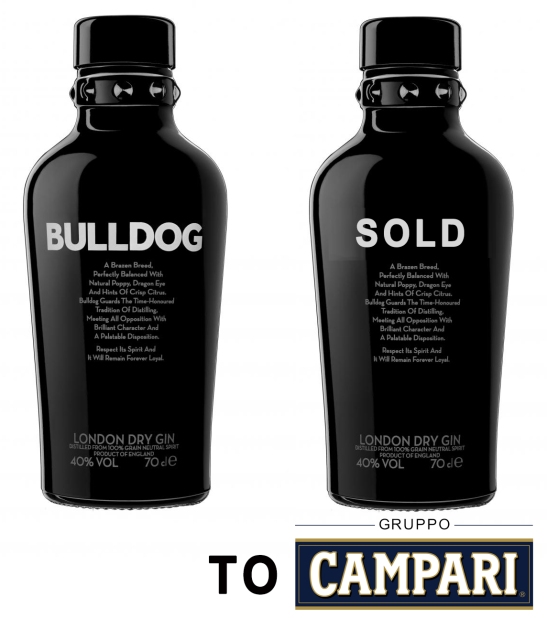
CAMPARI ACQUIRES BULLDOG GINS

Bulldog Gin Sold to Gruppo Campari February 2017

It is not often that one gets to see the insider of a transaction and get to read the details.

Shanken Daily News offers this info:
"Italy’s Gruppo Campari has acquired Bulldog Gin for roughly $58 million.
Launched in the U.S. in 2007 by entrepreneur and investment banker Anshuman Vohra, Bulldog (roughly $26 a 750-ml.) is currently available in nearly 100 markets around the globe, with a strong concentration in Europe.

. Bulldog sold around 150,000 cases in total in 2016.
. The brand’s net sales were around $12 million (+22% sales previous year).

The deal values the independently-owned Bulldog at approximately 13.6 times the expected CAAP (contribution after advertising and promotion) of about €4 million ($4.3m) in 2017."

The ratios are starting to look like those App start-ups and Dot-Com Companies.
There is a spirit valley after all!

Friday, July 22, 2016

THIERRY PICOULET COLLECTING FINE THINGS

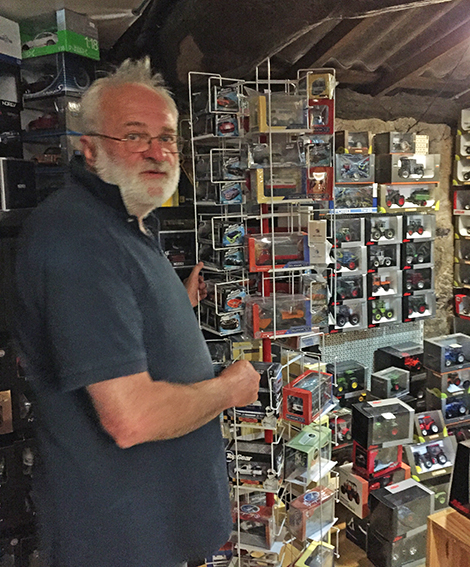
Thierry Picoulet shares 2 passions: one for the rare and finest spirits and the other for small scale cars.
In his store, 'Les Charentes en Boutique' in Jazennes next to Gemozac and Pons in (Charente Maritime), Mr. Picoulet has one of the most exciting collection of fine wine & spirits in the region. 
In particular he has a huge amount of rare whiskies from around the world, and some of the lesser known brands of cognac but also many wines which are considered 'cult wines'.
Thierry Picoulet et Charentes en Boutique

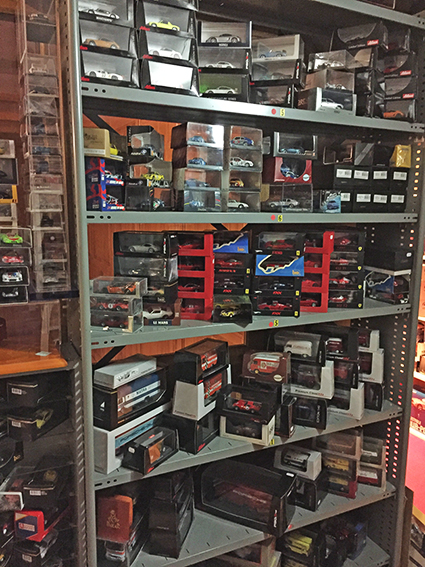
This is downstairs, now step upstairs to find a collection of small scale cars which will take you over 1 hour to look through. Norev, Dinky Toys, Majorette, Britains, Matchbox, etc. Some smaller some bigger, there is enough to make any adults want to return being a kid.
Thierry Picoulet, Charentes en Boutique


Bienvenue en Charente Maritime chez Thierry Picoulet au magasin 'Les Charentes en Boutique'. En bas tout pour Papa, des vins et spiritueux haut-de-gamme, et en haut pour les grands enfants une collection de miliers de petites voitures, certaines des repliques d'autres des models d'origine: Norev, Majorette, Britains, Matchbox, etc.
Prevoyer 3 heures si vous etes un mordu!

LES CHARENTES EN BOUTIQUE
Thierry PICOULET
La Petite Foy - 17260 JAZENNES
Tél.: 05.46.94.57.35 - Courriel : thierry.picoulet@wanadoo.fr

Sources: Sud Ouest

Friday, January 16, 2015

SPIRITS SALES ARE ONLY 1.5% UP IN 2014

Overall, 2014 is not going to be remembered as a great year for sales of spirits with only 1.5% increased sales in the USA.
Only a few brands particularly a few brands of vodka have recorded a nice growth such as Amsterdam vodka (+24.7% to 2.5 million cases) and Cîroc vodka (+9%).
Hennessy Cognac's sales have also significantly increased with +7.5%.

Friday, October 10, 2014

HOW USING CONSUMER TRENDS TO LAUNCH NEW SPIRITS?

Launching new products can be a big revenue driver, but it can also be a big cost to companies. The beverage industry is well-positioned for new products that capitalize on consumer trends, but there are several things companies should keep in mind when launching new beverage products, a panel of experts said during a recent Beverage Industry webinar.
Old metal iron with new tag
1st Key element = Value:
Consumers are willing to pay more for products they find valuable and that make their lives better.
2nd Key element = Identifying Innovators and Early Adopters:
These consumers are looking for new products and if they like them they quickly tell others.
3rd Key element = Understanding Millenials:
They look for details and unique points of differentiation.
4th Key element = Planning beyond the Launch year.
A great deal of companies fail has they plan for resources just for the first year and cannot keep the momentum year 2. Example, lesser media exposures, lesser cash flow to replenish the shelves, etc.
Source: SmartBlogs

Friday, November 22, 2013

CLASSICAL CONDITIONING A SIMPLE METHOD USED TO SELL WINE & SPIRITS TO CONSUMERS

I think consumers should learn more about the true origin of products and what the products are meant to be rather than pay attention to vague details.
In most cases, products are bought for the appeals. Either a physical appeal or a brand appeal or a promotion appeal.
. Physical Appeal: people buy with their eyes and are influenced by aesthetics and fashion.
. Brand Appeal: most sold brands are building growth on the concept of popularity.
. Promotion Appeal: either a discount or an extra products or the use of a celebrity endorsement can increase sales.

. More often than not, consumers are blind sided by simple conditional responses. Let's review 2 conditioned stimuli for the liquor industry.
---> Stimulus 1 = Item descriptions

Three Examples of Item Descriptions
Example 1
Matured in both traditional sherry casks and heavily peated casks. On the nose, it displays aromas of dried bitter orange complemented by softer notes of lemon peels, cardamom and anise. The palate is rich with notes of lemon, grapefruit and toffee that merge with rich spiced apple and liquorice undertone. The long finish leaves behind hickory smoke, toasted cloves and light vanilla.
Example 2
On the nose, it displays bold, complex aromas of orange peel, ginger, nutmeg, clove and other baking spices which are complemented by notes of charred oak, caramel, and a hint of gingerbread. Full-bodied and rich on the palate, sweet, warming notes of caramel and vanilla are followed by rye-spice and mint flavors, which blend seamlessly into butterscotch and dark chocolate on the long, crisp finish.
Example 3
It has been carefully distilled to capture the nuance of the malted barley, then aged in new charred American oak barrels for ten months. The resulting spirit is floral with harmonious notes of vanilla, caramel and sweet spice leading to a hint of dark chocolate on the finish.
. These notes were created to signal quality and to appeal to consumers based on conditioned words. In this situation, the conditioned words are: vanilla, orange, caramel, spice, and chocolate in most case.

---> Stimulus 2: ratings
Another typical classical conditioning is the use of ratings. Ratings are made to help consumers quickly make decisions. Consumers in many situations try to save mental energy and for this purpose they learn in many different ways including classical conditioning. Hence, marketers have created these ratings for this purpose, i.e., to create a simple "heuristic" to speed decision making.
Example:
2010 Château de Somewhere ($49.99): It exhibits a deep plum color as well as sweet aromas of kirsch, cassis, licorice and lavender. Richly fruity and pure with low acidity and terrific purity, it should drink well for 10-12 years. 94 points by XX, 92 points by XX, 90 points by XX
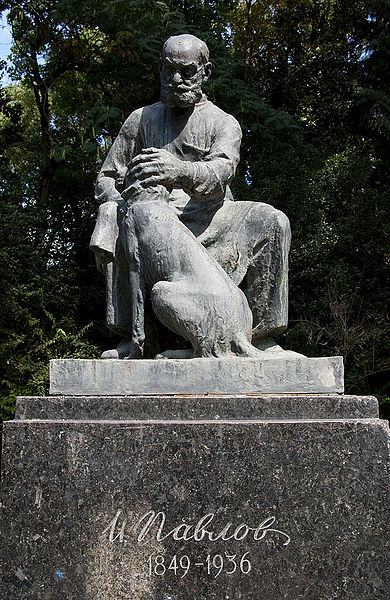
A statue of the Nobel Prize-winning physiologist Ivan Petrovich Pavlov (1849-1936), Institute of Experimental pathology and Therapy, at Sukhumi, Caucasus.
Classical conditioning (also called Pavlovian Conditioning) was made famous by Ivan Pavlov when he revealed the "conditioned reflex" of salivations from his dogs. Pavlov, the "master" was able to dominate his 'dogs' by conditioning them. Classical conditioning is a powerful tool mostly in favor of the marketers (masters) and not so much in favor of the consumers (dogs). Sorry!
Source Photo: Я автор этой фотографии (Wikipedia)

Sunday, July 1, 2012

Who is Rating Cognac? A Review of the Competitions, the Raters, and the Ratings


There are many spirits competitions and ratings in the world. From the local wine & spirits fairs to the international event organized with selected judges highly regarded for their experience and know-how in the industry, and also independent raters who are ratings spirits in their own media such as Dias-Blue or Pacult.

I will only reference the spirit events which are internationally representative and commonly used as reference by the industry trades and and also by consumers. The concept of rating spirits is often an offspring of ‘Wine ratings’ which they are 100 times many more numbers and are much more prominents. Most of these events/competitions were originally wine competitions which opened up to spirits or encouraged spirit submissions for ratings.

World Spirits Competition in San Francisco
World Spirits Competition San Francisco
First, I would reference the World Spirit Competition in San Francisco (SFWSC) because it is 100% a spirit competition event. I do not think the wine and spirits should be in the same competition. It would be like a magazine called ‘cars & bicycles’ or ‘meat & pastries’.  I think the less you know about wine & spirits the more you think they have things in common, and the more you know about them the more you see the differences and that is why I have a preference for events which are 100% dedicated to spirits only. The rating of wines and spirits requires similar skills but it takes a different mindset, approach and expectations.
This World Spirit Competition www.sfspiritscomp.com is carried out in San Francisco, it is not that old in comparison to many wine events. It was started in 2000 by Anthony Dias-Blue. Mr Blue is a highly recognized wine & spirits journalist who originally made his name as the Wine & Spirits Editor of Bon Appétit, one of the largest food publication in the United States.
He also broadcasts on radios, KFWB and KLSX FM in Los Angeles and on WCBS radio in New York.  He is co-owner and Editor-in-Chief of Tasting Panel Magazine and is a frequent contributor to Decanter, Robb Report, Celebrated Living, Virtuoso Life, and C Magazine. Mr. Blue is the author of The Complete Book of Mixed Drinks and its companion, The Complete Book of Spirits. Interestingly, Mr Blue is the executive director of the New York World Wine and Spirits Competition, which is another representative competition that I am presenting below, but also the San Francisco World Wine Competition.
The World Spirits Competition in San Francisco rates about 1200 entrants annually from 60 countries on average (exactly 1215 in 2012 from 60 countries) with "blind" tastings involving panels of expert judges selected each year from the spirits industry including world-renowned mixologists, spirits buyers, and media from across the United States

The +: the earlier in the year the better. Consumers prefer recent/this year winners than last year winners. WSC is in March and results are in April. this competition is seriously done, executed and rather representative. All spirits competitions are subjective. This is the best competition in my opinion.
The -: judges are not international judges for the most part and rather represent the experts in the USA. From my experience I can say that not all world experts are the same. It would be nice to see international experts in the panel to offer a more worldly view, mostly when the competition is called World Spirits etc ... Little appearance/representation in international trade events, for instance, Vinexpo, etc... They do appear in the Wine & Spirits Wholesaler of America trade show which is the equivalent of VINEXPO but for the USA only.

The International Wine and Spirit Competition (IWSC) www.iwsc.net
International Wine and Spirit Competition
This competition is the most famous competitions has it has been seriously organized and supported by the majors of the industry. I think also it benefits from having been established in London by a British and a German person in 1969 so it has benefited from a solid organization and structure from the foundation. Europeans have taken a serious lead on this judging/rating a long time ago. The statistics and numbers are huge 30,000 submissions, 80 countries, 250 judges coming from all over the world, chemical analysis, and etc... But it is hard to decipher how much of this is dedicated to spirits. I guess about 1000 submissions for spirits.
This competition is also greatly enhanced by its world partner and media support mostly from the Drinks Business magazine, but also by its pertinent participation in the world’s leading trade exhibitions, such as Vinexpo, ProWein and Vinitaly.
Plus the IWSC has a huge experience in getting media coverage and offers promotional supports trough their networks of retail/industry connections. It is a powerful organization - no doubt. Far more powerful than the World Spirits Comp. in San Francisco presented above, and far older too.

The +: they are powerful and their name means business in the alcoholic beverage industry.
The -: lack of legitimacy for the spirits ratings in particular as this is fundamentally a wine competition. I think it is and it will always be a wine event in priority!

Internationaler Spirituosen-Wettbewerb ISW (www.mundusvini.de)
Internationaler Spirituosen Wettbewerb
This competition was started in 2004 in Germany, and it is a subsidiary of Meininger Verlag in Neustadt, one of Germany's oldest specialist publishing houses and run by the 4th generation family. It specialises in wine and beverage publications for different target groups.
A special ISW supplement with a print run of more than 100,000 copies reports in detail on prize-winning spirits and their producers and is included with all the wine, beverage and hospitality trade magazines published by Meininger Verlag.
The ISW judges are renowned experts from wine & spirits institutes, producers, retailers and restaurateurs who have daily experience with spirits.

The +: this is a well organized competition that seems very professional.
The -: mostly from Europeans for Europeans.

The Los Angeles Wine and Spirit  www.lawinecomp.com
Los Angeles International Wine and Spirits Competition
This competition was initially for wine only and founded in 1939. In 2007, it began receiving entries for spirits. Awards are provided for gold, silver, and bronze medals. In 2009, there were 199 entries with 179 awarded medals.

The +: situated in the middle of the capital of world entertainment. Well organized event, business frendly, ... increasingly referenced. Great longevity since 1939.
The -: the spirit rating is clearly an off-spring of the wine event, and one could say this part of the event is in its introduction stage.

The Beverage Tasting Institute www.tastings.com
Beverage Testing Institute
The Beverage Testing Institute is based in Chicago, Illinois and was founded in 1981 with its initial focus on wine but later branching into the world of spirits and beer. They use a dedicated tasting laboratory in order to create consistent results and minimize external distractions. Each periodic tasting is conducted at the same time of day under identical conditions. The panelists are selected from the professional world of restaurants and publications under the leadership of director Jerald O'Kennard. Not all spirits are given a rating. Those of sufficient merit are awarded a point score between 80 and 100.
The institute seeks to produce "fair and impartial wine reviews for consumers." Buying guides have appeared in All About Beer, Epicurious.com, International Wine Review, Wine Enthusiast, Restaurant Hospitality, The New Yorker Magazine, and Wine & Spirits.

The +: highly recognized in the trade and used to promote to consumers. So it is working and it is clearly an official source. The spirit division is very seriously carried out and broken into departments: the whiskies, the bandies, the eaux-de-vie, ... Just from the fact that they divide and organize ratings of spirits by family and rate them at different times and per family says a lot. I like the scientific ‘kind of’ style this organization has. I like the fact that they clearly mentioned that not everyone gets to win something. No idea if it is true but it sounds good.
The -: rather expensive and many boutiques brands do not apply which makes it a safe heaven for the spirits produced by large corporations.

SIP Awards  www.sipawards.com
SIP Awards
SIP Awards
The Spirits International Prestige (SIP) Awards takes a new approach to beverage competitions by linking producers to the people who matter the most - The Consumers. Hence, SIP provides one of the most valid measures of beverage quality in the world. By working directly with consumers, SIP offers a more realistic opinion and more market driven point of view.
Their consumer judging panel strips away the layers of elaborate marketing, brand recognition, price point disparity, and most importantly, the bias of established judges. Spirits are judged in a blind tasting review on the characteristics of Aroma, Taste, and Finish.

The +: finally consumers are the judges.
The -: only a few consumers are judging, and therefore even if the validity of the research methodology is high, the reliability of the data set is poor because 100s people would have to judge to make it reliable.  Reliability is how accurate is your data and validity is about how effectively you are measuring really what you are trying to measure. Therefore, one question: are all consumers equal. Answer is no. Do I want Gin lovers who would never buy a cognac evaluate my cognac. That is the advantage of using experts to judge because they are supposed to know.

International Spirits Challenge www.internationalspiritschallenge.com
International Spirits Challenge
The International Spirits Challenge is based in the UK, and it is very respected since 1995. The competition is founded on a rigorous and independent judging process, which serves to encourage the high calibre of spirits, designs and campaigns entered into the competition each year. Receiving more than 1,000 entries from nearly 70 countries worldwide makes the ISC is a truly global competition. It is supported by most of the world’s leading spirits producers as the international standard for quality and excellence.
The ISC has evolved over recent years to recognize four key areas of the industry; Tasting, Design & Packaging, Marketing and Retailer Awards.

Marketing Awards: The aim of the ISC Marketing Awards is to recognise and celebrate the invaluable impact marketing has on creating and sustaining brand value which will ultimately improve profitability. Judges are drawn from marketing and advertising agencies assess how well the campaign met the brief, overall brand strategy, evidence of innovation and creativity, positive results and statistics and return on investment.
. Best Launch Campaign
. Best Advertising Campaign
. Best Digital & Social Media Marketing Campaign
. Best Experiential Campaign
. Best PR Campaign
The International Spirits Challenge is home to some of the finest palates in the world. Each of our judges must have demonstrated their skill and knowledge in spirits before joining a specialist panel, and include master blenders, master distillers, importers, distributors, buyers, consultants, journalists, authors and independent experts.

The +: it is a well respected competition in Europe and the USA. For some reasons, some people do not trust the competitions in the USA, so they would rather leave it to foreigners. So it is a good choice for a balance of US/Europe ratings.
The -: Results are in November.

---> The Competitions in New York, USA
There is no surprises that New York be the place for an international spirit rating event. The question is which one as there are several and it is not clear which event is dominating the scene.

New York World Wine & Spirits Competition www.nyworldwineandspiritscompetition.com
New York World Wine and Spirits Competition
This event is like a mirror image of the World Spirits Competition in San Francisco, but with wine too. Perhaps this is explained by the fact that Anthony Dias-Blue is the executive director in both places. This competition occurs at the same time and is associated with the Bar and Restaurant Trade Show.
The +:  New brands trying to get traction in the USA have to start in New York. It is not a law but a recognized rule of thumb. Because this show is tied up with key trade partners to jump starts your distribution that is bars and restaurants (called on-premise in the trade) it makes sense to participate. The idea is getting 2 birds with 1 stone.
The -: this is a new competition pretty much over-shadowed by the World Spirits in SF, and also it is including wines where spirits usually play the second roles.

New York International Spirits Competition www.nyispiritscompetition.com
New York International Spirits Competition
This competition is different in that the judges are spirits buyers from the industry, which gives a nice twist in the sense that most other competitions classically employs experts. Experts may be more representative of the experts’ tastes rather than the trade or consumers. Another interesting aspect is that the competition is grading similar products and categorizing them also based on pricing. This rule is perhaps even more significant for cognacs as one may find for instance XOs at 70 euros and other at 150 euros, or Extras at 150 euros and other at more than 1000 euros. In other words one may find that a highly rated cognac at 100 euro may be more realistic than a highly rated cognac at 1000 euro.

The +: the rating method allows for new facets and perhaps originality. A spirit rating competition only.
The -: this competition does not have the national coverage and support found in the other competitions.

Other Spirit Rating Organizations:

. Wine & Spirits in the US (www.wineandspiritsmagazine.com)or Wine & Spirit in the UK (www.harpers.co.uk) are very wine oriented.

MicroLiquor Spirit Awards www.microliquorawards.com
Micro Liquor Spirit Awards
MicroLiquor Spirit Awards is the World’s First Spirits Competition for Small Brands - Brand/Label sells less than 50,000 9-liter cases annually. MicroLiquor Spirit Awards sponsored by Flow Design provides professional and confidential feedback on product quality, packaging and design, and overall value.
Liquor entrepreneurs, brand managers and marketing professionals have the opportunity to gain entrepreneurial thought and insight to their brands while enjoying the benefits of competition.

BLUE’s Reviews www.bluelifestyle.com
Anthony Dias-Blue offers a rating through his magazine the Tasting Panel Magazine in the USA. See more information above.

PACULT’s Reviews www.spiritjournal.com
F. Paul Pacult has a tremendous reputation in the spirit review and he publishes his ratings in his members only Spirit Journal. Look for the annual review edition in particular. His reviews also appears in the Wine Enthusiast Magazine.

Wine Enthusiast Magazine (Wine Spectator does the same) publishes a magazine and other media to promote the appreciation of both wines and spirits. It is headquartered in New York and founded in 1979. Currently, spirits reviews are provided by F. Paul Pacult, who does tastings in a controlled environment. Results are given a point score. www.winemag.com