Tuesday, November 29, 2011

Cognac = Definition of a "Classic": It Never Goes Away!

Amy Cavanaugh 's post could not be more stereotyped of what I hear from people who like spirits, brown or clear, scotch, vodkas, and else, but knows nothing or very little about cognac.

Cognac Paradis Courvoisier 21 Connoisseur Collection
"Going into a cognac tasting at the Drawing Room last week, I didn’t know much about the grape-based spirit. I’m a brown spirits drinker, but my tastes usually run more toward bourbon and scotch, and I hadn’t ever had more than a nip of cognac here and there.
I blind tasted cognac against Irish whiskey, Scotch whiskey, rye, bourbon, and aged rum to taste the difference between grain and grape-based liquors. I found cognac heavier on the tongue, with a taste that lingered longer in my mouth than any of the other spirits did.
Cognac was originally used in mint juleps, sazeracs, and other classic cocktails that now feature bourbon and other spirits. It fell off the radar over the years, thanks in part to an insect attack that destroyed many French vineyards in the late 19th century. With the resurgence of interest in the classics, it’s starting to appear on more and more cocktail menus."
Cognac is a modern spirit because it is a classic, that means it never goes away and it is always trendy for the connoisseurs.  It is the traditional ingredient of prohibition cocktails and back in the trends today. It is made by  a long list of connected intermediaries and families, and it requires the utmost quality steps to be created. It is very exclusive and also sustainable from an environmental perspective - "liquid gold" some call it.
So do not get me wrong. I enjoy most types of spirits (with moderation). I only have favorites spirits for specific situations. I think cognacs are more elegant, subtle and clean than other spirits, but I am open minded. If I had to pick a second favorite spirits it would be eaux-de-vie for the variety of fruits that can be found. Otherwise, in second I would pick Calvados. I love crepes perhaps this is why.
Source: Photo: Courvoisier Cognac

Friday, November 25, 2011

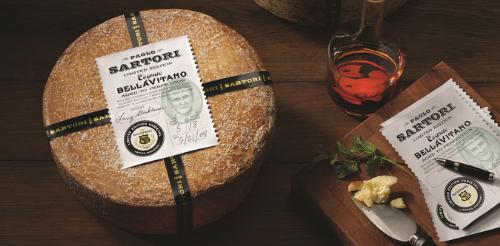
Sartori to Release Cognac BellaVitano® Cheese varieties for 2011 Holiday Season

Sartori Company announced this week that it will be releasing a very limited quantity of Cognac BellaVitano for the 2011 holiday season.

Cognac Paradis Sartori Cheese Bella Vitano Cognac
Cognac Paradis - Sartori Cheese Bella Vitano Cognac
Based in Plymouth, Wisconsin, Sartori has been producing artisan and premium cheese for seven decades for Specialty, Retail, Ingredient, Restaurant and Food Service markets.  Cognac BellaVitano is an extension of the company's BellaVitano Cheese varieties.
The cheese itself is extra aged; it matures for at least 18 months.  After the aging process, it is submerged in a premium Cognac and is only removed when Sartori Master Cheesemakers believe it is just right.  The end result is unique and complex celebration of smoky, nutty, oaky flavors with toasted notes of vanilla and caramel from the Cognac.  Each finished wheel will be hand signed and numbered by Master Cheesemaker Mike Matucheski.
Sartori is excited to announce that this year's very first two 20 pound wheels, hand signed by Master Cheesemakers at Sartori, will be sold at auction via eBay.  All proceeds from the auction will be donated to local food banks. Jim Sartori, CEO, sums up the decision to donate best: "This is a challenging time of year for some members of our community.  We will be donating 100% of the proceeds to the food banks to help out families in need.  The Cognac wheels at auction are wheels #1 and #2, and we are only selling 20 wheels this entire holiday season.  We expect the auction to be very successful."  The auction for wheel #1 will begin Monday, November 21st, and Wheel #2 will go up November 26th with each auction running 10 days.  
Sartori will sell the remaining wheels more conventionally by partnering with a very limited number of specialty retailers. The Cognac BellaVitano will carry a $75 per pound suggested retail price.  Additionally, a limited supply of 4 oz. wedges will also be available for sale on the company website, www.sartoricheese.com.  This will give people who do not live within driving distance of a retailer carrying the item the opportunity to buy and share this unique cheese.
Source: Photo: Sartori Company
Source: News: PR from Sartori Company

Monday, November 21, 2011

Cognac and Armagnac - It is Like Salt and Pepper


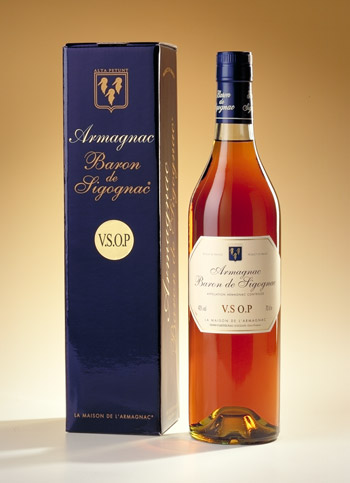
Cognac Paradis - Armagnac Baron de Sigognac VSOP
John W. Fischer in his blog published on November 5th 2011, gives us a rare explanation of what is cognac versus armagnac but also he offers an interesting view on why someone may select armagnac over cognac. The number of people who prefer armagnac over cognac is very limited. I often find that these people do not have a single valid reason for why they prefer armagnac (I will below give you my rational for preferring armagnac). In addition, preferring one over the other is like preferring salt over pepper. You need both in life because their are different and complementary.
At the end, comparing the 2 and saying which one is better makes no sense. But if I had to guess which one people think is better I would say that over 90% of the time people prefer cognac over armagnac. The driving reason for this may be that people do not know armagnac as much as they know cognac. There is 25 times more cognac than armagnac being produced. That just does not make it better - it is just a fact. Armagnac is 200 years older than cognac but that does not make it better either. Cognac has grown faster because of its natural proximity to the ocean which favored international trades for centuries. Remember 95% of the cognac is exported, and this percentage has been pretty much the same since it was created. Anyway, it was created by foreigners for foreigners  (quickly and over-simplified explanation but pretty valid).
Cognacs are generally assembled (blended) for the sake of creating the most balanced products. In many cases, the blends include over 100 different cognacs. Hence, they are smoother than armagnacs where the spirits are much less blended. Also, cognacs are distilled two times whereas traditionally armagnacs are distilled 1 time. The more you distill the smoother it gets. Passed 2 times you are removing significantly the characteristics of what you are distilling. So as a rule of thumb, 1 distillation are for eaux-de-vie, where the spirits are the expression of the fruits being distilled.
2 distillation is good balance where you have the best of both worlds: enough purity and still the complexity and typicity of what you are distilling.
--->Why vodkas are distilled 20 times? The worst the "stuff" you have fermented to generate alcohol the more you need to distill to get to neutrality. Plus some people are pretty bad at distilling so they need more times.
--->Why some vodkas are distilled 9 times or more ... (1) it is a marketing gimmick, and (2) they are not good at it. It is like someone telling you a joke and they need to repeat their joke 5 or 10 times to get you to laugh. Either the joke was bad or they were not good at telling the joke.
Going back to armagnac. Advanced spirits tasters look for single grape armagnacs made of colombard or made of only folle blanche. And since it is only made of a single grape one should taste a difference. That is a plus point of armagnacs as they more often make this distinction. The truth is you should taste a difference if the armagnacs are less than 5 years old but passed 5 years old the armagnacs or anything that is aged for that matter start tasting the same. So if someone starts spending a lot of money on very old armagnacs, and even more money because they are single grape armagnacs they are only being snob! Sometime people just know enough to get themselves in more trouble!
However, I will give you some valid reasons why someone may prefer Armagnac in another postings to keep things short and parsimonious.
Link to John Fischer's article: http://tinyurl.com/8x297zk

Sunday, November 20, 2011

What is a Fine? Why do You Read "Fine Cognac" on old labels?


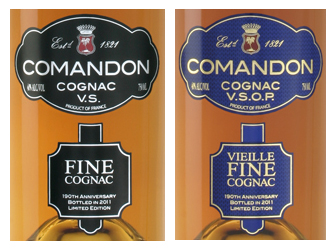
Cognac Paradis Comandon Labels Fine VS and VSOP
Some cultures and countries have a real tradition in making brandy of wines like Spain or Armenia. They both have a set of specific traditions in aging and producing but at the end they produce a much sweeter brandy than say French brandy.
French brandies (i.e. generic of wines) appear in a wide variety of quality levels with some being 'the run of the mill' and other being absolutely outstanding.
So what is a 'fine'? [pronouced feenne in this case].
A fine is a brandy made of distilled grape wines. Same thing as a grape brandy but it specifically separate from the other fruits' brandies.
So when you read a cognac label that says 'fine cognac' or 'vieille fine cognac' it is referring to the term of 'fine' as of distilled grape based brandy. This term is only used by very old cognac brand since this was a statement mostly employed prior to the 1950s when the cognac appellation was not well protected by international treaties.

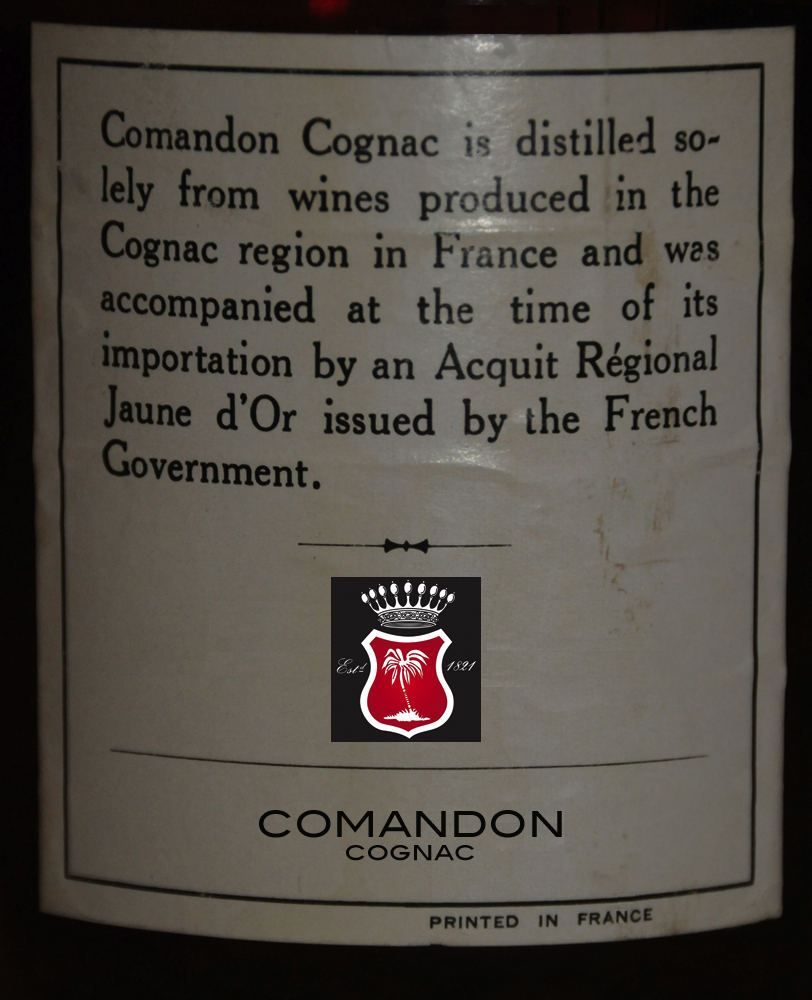
Cognac Paradis Comandon Acquit Regional Jaune D'Or
Another term you can read on old labels is "acquit regional jaune d'or". This is a certificate issued y the local tax office that warrants the cognac has been produced and distilled in Cognac. It is a necessary for any cognac to be transported. It provides a control on the exchange of cognacs.  Cognac shipments require a certificate of "acquit regional jaune d'or" and it is a separate documents used by the customs to verify the quantities of cognacs exported. Simplified, one has to produce the cognac, then the cognac gets this certificate, and after this the cognac can leave the distilery or cellar to be transported or sold to someone else. Every cognac house has to manage these certificates but this mention does not appear on labels as this is 'old school'. Now, consumers are not as worried as before about fake cognac.  People are more aware now that cognac is only coming from France than they were 50 years ago. The Acquit regional jaune d'or was created in 1929 and it was used in Cognac as part of the cognac regional effort to protect its regional characteristics.

Saturday, November 19, 2011

How Is Cognac Camus Keeping a Steady Growing Family Business Since 1863?


Cognac Paradis - Cognac Camus
Cognac Camus
Cyril Camus, the CEO of Cognac Camus, has much merit in having been a visionary when he moved to China in 1994. Already at this time China was promising but this was the hey day of cognac launch in China. Although nowadays cognac sales are still growing at a fast pace in China, much of the market is dominated by Martell and Hennessy which control over 50% of the market share. Cyril Camus lives now in China with his family, because it is the company's biggest and fastest growing market for Camus. Camus is considered the 5 largest cognac company with about $80 million following Hennessy, Martell, Remy Martin, and Courvoisier with triple digits hundreds of millions and more.
Camus seems to have made a number of critical business decisions for the past 100 years which have ensured it would continue to strive.
1)   Only 1 family ownership of shares. Father to son, not always the oldest son, just the most competent and motivated. Although cognac is glamourous it is not always very appealing to high-yeald investors because of  the inherent limitations for growth due to the time necessary to grow the business and the overload of regulations coming with making cognac. A great deal of successful cognac family businesses have over extended the sharing of management. It is kind of like the European Union syndrome: 2 countries are OK, 10 countries is possible, 14 is max, 28 it is twice too much!
2)  Focus only on super premium cognac. No mass marketing of Camus Cognac. Cognac is and should only be super premium. Cheap cognac does not make sense.
3)  Adapt, pioneer and differentiate: it takes risk taking and vision to make ends meet.
---> 1900s: supplier of the Tsar.
---> 1960s: Duty Free and travel shopping.
---> 2000s: China and consumerism.
4)  Be hands-on. Just do it attitude from the family's management. Too many families who have succeed to grow their cognac business have kept the 3rd generations away from the vineyards and distilleries. These people quickly forgot where they were from and the hard working labor of love to keep the good things coming.
Camus owns several other brands of cognac (such as Pionneau) and brandy (such as Ascot). I am particularly interested in the Camus XO "Ile-de-Re"  which is a very original product with unique terroir elements. I also like their "Maison Camus" concept started in 2010 in Beijing where they indulge their clients and members to taste the best liquors from France in a lounge club supported by Camus Cognac. Very Clever!
See: www.maisoncamus.cn

What Makes Cognac Outstanding - A Perspective


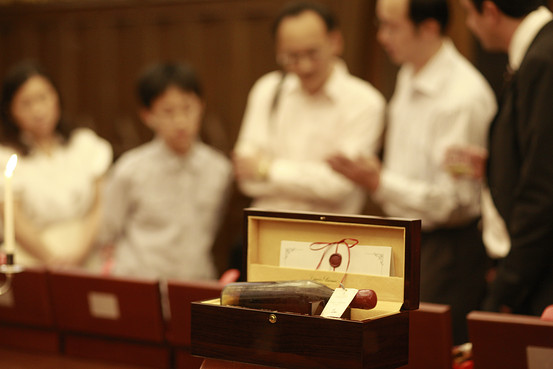
Cognac Paradis Cognac Croizet Cuvee Leonie at Shangai's Auction
An interesting recent article from 'The Star online magazine' reports on Hennessy Cognac in Malaysia. I find this article pertinent as it reveals a set of perspectives on cognac which I believe explains what sets it apart from other types of spirits.
These characteristics are:
1) First it begins with the barrels. Made of French oak, specifically sourced from the forests of Limousin.
2) Light barrel toasting. When barrels are made they are burnt or rather fired inside to stimulate the chemical reaction with the contact of the spirits aging inside. The more you toast the bolder the smoky taste and the lesser other flavors will come out. There is a debate about toasting versus burning oak barrels. The difference is like when you prepare your breakfast and you have to set your brand new toaster (1) you do not know if 1 or 2 minutes will do and (2) everyone has a different preference in how much they like their bread to be toasted. An error of setting will get you to burn your toasts. Sometimes oak barrels are consciously burnt. cognac or armagnac's barrels are toasted, bourbon's oak barrels are for instance burnt. Try bourbon and you will see an overwhelming smoky taste because of that. Now, there is no good or bad, it is a question of tradition and choice.
3) Longer aging of eaux-de-vie. In general and by comparison cognac are aged longer. For instance, Tequilas are aged 5 years maximum. Why because a good tequila is about tasting the quality of the agaves being used to make it and with extended aging this goes away and it defeats the nature of this spirit.
4) Assemblage. I say assemblage rather than 'blending' as this term is being looked down as a way of getting ride of bad blends by mixing with good blends. Assemblage is more of a conscious type of selective blending - so I will say assemblage instead. And I insist cognac is about assemblage who ever is trying to tell you the opposite is wrong - period. "Single this" and "single that" is just inferior cognac but I agree the non-blended cognacs are more unique and why not trying them - but again this is not the nature of what cognac is about.
5) Factors like the weather, soil conditions and the timing of t he harvest. Terroir and tradition makes cognac a unique and original product.
6) Hence importance of the cellar. The cellar dryness and humidity dictate the smoothness and aromas. Higher humidity are favored.
7) Officially and/or unofficially endorsed by famous hip hop entertainers. Celebrities just do not drink eaux-de-vie or grapas, etc... That does not mean they are right.
8) I will add that cognac is the most expensive liquor. A bottle of cognac fetched 1 million yuan (US$156,740) at a recent auction in Shanghai, according to the Guinness Book of World Records, announcing the importance China will be taking in the market for the high-end liquors. This bottle was bought as a gift from a daughter to her father. It could happen to me, I have a daughter!
Source: Reference: http://tinyurl.com/7gjydx8
Source: Photo: http://www.gomoneyways.com/?p=43010

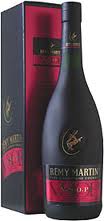
Remy Martin is Lowering the Price of its VSOP in Canada for the Holidays


Remy Martin VSOP
Remy Martin VSOP

TheRecord.com has just announced that Remy Martin has started discounting its cognacs in Canada to seize the opportunity of increasing sales during the end-of-the-year shopping season. VSOP Cognac has lowered its prices for the holidays. From now until the end of the year, both VSOP labels — the regular bottle and the limited edition glow-in-the-dark Urban Lights package are reduced by $15 a bottle, from $89.95 to $74.95.

Remy Martin VSOP uses the term “Fine Champagne” on most of its labels. Champagne in this context means “country,” from an old French "campagne" and it has nothing to do with the sparkling wine made with grapes from the north east of France. I maybe wrong but I strongly associate Remy Martin with "fine champagne" as far as I am concerned I give them credit for this concept.
The Fine Champagne is an "appellation d'origine controlee" AOC which describes a cognac made from the double distillation of  grapes exclusively coming from the Grande and Petite Champagne designated areas within the Cognac region.
Source:   http://tinyurl.com/7ub9co3