Showing posts with label Economy. Show all posts

Thursday, November 8, 2018

GOVERNMENT AGREES TO GROWING LAND SPACE TO PLANT COGNAC VINEYARDS

Cognac Economy is Up
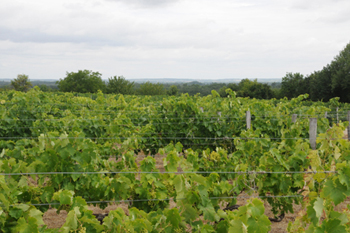
Cognac sales have been rising for four years, thanks to exports. Plans were approved this week to expand its vineyard areas by almost 3,500 ha next year, in addition to the present 75,000 ha in the appellation.
Sales of cognac
In the 2017-18 season (August to July), cognac sales grew for the fourth consecutive year, up 8.2% in volume and 5.4% in value over the previous year. Exports accounted for 98% of sales, still driven by the North American market, with Asia the fastest-growing region.

A record high of 205.9 million bottles were shipped during the campaign, for a turnover of 3.2 billion euros, according to the BNIC.

Source: Vinexpo Newsroom

Friday, October 5, 2018

MORE COGNAC SOLD IN USA IN 2018 THAN EVER

Cognac Economy is Up


Source: ShankenDailyNews

Cognac is enjoying a renaissance. Last year global volumes increased by a robust 5.5% to 15.4 million cases, with the U.S. at the forefront, accounting for nearly 40% of total consumption. After crossing the 6-million-case mark on 9.7% growth in 2017, Cognac has now expanded its U.S. volume by nearly 2 million cases in just the past three years. With demand skyrocketing—particularly for the VS segment—keeping adequate supply in the pipeline is now the major concern.

Hennessy continues to drive the market in the U.S., averaging an annual increase of 12.9% over the past five years. In 2017, the brand increased 7.4% to just under 4 million cases, and might have risen higher if not for its supply constraints.

Still, Hennessy is now nearly twice as large as it was in 2012, when it depleted 2.16 million cases. “Hennessy has plans for growth across all our qualities in the coming years; however, we do need to continue to manage our growth and supply carefully,” says Giles Woodyer, senior vice president for Hennessy at Moët Hennessy USA. “We’re continuously improving and building our supply development efforts including expanded relationships with growers, new plantations, and strategic investments such as our recent considerable investment in our packaging and logistics site, Pont Neuf, which opened last year.”

This new 280,000-square-foot Pont Neuf facility will allow Hennessy to produce around 10 million cases annually by 2020, up from 7 million cases currently.

Read more at ShankenDailyNews

Sunday, September 9, 2018

COGNAC EXPORTS HIGH TIME HIGH

Cognac Economy is Up
Cognac exports in 2017-18 are valued at €3.2 billion, an increase of 8.2% in volume (250.9 million bottles) and 5.4% in value compared to 2016-17.
This is the fourth consecutive year of export growth, according to the Bureau National Interprofessionnel du Cognac(BNIC), the cognac trade body.
The American zone, with ALENA, was the largest export area, taking 89.8 million bottles, a increase of 9.4% in volume and 0.2% in value. The US was the largest ALENA export zone, with a ninth consecutive year of export growth.
The Far East, with 60.9 million bottles, was in second place with a growth of +13.5% in volume and +12.4% in value. Singapore (26.6 million bottles) and China (26.2 million) were the main export countries.
In Europe, exports were stable at 41.3 million bottles, down by 2% in volume but up 3% in value.
Source: Vinexpo Newsroom

Tuesday, June 5, 2018

EXPECTED COGNAC SHORTAGE IN 2019

Cognac Sales Image Logo Icon
Cognac Sales

Cognac shortage deepens as crops destroyed
Source:
http://www.drinksbulletin.com.au/
Alana House
June 04, 2018

A little more than six months after Hennessy announced "constrained" supplies of Cognac, the industry has been plunged into crisis following devastating hailstorms in France.
More than 10,000 hectares of vineyards were damaged in late May, as pebble-sized hail stones pelted the region. Around 14% of the brandy-producing vines of Cognac were affected, with many vineyard owners saying that they had lost all hope of harvesting any grapes.
The storm hit areas not affected by this type of weather damage for more than 40 years, with just under 1000 farms suffering the ravages of the hail.
The Bureau National Interprofessionnel du Cognac (BNIC) the Cognac interprofessional organisation that acts on behalf of all Cognac growers and firms of the region said in a statement on May 26: "Our vineyards were again hit by a violent episode of hail.
"In this difficult moment, the BNIC, its elected officials and its teams express their greatest support to the winegrowers of Charente-Maritime and Charente whose vines were destroyed or damaged.
"Our services are currently in the field to evaluate the precise impact of this episode on our vineyards."
The president of the General Union of Cognac Winemakers, Christophe Véral added that it had been a "catastrophe" and a crisis meeting was likely to take place.
Two years ago, the Cognac region was also hit by hail storms. The extent of the economic impact of poor weather in Cognac for three straight years is not yet known, but is expected to be crippling.
It comes as Cognac is having a millenial-fuelled revival.
BNIC reports that cognac's three largest markets are the United States (78.7 million bottles), Singapore (23.6 million bottles) and China (22.6 million bottles).
As a large proportion of Singapore's imports are shipped on to China, it's likely that China is now the world's largest market for cognac by revenue.
According to Reuters, Hennessy owns around half of the global Cognac market.
However, the category's booming growth was already under strain due to the lack of supply Hennessy has in reserve.
In January, the wine & spirits arm of LVMH, Moet Hennessy, announced a solid jump in 2017 sales, with strong volumes growth for Hennessy Cognac (+8%), which came despite supply constraints that Moet Hennessy said slowed growth in the second half of the year.
It said supply issues, which the company highlighted throughout last year, were likely to continue in 2018, with supplies remaining "relatively constrained".
Hennessy has been planting more vines, but new vineyards will take up to six years to start producing usable grapes - even Hennessy's youngest Cognac is aged between two and eight years.
It's expected the shortage will really begin to bite in late 2019 to early 2020. Experts are suggesting that Cognac lovers stock up on more expensive bottles of Hennessy, such as the V.S.O.P., the X.O. and Hennessy Black.

Thursday, March 15, 2018

FRANCE DRINKS LESS COGNAC THAN THE PHILIPPINES

Cognac Sales Image Logo Icon 

The Philippines is one of the world’s largest markets for brandy, with national company Emperador Inc., which owns Bodegas Fundador in Spain, now considered the largest producer of brandy in the world.

Southeast Asia is fast-growing its consumption of cognac with new markets such as Malaysia or Indonesia.

Source: TheStandard.com

Wednesday, November 29, 2017

MILLENNIAL SHOPPERS EXPECTED TO SPEND MORE IN CHRISTMAS HOLIDAYS 2017

Cognac News and Economy 
Cognac News and Economy

While most consumers (54%) say they’re keeping their holiday spending about even with last year, young adults (18-24 years old) are likely to increase theirs, according to survey released last week by the National Retail Federation and Prosper Insights & Analytics.

  • Barely a quarter (24%) of consumers overall say they’ll spend more this year, but nearly half (46%) of those aged 18-24 — which includes the oldest members of Generation Z — and 39% of those aged 25-34 years old, will spend more than they did a year ago.
  • Many of America’s youngest consumers will also be heading to stores this season, according to a survey from Junior Achievement USA. Most (54%) plan to do much of their shopping at brick-and-mortar discount stores like Walmart and Target this holiday season. Less than half of teens (46%) said that they would be doing much of their shopping online, while about a third (34%) planned to head out to the shopping malls.

Source: RetailDive

Tuesday, January 24, 2017

SALES FROM REMY COINTREAU SHOW GROWTH

Remy Cointreau
Remy Cointreau

After a strong third quarter, Rémy Cointreau’s sales were up by nearly 5% (and 6% on an organic basis) over the first nine months of its fiscal year. The company’s organic sales rose by 9% in the third quarter (ending December 31, 2016), as high-single digit growth in the U.S. market combined with a double-digit advance in China to produce significant progress.

Rémy’s third-quarter sales bump more than doubled analysts’ projections. Flagship brand Rémy Martin was the company’s growth engine over the first three quarters of its fiscal year. 

The Cognac brand’s sales grew by 11.2% on an organic basis. Meanwhile, in China, the brand’s depletions were up by high-single digits, in part because of the earlier Chinese New Year. Beyond Rémy Martin, Rémy Cointreau’s liqueurs & spirits unit (led by Cointreau) grew by 4.1% over the first three quarters, while its partner brands business fell by 15%, mostly due to the end of distribution contracts for Piper Heidsieck and Charles Heidsieck in several key markets.

Source: Shanken Daily News
SaveSave

Friday, January 13, 2017

2016 MARKS A NEW HIGH FOR COGNAC SALES

The "Cognac Enterprise" is made up of about 16,800 active individuals, which accounts for over 50% of the active general agricultural population in France.

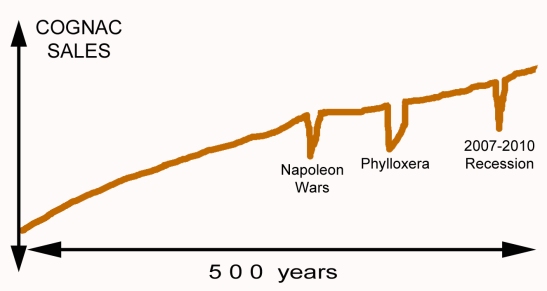
2014, 2015 and now 2016 mark a constant growth for the sales of cognac.

Image to Illustrate Cognac Sales in 500 years

That is growth +6% in volume and +6,8% in monetary value, still fueled by the USA which is making close to 42% of the overall sales for the past 25 years with 74,1 millions of bottles sold in 2016.

More than 98% is exports with 179,1 millions of bottles sold in 2016, was 168,9 millions in 2015. I can still remember not long ago when we were saying that 120 million bottles was a lot!!

Total sales in 2016 equal 2,76 milliards d'euros compare to 2,6 milliards en 2015.
North America comprises 77,3 millions of bottles with +14,2% in sales volume, and 14,3% in value.

Asia is the second market with 51,1 millions bottles sold, that is +1% in volume and +3% in value. This situation confirms the stability recovered in 2015 after the 2014 decline period.

Africa and Oceania are showing great potential for growth with 11,3 millions of bottles sold, comprising 6,3% of the total sales, but with significant growth:
. +5,4 % in volume
. +5,1% in value

In contrast, the European market shows a slight decline of -1,2% in volume, and -1% in value. But still 39,4 millions of bottles were sold in Europe.

Looking at the sales in using the 3 basic qualities is interesting:
. VSOP sales are stable.
. VS = +9,6 % in volumee and  +13,0 % in value.
. XO and Older = +11,7 % in volume and +8,3 % in value which is a little scary because not sustainable.

Sources: Charente LibreBNIC

Friday, September 28, 2012

HOW CAN 15 YEARS CHANGE EVERYTHING. LOOKING BACK IN TIME.


In the past 15 years, a great deal of things have happened in Cognac including a recession, a slow growth, a fast decrease and a fast increase.

To exemplify this I am posting an article from summer 1996 from Andre de Segonzac published in Liberation. This newspaper is known to be leaning towards the democratic party in France (socialist) but I think it does a fair review of the situation at the time.  Hard to believe this article now that we are in a different situation.

In essence, this article describes the decreasing wholesale prices of cognac, the decreasing value of land, the disappearing traditional structure of the workforce, that is not employed for life by the negociants but now dependent on the market fluctuations and therefore suffering massive lay-offs in 1996.
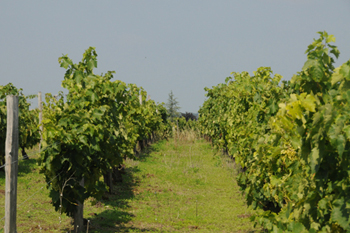
Cognac Vineyards
Cognac Vineyards
So what has happened since. I guess everyone had to pull themselves by the bootstraps. Starting with the BNIC that became much more involved with the promotion of cognac overseas, the 4 big cognac houses became part of larger multinationals, and wine makers had to become more efficient. In addition, the political and regulatory weight of the European Union since 2000 has also changed dramatically the cognac business.
One thing is for sure, the cognac marketplace never stays the same and one has to adapt quickly to survive.
Cognac Vineyards
Cognac Vineyards
There are 2 important things that consistently keep saving cognac from despair. At the end of this article, the author mentioned that a top executive from Hennessy was worried that cognac would disappear like the coal mining in Lorraine.

1) Cognac unlike coal mining is not a commodity. Cognac is made in a specific area under international protection. It cannot be replicated anywhere else, and therefore it does not suffer from delocalization.

2) Cognac is truly a superior quality product and it is recognized as such by consumers. It is not just a myth or made up perceive short sighted thing. Andre de Segonzac makes an interesting costs/investments comparison with other spirits.
. Cognac cost 5 times more to make than whisky.
. Cognac costs 25 times more to make than cane sugar spirits.

=================================

Cognac: grande récolte, grands soucis. Les grands groupes de négoce cassent les prix d'un alcool cher à produire.
La récolte s'annonce bonne; excellente, même. «Sur pied, nous estimons qu'il y a 130 hectolitres de vin à l'hectare», estime Bernard Combes, le directeur départemental de l'agriculture de la Charente. S'il continue à faire beau, on s'attend à un degré moyen égal ou supérieur à 9$. De sorte que les 83.000 hectares de vignes de cognac vont produire un million d'hectolitres d'alcool pur. Une catastrophe si l'on considère que le marché du cognac n'en absorbera pas la moitié. Car des vendanges aussi prolifiques risquent d'accentuer la chute des prix déjà bien entamée cette année.
...
Prix en baisse depuis 1990. Les prix du vin et des eaux-de-vie sont en baisse constante depuis la bulle spéculative de 1990: Bisquit, une vieille marque de cognac (Pernod-Ricard), a été exclu du syndicat des exportateurs pour n'avoir pas respecté les contrats passés avec les viticulteurs. Le temps n'est plus au paternalisme triomphant qui voyait garantis l'emploi à vie des ouvriers dans les chais, la vente des eaux-de-vie des viticulteurs aussi bien que les ressources des nombreux clubs de sport de la ville.
Les sociétés de négoce sont passées sous le contrôle de grands groupes internationaux de vins et spiritueux: Louis Vuitton-Moët Hennessy (LVMH) pour Hennessy, Allied Domecq pour Courvoisier, Seagram pour Martell... Qui souhaitent acheter au meilleur prix en laissant faire la loi du marché.
...
Produit de luxe très élaboré, le cognac a un prix de revient élevé: 5 fois celui des alcools de grain comme le whisky, 25 fois celui des alcools de canne, explique Jacques Fauré. En plus, il faut le distiller deux fois et le vieillir longtemps. Le stock actuel représente 7,5 années de consommation.
...
Le négoce s'apprête à vivre de nouvelles concentrations: Camus est à vendre. Rémy-Martin cherche des partenaires et la coopérative viticole de Cognac est en difficulté ...
«La région de Cognac est aujourd'hui dans une situation comparable à celle de la métallurgie lorraine voilà quinze ans.» Répétée par un cadre supérieur d'Hennessy, cette petite phrase semble plus menaçante qu'un orage de grêle en septembre, sur un coteau de Grande Champagne.

Wednesday, September 5, 2012

IN FRANCE ONE LEARNS TO SAY 'NO' BEFORE SAYING 'YES'. COULD THIS HAVE A NEGATIVE IMPACT ON THE FRENCH ECONOMY?


In France like pretty much everywhere in the world it is back to school or in French 'La Rentrée' at this moment.
For François Hollande, the new President of France and Jean-Marc Ayrault, the new Prime minister of France 'la rentrée' is rather paved of negative news.

First the announcement that employment reached 3 million people on the 31st July, worst results since 1999. And this figure is not going to get better in August 31st. In France everything shuts down in August.

Second, a real lack of confidence and motivation for people to become entrepreneurs in France. In a recent article from the Washington Post, the author explains that it is difficult to create start-up companies where the culture is about 'no' and 'impossible', risk aversion and lack of innovativeness. One may find many French innovators outside of France right now but they may have left for a reason.

Third, less than 24 hours ago all the economic newspapers have announced that France is not ranked any more in the top 20 most competitive countries in the world according to the Davos World Economic Forum. France is ranked 21st, lost 3 positions in 12 months.

Motivation to excel and the possibility to fail and the likelihood of coming out quickly out of a failure/brankruptcy may stop people to try. The Economist at the end of August had a special review on how easy it is to come out of bankruptcy and start over across different countries. America took about 12 months versus France 6 years.
Richard Branson Entrepreneur
At a time where the cognac economy is doing well one may wonder how cognac would be doing if it was made somewhere else than France! 
Could it be better in Canada, Germany, Australia, Switzerland ... I guess there are pros & cons in every country. For cognac it does not matter: in fact the owner of Hennessy, Bernard Arnault, is the richest individual in France according to the last ranking from www.challenges.fr  I wonder if they say 'yes' more often at Hennessy than any other places ...
Source: Washington Post